
False Nationalism over Local Trains
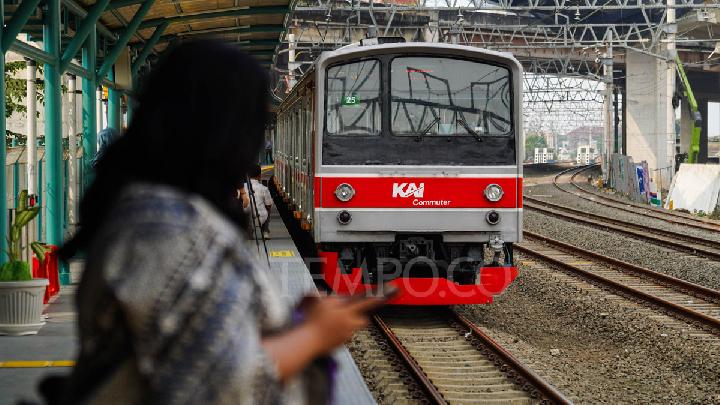
So far, importing used trains has been more efficient than producing trains domestically. Forcing unfit trains into service only adds costs.
IN providing public transportation, four aspects form the backbone: safety, comfort, accessibility, and reliability. Other considerations can be set aside if they do not serve the public interest in these four areas, such as prioritizing domestic products. This is precisely what happens when the government forces trains made by Industri Kereta Api (INKA) that have not been properly tested to serve commuters.
State railway company Kereta Api Indonesia (KAI) pulled seven train sets manufactured by INKA from service after damage was discovered in their underframe components in early September 2026. As a result, 17 commuter rail trips serving passengers in Jakarta and its surrounding satellite cities were canceled. Repairs are not expected to be completed until October 9, 2026.
This magazine’s investigation found that the damage occurred because inspections of the trains before they were put into service were inadequate. In the name of pride in domestic products, carriages that had not actually passed testing were forced into passenger service. The impact was not limited to disrupted services but also included higher repair costs.
Encouraging INKA to manufacture its own trains is certainly an initiative worth supporting. But in business, costs should be an important consideration rather than an excess of nationalism. Government officials need not let pride stand in the way if importing used train cars proves more viable and far cheaper.
Consider the numbers. In 2023, KAI announced the procurement of a new 12-car electric multiple unit (EMU) train set from Japan valued at Rp225.6 billion. Procuring a 20-year-old used train set, by contrast, costs just Rp19.2 billion. This is merely the shipping cost, as Japan offered the carriages free of charge through a grant.
Meanwhile, manufacturing a new train set with the same number of carriages through INKA costs Rp293.3 billion—excluding retrofit costs (modifications, technological upgrades, and components) amounting to Rp117.6 billion per set. Ever since Indonesia began importing used Japanese trains in 2000, train trip cancellations have been driven far more by signaling and track network failures than by technical defects in the carriages themselves.
Furthermore, INKA’s production capacity remains inadequate to meet demands. INKA can only produce two to three train sets annually, whereas KAI needs 16 train sets to serve a steadily growing passenger volume. INKA will face even greater production pressure because it needs to allocate manpower and funds to repair trains that break down quickly.
INKA must therefore take time to learn and absorb technology to engineer trains as reliable as those built by Japanese engineers. Grant schemes from foreign nations typically include knowledge transfers and maintenance frameworks to ensure carriage utility until the end of their operational lifespans. INKA engineers could study these systems first while building up toward larger production capacity.
While domestic products deserve priority, favoring national industry must never eclipse the interests of passengers—much less compromise safety. Rushing to use unproven domestic products in the name of nationalism or false pride will only rack up unnecessary costs.