
Falling One by One: The World's Giant Dams Struggle to Generate Electricity
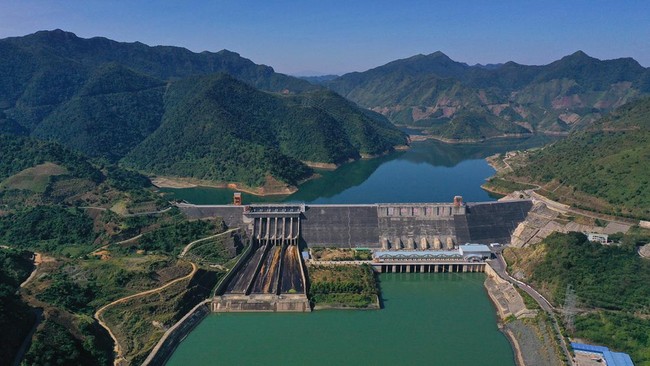
The threat of El Niño is expected to persist. The latest outlook from the International Research Institute for Climate and Society (IRI) for August 2026 indicates that El Niño is likely to last until early 2027, with a 100% probability from August–October 2026 through to February–April 2027. The probability is only expected to begin declining during the March–May 2027 period.
These conditions bring more than just risks of drought to agriculture and water supplies. Electricity production from Hydroelectric Power Plants (PLTA) can also be pressured as rainfall decreases and dam water volumes shrink. Hydroelectric plants rely on water availability to drive turbines. When rainfall drops, river flows and inflows to reservoirs also decrease. If dry conditions persist for a long enough period, reservoir water levels can drop, making the volume of water available for power generation increasingly limited.
This risk is even greater for countries with a high dependency on hydropower. In July 2026, Fitch Ratings assessed that Asian electricity systems heavily reliant on hydropower face higher pressure from El Niño, particularly if dry conditions are prolonged. The issue does not stop at decreased hydropower production. When hydropower supply decreases, system operators must replace it with other generation sources that potentially have higher production costs, thereby increasing overall electricity generation costs.
Vietnam is one of the most exposed. In Asia, Vietnam is one of the countries most vulnerable to such risks. Fitch Ratings assesses Vietnam’s electricity sector as the most exposed to El Niño among the Asian markets rated by the agency. This is because hydropower contributes approximately 30%–40% of Vietnam’s electricity generation. When rainfall decreases and reservoir levels shrink, this large portion makes the electricity system more sensitive to dry conditions. This risk was evident in 2023, when low water availability caused power supply disruptions and economic losses. Fitch assesses that additional thermal and renewable energy plants will gradually reduce Vietnam’s vulnerability, but the development of this capacity is not yet fully complete.
Shrinking Reservoirs Pressure Malaysian Hydropower. Malaysia also faces pressure on hydropower due to dry conditions. The impact is most visible in Sarawak, where the electricity system is highly dependent on hydropower. Sarawak Energy noted that since April 20ly6, lower rainfall has pressured inflows to the Bakun, Murum, and Batang Ai reservoirs. Hydropower typically supplies about 65% of electricity in Sarawak, so the decrease in water availability necessitates a reduction in hydro production and an increased use of thermal plants to maintain supply. Nationally, reservoir conditions are also gaining attention. As of late August 2026, of the 49 main dams monitored in Malaysia, nine are at warning levels and one is at a critical level. This indicates that dry periods not only impact water supply but can also increase pressure on electricity systems in regions heavily reliant on hydropower.
In India, hydropower production has plummeted by more than 20%. The impact of El Niño is now visible in India. Electricity production from hydropower in June 2026 fell by nearly 21% year-on-year, to approximately 13,361 GWh, from 16,775 GWh in June 2025. This decline is the deepest since February 2024. This occurred as cumulative monsoon rainfall in India until early July was recorded at 38% below normal. A total of 166 reservoirs monitored by the Central Water Commission held only about 47.7 billion cubic metres of water, or about a quarter of total capacity. This volume was also 39% lower than the previous year. Pressure continued until late July. Of 30 major hydropower reservoirs, 23 recorded water levels lower than the same period last year. Large-scale hydropower production between 1 April and 30 July fell by 10.75%, while coal-based generation actually increased by 9.49% to 463,995.61 million units (MU). In July alone, coal-fired electricity production rose by about 13% year-on-year, demonstrating how thermal plants must work harder when hydro production weakens.
Zimbabwe begins to recover, but risks remain. Zimbabwe serves as an example of how prolonged drought can strain electricity systems heavily dependent on hydropower. The water crisis at Lake Kariba in 2024–2025 temporarily slashed hydropower production and triggered prolonged blackouts. Entering 2026, the situation began to improve. Data from the Zambezi River Authority shows that usable storage—the water available for power generation at Lake Kariba—reached 43% on 31 August 2026, up from just 19.59% during the same period the previous year. This improvement helped drive production at the Kariba South Power Station to approximately 520 MW in June 2026, compared to 400 MW in the same period in 2025. However, Kariba’s water levels declined again after reaching a peak of around 48.55% in late June 2026. This demonstrates the high dependency of hydropower on rainfall patterns and water availability, especially during long dry periods.
Indonesia also faces risks. While Indonesia is not as heavily dependent on hydropower as some other nations, hydropower remains vital to the national energy mix. Indonesia’s hydropower capacity reached approximately 7,587 MW by the end of 2025, making it a significant source of national renewable energy. In the 2025–2034 PLN Electricity Supply Business Plan (RUPTL), the government also targets an additional 11.7 GW of hydro capacity. The risk is already visible at the Saguling Hydropower Plant in West Java. Research from…