
Falling Foreign Exchange Reserves Make Investment in Indonesia Increasingly Risky
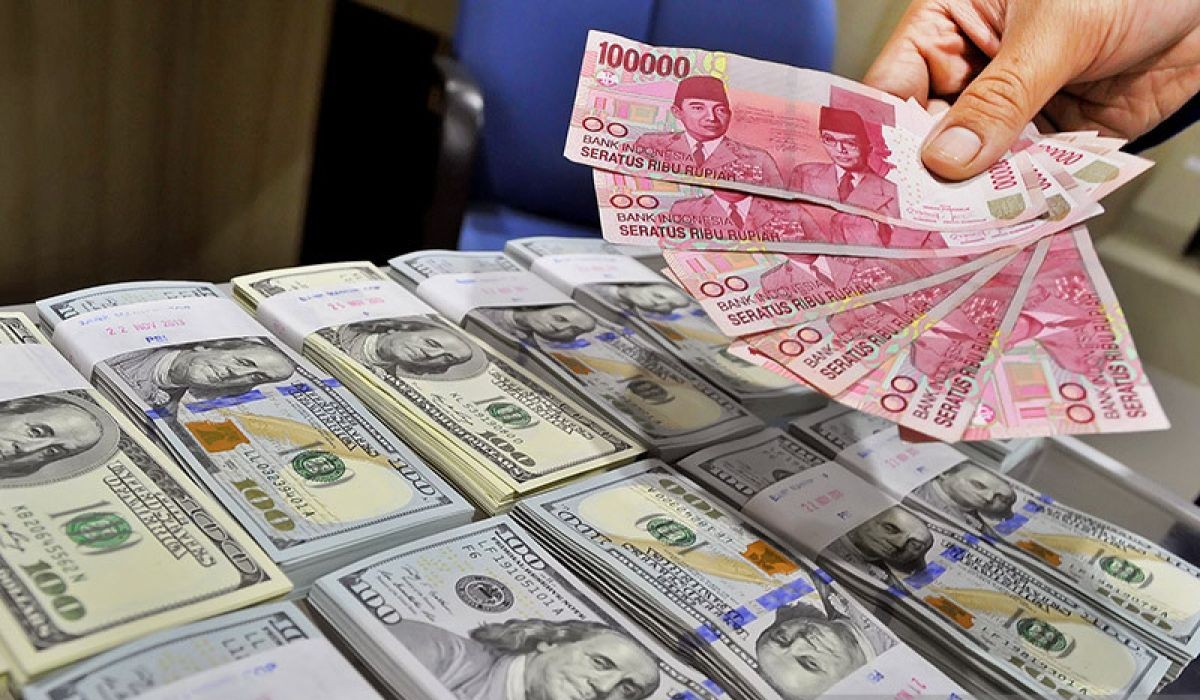
The decline in Indonesia’s foreign exchange reserves since the beginning of 2026 warrants close monitoring. Syafruddin Karimi, an economist from Andalas University, notes that markets are not only observing the total volume of foreign reserves but also the downward trend occurring amidst the weakening Rupiah and corrections in the domestic financial market. According to him, this trend could increase investor risk perception towards Indonesia if it continues without being balanced by improvements in economic fundamentals.
“This trend needs to be watched. Foreign exchange reserves may appear quite large on paper, but they become concerning if they continue to be depleted to support the exchange rate without being accompanied by improvements in exports and other fundamentals,” Sya0adfruddin told Media Indonesia on Monday (8/6).
Syafruddin explained that the general standard used to measure the adequacy of foreign reserves is the ability to finance imports for at least three months. Currently, Indonesia’s foreign reserve position is still considered safe, as it is equivalent to approximately five to six months of imports. He added that the resilience of foreign reserves also depends heavily on the inflow of export proceeds, the repatriation of funds from abroad, and stable portfolio capital flows. “Therefore, the safety limit for foreign reserves should not be read mechanically based solely on the number of months of imports,” he said.
According to Syafruddin, the situation will become more vulnerable if foreign reserves drop towards the four-month import level, while the Rupiah continues to weaken and foreign investors continue to withdraw funds from domestic stock and bond markets. For four consecutive months, Indonesia’s foreign reserves have shrunk. Based on Bank Indonesia data, the foreign reserve position fell from US$154.6 billion in January 2026 to US$144.9 billion at the end of May 2026. Assuming an exchange rate of Rp18,158 per US dollar, the value decreased from approximately Rp2,806.23 trillion to Rp2,631.09 trillion. Cumulatively, foreign reserves decreased by US$9.7 billion, or equivalent to about Rp176.13 trillion, between January and May 2026.
Syafruddin assesses that this trend also has the potential to affect foreign investor confidence. He noted that global investors evaluate Indonesia’s economic resilience based on a combination of indicators, ranging from the Rupiah exchange rate, stock market movements, yields, inflation, and foreign reserves, to the credibility of government policy. The weakening of the Rupiah to the range of Rp18,155 per US dollar and a correction of the Jakarta Composite Index (JCI) by approximately 37% indicate that investors are beginning to increase risk premiums on Indonesian assets. Meanwhile, the increase in the BI Rate reflects a firm monetary response, while the government’s fiscal discipline also strengthens the positive perception of state budget management.
“This condition clearly affects foreign investor confidence,” he emphasised. Nevertheless, investors still require more concrete evidence, including exchange rate stabilisation, sustainable capital inflows, credible fiscal financing, high-quality state spending, and the prospect of strong corporate earnings. He added that if the Rupiah continues to weaken, foreign investors will face exchange rate losses despite increasing yields on Rupiah-denominated assets.
Furthermore, if the JCI continues to decline, investors will become increasingly cautious in assessing economic growth prospects and corporate profit performance. Therefore, the government and Bank Indonesia need to strengthen policy communication, maintain consistency in their measures, and demonstrate that macroeconomic stability is reflected not only in statistical data but also in market responses and confidence. Syafruddin also highlighted that the Rupiah’s weakness and the JCI’s decline occurred while several fundamental indicators still appear quite strong. The Rupiah weakened from around Rp16,670 per US dollar in December 2025 to Rp18,155 per US dollar in June 2026, while the JCI corrected about 37% from its peak. At the same time, the US Dollar Index (DXY) only rose by about 1.74%, the BI Rate has increased to 5.25%, inflation remains low, and foreign reserves are still around US$146.2 billion. He noted that this combination shows market pressure stems not only from global US dollar strength but is also influenced by domestic factors such as foreign exchange demand, capital flows, and investor expectations regarding the national economic outlook. “External resilience cannot be measured solely by the size of foreign reserves,” he explained.