
Fake Identity Breaches UK PM's Inner Circle, Andy Burnham Nearly Trapped
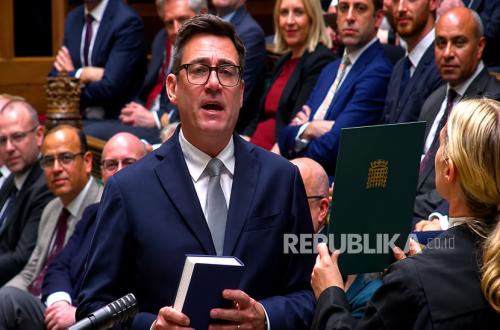
There is no evidence that anyone hacked the phone of UK Prime Minister Andy Burnham. Nor is there evidence that Downing Street’s secret communications systems were breached or that the device of White House Chief of Staff Susie Wiles was compromised in this latest case.
Yet something worrying did happen. An unknown individual made the British prime minister believe, at least for a few messages, that he was communicating with Susie Wiles, one of the most influential officials in the administration of US President Donald Trump.
Burnham eventually became suspicious and stopped the communication. On Tuesday, 18 August 2026, he confirmed himself that the exchange was minimal, produced nothing of consequence, and was reported immediately after he realised there was a problem.
The incident at first glance looks like a simple digital scam. But for a government, the case touches on a very fundamental security question: how can one be sure that the person behind a name, phone number, or messaging account really is who they claim to be?
That question is becoming increasingly important because the UK actually has fairly strict communications security rules for government officials. The National Cyber Security Centre, or NCSC, had even warned several months before the Burnham incident that high-risk individuals could be targeted through impersonation on messaging apps.
Several Messages Before Burnham Became Suspicious
The case was first reported by Politico, citing four officials familiar with the incident. The Associated Press later reported that Burnham thought he was exchanging messages with Wiles before he began to suspect that the person on the other end was not the White House official.
Downing Street confirmed one important detail to ITV News. There was never a telephone conversation between Burnham and the impersonator, while the communication that took place was said to have no significant consequences.
This means the public so far knows the incident as an exchange of messages, not a voice or video call. Downing Street has also not revealed which app or service was used for the communication.
The content of the messages has also not been published. The UK government said it does not comment on national security matters, while Burnham only stated that the exchange of information was very minimal and had no consequences.
That information is important because it limits what can be concluded from this case. There is no factual basis yet to say that British secrets were leaked, and there is no evidence that the impersonator managed to obtain sensitive material from the prime minister.
But the fact that communication took place at all remains a security issue in itself. The impersonator succeeded in passing the first stage required in almost all social engineering attacks: making the target place initial trust in a false identity.
Burnham: I Did the Right Thing
A day after the first reports appeared, Burnham finally answered journalists’ questions directly about the case. He declined to say he felt embarrassed because, according to him, the communication was very brief and produced nothing of significance.
Burnham said he quickly realised the matter needed to be reported and then did so. When asked what action was taken to find out who the impersonator was, he said the appropriate action had been taken in both the UK and the United States.
Burnham’s account shows that the detection and reporting mechanism ultimately worked. But the statement does not explain the stage that occurred before suspicion arose: how Wiles’s identity was initially considered convincing enough to receive a reply from a prime minister.
That question has not been answered publicly by Downing Street. The government also has not explained whether the first contact came directly to Burnham, passed through his staff, or came through another route before reaching the prime minister.