
Fair Burden-Sharing in the Biofuel Policy Framework
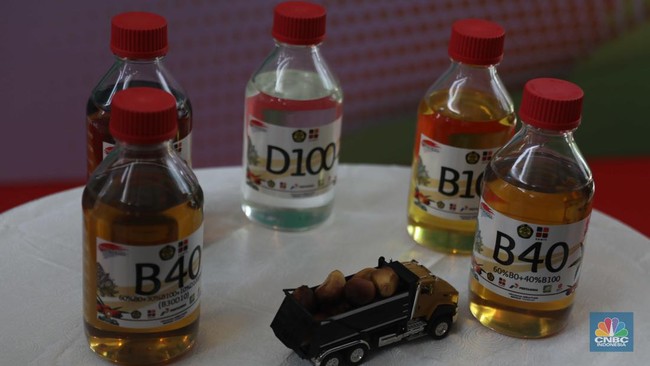
The biofuel mandate is a crucial pillar of Indonesia’s energy transition, energy self-sufficiency and efforts to achieve Net Zero Emissions (NZE). The Government’s progressive policy to increase the share of green energy—from the successful implementation of B35 to plans to accelerate towards B40 and B50, and the launch of bioethanol (E10)—deserves recognition.
Viewed structurally, biofuel policy cannot be treated merely as a straightforward instrument for import substitution. It is a national-scale decision on resource allocation, with far-reaching effects on actual energy security, fiscal stability, food security and people’s purchasing power.
One fundamental issue that is often overlooked is the principle of fair burden-sharing across the supply chain. The current regulatory framework for biofuels tends to place the heaviest operational burdens and financial risks asymmetrically on downstream distributors, including fuel suppliers such as Pertamina and petrol station operators.
Asymmetric logistics burdens and downstream risks
A key governance problem is the spatial disparity and logistics framework, particularly the designation of delivery points. In practice, biofuel delivery points—for products such as FAME used in biodiesel—are often some distance from the blending facilities, refineries or terminal depots owned by distributors.
These disproportionate distances force downstream businesses to bear additional transport costs that should, in principle, be part of producers’ costs. In an archipelagic country such as Indonesia, inter-island distribution can sharply erode margins unless it is governed according to the principle of fairness.
Biofuels, including FAME and bioethanol, require careful handling because they are hygroscopic (they readily absorb water), prone to oxidation and have solvent properties that can corrode certain materials. Meeting increasingly ambitious blending targets requires Pertamina and petrol station operators to make substantial capital expenditure (capex).
They must modify storage tanks, replace pipeline materials, manage tank-cleaning waste and refurbish dispensers at thousands of petrol stations, including those in the 3T (underdeveloped, frontier and outermost) regions.
The current Biofuel Market Index Price (HIP) formula, however, does not fully account for additional “alpha” components that would fairly cover actual handling costs, extra maintenance, product losses and a reasonable return on investment in logistics facilities.
Quality and consumer protection
Another challenge is inconsistent quality at producers’ facilities upstream. As mandatory off-takers under the regulations, downstream distributors are often placed in a difficult position.
On the one hand, rejecting a biofuel cargo that appears, either visually or in initial tests, not to meet specifications (off-spec) risks failure to meet the mandatory quota, which could lead to sanctions and fines. On the other hand, accepting substandard supplies could cause serious damage to storage facilities and lead to widespread damage to end-users’ vehicles.
Automotive industry associations and logistics transport users have repeatedly raised concerns about potentially clogged fuel filters, corrosion in engine injection systems, water accumulating in vehicle tanks and reduced torque due to the unproven oxidation stability of biofuels.
The new biofuel regulatory regime should therefore include a “Right to Reject” clause. Pertamina and petrol station operators should be authorised to reject off-spec biofuel cargoes without having this count as a quota shortfall or incur penalties.
Quality parameters should also be based on tests by independent surveyors at the delivery point, rather than relying solely on the producer’s Certificate of Analysis (CoA) at the factory gate, which does not account for quality deterioration during transport. Compensation for damage to downstream pipelines or mass consumer claims caused by poor-quality products must be traceable and the responsibility of the producer.
Competition for resources, or the “food versus fuel” issue, also requires attention. Accelerating biodiesel blending towards B40 and B50, alongside the E10 bioethanol ambition based on sugar cane, molasses and cassava, will bring the energy sector into direct competition with national food security.
There is a risk of moral hazard and economic incentives upstream: when commodity prices such as crude palm oil (CPO) rise sharply on global markets, producers may naturally prioritise exports to maximise profits rather than supply domestic biofuel plants.
To make the policy more resilient, biofuel regulations should establish a mitigation instrument in the form of an escape mechanism. If the relevant authorities—the Ministry of Agriculture or the Ministry of Trade—declare a domestic feedstock shortage, mandatory blending targets should automatically be suspended or temporarily relaxed.
During such a relaxation period, downstream distributors should be exempt from all legal penalties and administrative fines. To mitigate day-to-day disruption, biofuel producers should also be legally required to maintain buffer stocks at their facilities equivalent to 15 to 30 days of operations, helping absorb fluctuations in harvests.
The energy transition towards self-sufficiency must not be based on the mistaken assumption that downstream businesses have unlimited capacity to absorb inefficiencies in upstream plantation sectors. Accelerating biofuel blending without ensuring viable logistics economics, reliable product quality, healthy cash flow and consumer protection could instead threaten the national energy supply system as a whole.
Indonesia’s biofuel policy will succeed only if regulations take account of the interests of all stakeholders. The Government, smallholder farmers, plantation companies, biofuel producers, downstream distributors and consumers must all be covered by a regulatory framework that applies a rational approach to sharing the burden.
Only by ensuring operational viability and financial fairness from oil palm plantations and sugar cane fields to the petrol station nozzle can Indonesia’s ambition of genuine national energy sovereignty be realised sustainably.
Source: jawawa.id (https://jawawa.id/newsitem/fair-burden-sharing-in-the-biofuel-policy-framework-1794707439)
Originally published by CNBC Indonesia (https://www.cnbcindonesia.com/opini/20261115073717-14-785313/asas-keadilan-beban-dalam-ekosistem-kebijakan-bahan-bakar-nabati--bbn-), translated from Indonesian