
Failing to Win War, Trump Now Attempts to Conquer Iran with Massive Funding
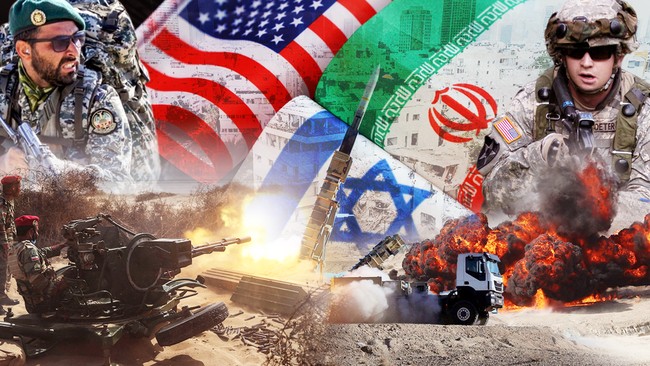
Iran potentially stands to gain access to reconstruction and development funds worth at least US$300 billion, equivalent to approximately Rp 5,332.5 trillion. Additionally, the United States is said to be prepared to reopen access for Iranian oil exports, unfreeze a portion of assets blocked for years, and gradually relax sanctions. In return, Tehran is asked to convince the world that its nuclear programme will not produce nuclear weapons. The latest peace deal between the United States and Iran is essentially built on a single wager: whether economic incentives can deliver the stability that war failed to achieve. If negotiations proceed as planned, the United States will also unblock tens of billions of dollars in Iranian assets, lift various economic sanctions, and help establish a reconstruction and development fund worth at least US$300 billion. In exchange, Iran pledges not to develop nuclear weapons, to reduce the enrichment level of part of its uranium stockpile, and to continue discussions regarding its nuclear programme. In short, economic access is traded for security commitments. What is intriguing, however, is not only what is included in the agreement, but what is left out. The deal contains no regime change, no limits on Iran’s ballistic missile programme, no regulation of support for proxy groups in the region, and no domestic democratisation agenda. This means its scope is far narrower than the various objectives once associated with the war. The focus is not on creating a new Iran. The focus is on reducing the risk of conflict and controlling the nuclear issue. The agreement also places the Strait of Hormuz as a key priority. For global energy markets, this narrow passage is not merely a geographical area; it is one of the most important corridors for world oil trade. Before the conflict, ships could pass without significant hindrance. After the war and lengthy negotiations, the route may indeed reopen, but with rules and additional costs that may never have existed before. Wars can end in weeks. Their economic impact often lasts far longer. The greatest value of this deal does not lie in the US$300 billion figure. The real wager is the assumption underpinning it. Washington appears to believe that access to trade, investment, and economic growth will give Iran more reason to maintain stability than to prolong confrontation. The logic is straightforward: a country with more to defend usually has a greater incentive to avoid conflict. Yet Middle Eastern politics is rarely that simple. For many in Iran, the nuclear programme and regional influence are not merely economic matters. They are also tied to security, strategic positioning, and the country’s political identity. For decades, the West’s primary approach to Iran was dominated by sanctions. Trade access was restricted, investment narrowed, and economic room for manoeuvre squeezed in the hope that Iran’s behaviour would change. This latest deal moves in a different direction. Instead of increasing pressure, the agreement offers access. Instead of raising costs, the new approach tries to enlarge economic benefits. In other words, the deal is built on the belief that economic prosperity can help create political stability. Whether this approach will succeed remains an open question. The region’s history shows that money and security do not always move in the same direction. Peace agreements are often judged by what is signed. But history usually judges them by what happens afterwards. For now, the United States secures a new commitment regarding Iran’s nuclear programme, while Iran gains economic opportunities far greater than in recent years. Both sides obtain something they want. What remains unknown is whether that will be enough to produce lasting stability. Because in the Middle East, as in many other regions, money can buy time. But it cannot always buy certainty.