
Failing to Pray Harms Oneself
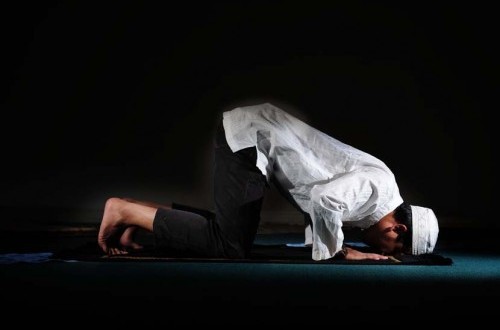
“Establish prayer, for it prevents indecency and immorality” (Quran 29:45)
Neglecting prayer is not merely about omitting the ritual; even those who perform it may still be neglecting it if they miss its essence.
Regarding this, Sunan Kalijaga, a 16th-century Islamic preacher in Java, offered a notable perspective: “uwis shalat ananging durung shalat”, meaning “prayed but not truly prayed”.
Thus, neglecting prayer can be both a formal and substantive issue.
The formal aspects of prayer, beginning with the takbiratul ihram and ending with the salam, must be performed according to the Prophet’s practices. No additions or subtractions are permitted in its conditions, pillars, obligations, methods, or sequence. Therefore, anyone performing obligatory prayer must learn and understand its intricacies.
For one may unknowingly perform prayer incorrectly, thereby neglecting it. Legal scholars assert that prayer is a specific act of worship governed by the principle that all aspects of prayer are prohibited unless explicitly prescribed by the Prophet Muhammad (peace be upon him).
The substance of prayer, as per the aforementioned verse, is to prevent indecency and immorality. Those who pray must strive to avoid reprehensible, rejected, and wrongful acts. There cannot be cases where prayer continues while corruption, deceit, oppression, or theft persist. Such indecent and blameworthy deeds cannot coexist with proper prayer.
Not neglecting prayer means being aware and safeguarding it. Safeguarding prayer entails performing it correctly and devoutly, while maintaining conduct outside prayer that avoids indecency and immorality.
For instance, performing the Fajr prayer may take five minutes, but safeguarding it means avoiding indecent and blameworthy acts from after Fajr until Dhuhr prayer time.
Similarly, performing Dhuhr prayer takes five minutes, but safeguarding it requires avoiding misconduct until Asr prayer time. This pattern continues, meaning that the five daily obligatory prayers should lead to 24 hours of abstaining from indecency and immorality.