
Fahri Hamzah highlights importance of statecraft and AI era governance
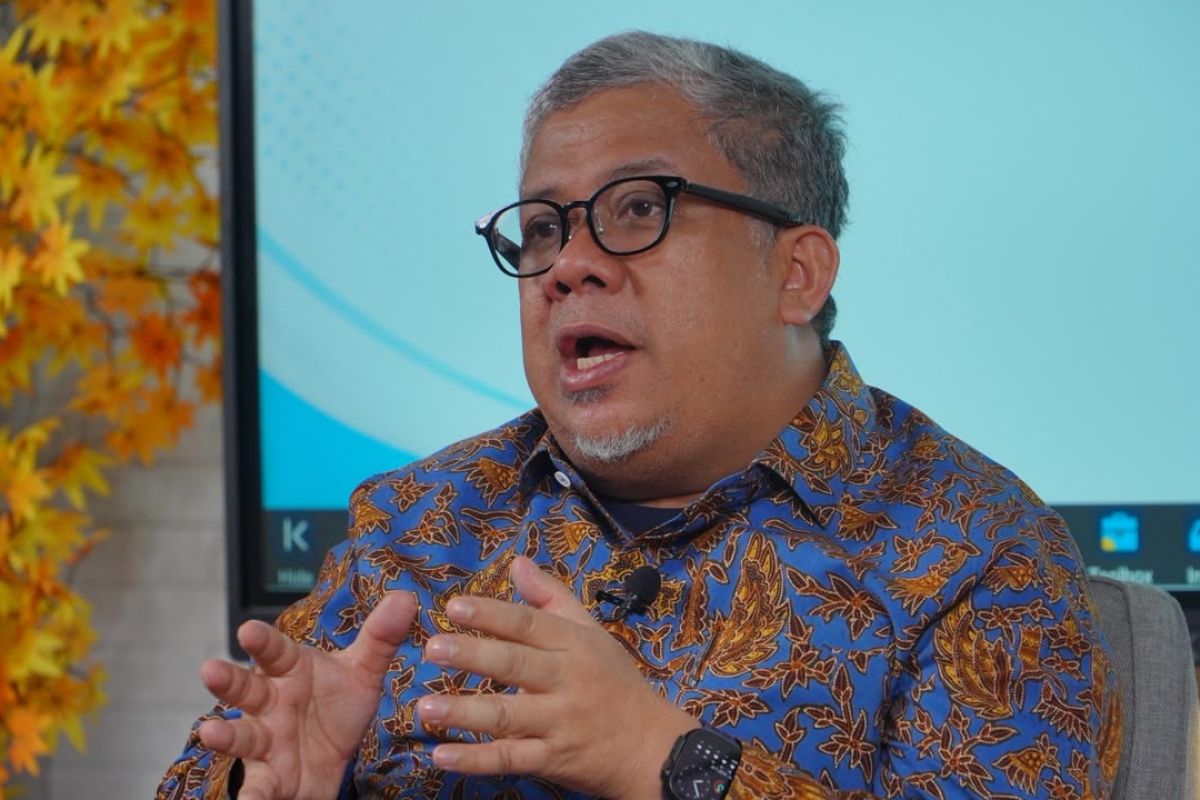
Jakarta (ANTARA) - Deputy Chairman of the Gelora Indonesia Party and Deputy Minister of Housing and Settlement Areas, Fahri Hamzah, has emphasised that state management in the era of digital disruption and artificial intelligence (AI) demands a deep understanding of statecraft, or the art of managing a state, as well as a leadership vision oriented across generations.
Fahri explained that statecraft is a comprehensive skill for a leader to orchestrate all elements of the nation, from the people and territory to the structures of power and government, as this concept is closely linked to the value of statesmanship.
“Politicians only think about the next election, while statesmen think about the next generation,” Fahri said in a written statement in Jakarta on Sunday.
He made the statement during a National Insight Study titled “Understanding Statecraft: Managing the State in the AI Era”.
The former Deputy Speaker of the House of Representatives for the 2014-2019 period reminded elites and state administrators not to become trapped in short-term political pragmatism that is merely oriented towards the accumulation of power, but rather to prioritise a foundation of knowledge and ideas in every decision-making process.
Fahri assessed that the presence of AI is a great opportunity if managed by leadership with high intellectual capacity. However, the use of AI must be directed towards economic improvement, friendly public services, and public welfare, as well as making Indonesia a global power.
“Facing the AI era, easy access to technology must be balanced with human intellectual capacity. AI must be directed to support public welfare, economic improvement, and equitable governance of power,” he said.
Therefore, according to him, a new direction for national leadership is needed that combines knowledge and power to make Indonesia a game changer as well as a new superpower in the era of artificial intelligence.
Fahri stated that with its vast geographical assets, large population, status as the world’s third-largest democracy, and the largest Muslim population in the world, Indonesia has complete modalities to lead on the world stage. However, this potential requires strengthening in the technology, military, and economic sectors, including mastery of artificial intelligence.
“Indonesia must become a game changer that is more deeply involved in global dynamics. We must prepare by building technological, military, and economic strength going forward,” Fahri asserted.
Fahri invited the public not to be pessimistic, and said the public need not worry about the threat of job losses due to AI. According to him, humans are the best creation (ahsanu taqwim) who created the technology, so humans must also control it.
He assessed that AI actually has the potential to free humans from the burden of excessive capitalistic labour exploitation. This is because humans often work too hard, sacrificing time, family, and the environment, but the results are minimal.
Therefore, Fahri predicted that human work patterns will indeed shift in the future, but this does not mean eliminating the role of humans entirely.
“But we must not become slaves to machines; rather, machines must be employed for the benefit of humanity,” he said.
AI, he said, can be used to create justice, care for the earth, and provide wider space for humans to work and prosper life positively.
He stressed that the main key to facing this new era is the continuous improvement of scientific capacity so that humans remain in full control of the direction of technology.
Fahri highlighted the shift of traditional state boundaries in the digital space, where territorial boundaries become blurred because the public is transforming into global citizens. They enter platform ecosystems that are often driven by algorithms that create conflict for the personal, group, or factional benefit of certain parties, based on the spread of incorrect or misleading information.
To fortify the nation from digital polarisation, he encouraged young Indonesians to master high-level technical skills, such as coding and designing local algorithms rooted in communal values, empathy, and mutual cooperation.
In principle, Fahri said, Indonesia has a strong historical foundation that can be used to fortify the nation in the current era of digital disruption. Indonesia’s historical foundation was built over two generations: the first generation (narrative foundation) and the second generation (institutional development foundation).
The first generation, in the era of Soekarno, Muhammad Hatta, Sutan Sjahrir, and Muhammad Natsir, laid the narrative strength, the Pancasila ideology, the 1945 Constitution, and national consolidation. Meanwhile, the second generation carried out the development of state institutions and a bureaucracy that has proven resilient through various political transitions up to the reform era and the 1999 democratic elections in the era of B.J. Habibie.
Nevertheless, Fahri reminded that the key to the state’s success in navigating the disruptions of the digital era lies in the complete integration of power and intellectual capacity.
“Power without knowledge is very dangerous, while knowledge without power becomes weak and helpless. Indonesia’s future requires leaders who act like philosopher kings—possessing effective authority of power as well as wisdom based on knowledge,” he asserted.
Concluding his presentation, Fahri underlined the leadership criteria relevant to facing future disruption, namely the integration of intellectual capacity and authority of power—similar to the concept of a philosopher king.
“Power has only two sides: power and knowledge. Going forward, these two things must not be separated. We do not want people in power without knowledge, or people with knowledge but weak without power. Power without knowledge is very dangerous,” he said.
Source: jawawa.id (https://jawawa.id/newsitem/fahri-hamzah-highlights-importance-of-statecraft-and-ai-era-governance-1787475167)
Originally published by Antara (Indonesian) (https://www.antaranews.com/berita/5707683/fahri-hamzah-soroti-pentingnya-seni-kelola-negara-dan-di-era-ai), translated from Indonesian