
Fahira Idris Urges Investors to Engage in 37 Strategic Jakarta Investment Projects
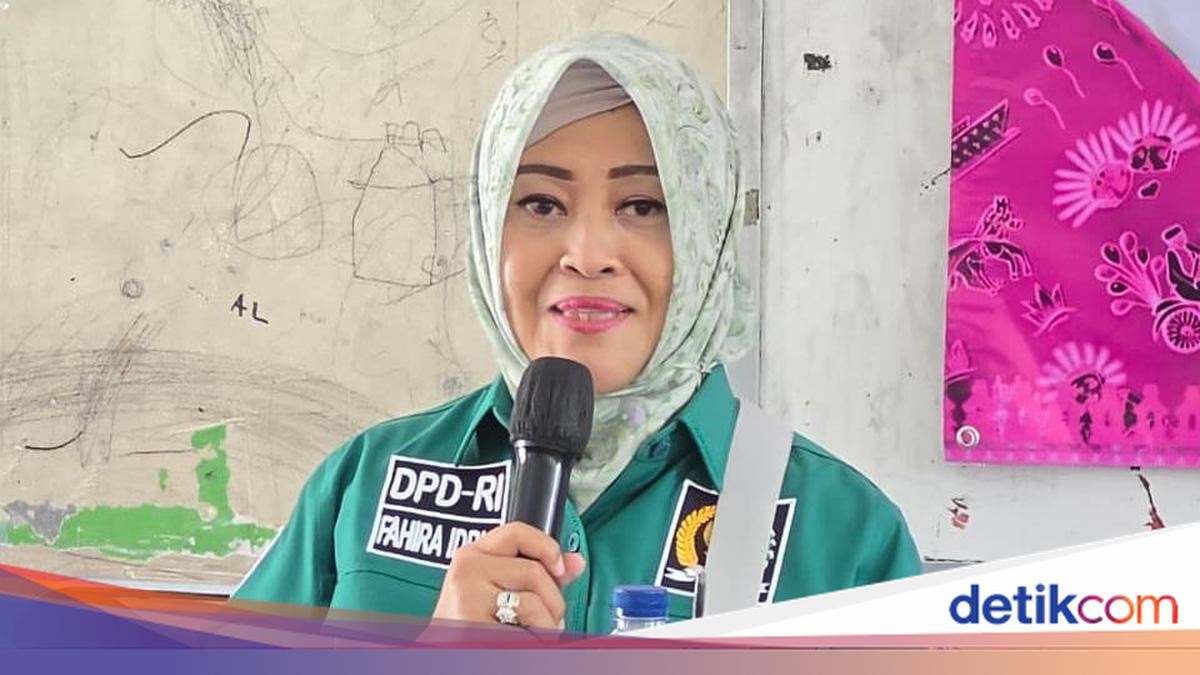
Member of the People’s Consultative Assembly (MPR) from the Regional Representative Council (DPD RI) for the Jakarta electoral district, Fahira Idris, has welcomed the Jakarta provincial government’s move to offer 37 investment projects worth approximately Rp115 trillion to domestic and global investors at the Jakarta Investment Festival (JIF) 2026. According to her, the portfolio presents an opportunity to accelerate Jakarta’s transformation into a global city while strengthening the benefits of development for its residents.
Fahira assessed that the diversity of the projects on offer shows Jakarta is not only seeking investment to expand economic activity, but also opening partnership opportunities to address the city’s various needs. The portfolio includes housing and hospitality, commercial and integrated areas, Transit-Oriented Development (TOD), sports and recreation, industry and logistics, utilities, transport, and waterfront development.
“I appreciate the Jakarta provincial government’s move to open these 37 strategic projects to investors. Jakarta needs quality investment that brings capital as well as technology, expertise, innovation, job creation, and accelerates the improvement of the city’s quality,” Fahira said in her statement on Saturday (29/8/2026).
The Jakarta senator outlined at least five reasons why investor involvement in these projects is strategic for Jakarta’s future.
First, accelerating the physical and service transformation of Jakarta as a global city. She assessed that the presence of TOD projects, transport, housing, wastewater management, waste management, commercial areas, and recreational spaces shows that investment is directed at the city’s various key functions.
According to Fahira, global infrastructure development must always lead to improved livability or quality of life. Investment must make mobility easier, housing more integrated, the environment healthier, and urban services of higher quality.
“The measure of success is not only how much investment value comes in, but how much that investment makes Jakarta more comfortable, connected, productive, and liveable for its residents,” she said.
Second, expanding Jakarta’s development financing sources. According to Fahira, the development needs of a city the size of Jakarta cannot rely solely on the regional budget (APBD). Partnerships with investors through sound and accountable schemes allow strategic development to be accelerated, while regional fiscal capacity can continue to be directed towards education, health, social protection, and other basic services.
However, investment partnerships must be built with transparent governance, proportional risk sharing, legal certainty, and clear public benefits.
Third, creating new growth centres and multiplier effects for the residents’ economy. Fahira assessed that the 37 projects spread across various areas have the potential to drive the construction, services, trade, tourism, logistics, creative economy, and various other supply chain sectors. She therefore urged that investment realisation also open broad opportunities for local workers, MSMEs, cooperatives, creative economy actors, and local suppliers.
Fourth, accelerating transport-based and connectivity-oriented city development. According to Fahira, quite a number of projects in the JIF portfolio are connected to TOD, mass transport, and mixed-use areas.
Fahira said this approach is important because Jakarta’s future will move towards a more compact, connected city that reduces dependence on private vehicles. The development of housing, workplaces, trade centres, public spaces, and city services around transport nodes is considered to increase productivity while strengthening the economic value of the area.
Fifth, strengthening Jakarta’s credibility and competitiveness as a global investment destination. Fahira said Jakarta’s ability to present a concrete project portfolio and connect it directly with investors is an important part of building the city’s credibility.
According to her, global investment is becoming increasingly selective. Jakarta must offer not only the size of its market, but also policy certainty, ease of doing business, infrastructure quality, talent, sustainability, good governance, and projects that are economically viable and provide social benefits.
“Jakarta is approaching its fifth century and entering a new era as a global city. We need investors who see Jakarta not only as a market, but as a long-term partner to build a more advanced, green, inclusive, and competitive city,” Fahira explained.
Fahira also emphasised that Jakarta has strong capital to maintain investor confidence. Economic activity continues to grow, investment realisation keeps moving, transport infrastructure is developing, and Jakarta has a large market and talent pool. JIF 2026 must be utilised to turn these various potentials into real investment realisation.
She also expressed hope that after the promotion and market sounding stages, the Jakarta provincial government will ensure accelerated follow-up through investor assistance, certainty in the licensing process, project readiness, transparency of partnership schemes, and rapid resolution of various investment barriers.
Source: jawawa.id (https://jawawa.id/newsitem/fahira-idris-urges-investors-to-engage-in-37-strategic-jakarta-investment-projects-1788007896)
Originally published by detikcom (https://news.detik.com/berita/d-8639784/fahira-idris-dorong-investor-terlibat-37-proyek-investasi-strategis-jakarta), translated from Indonesian