
Fadli Zon: Soeharto's Leadership Worthy of Study for Today's Generation
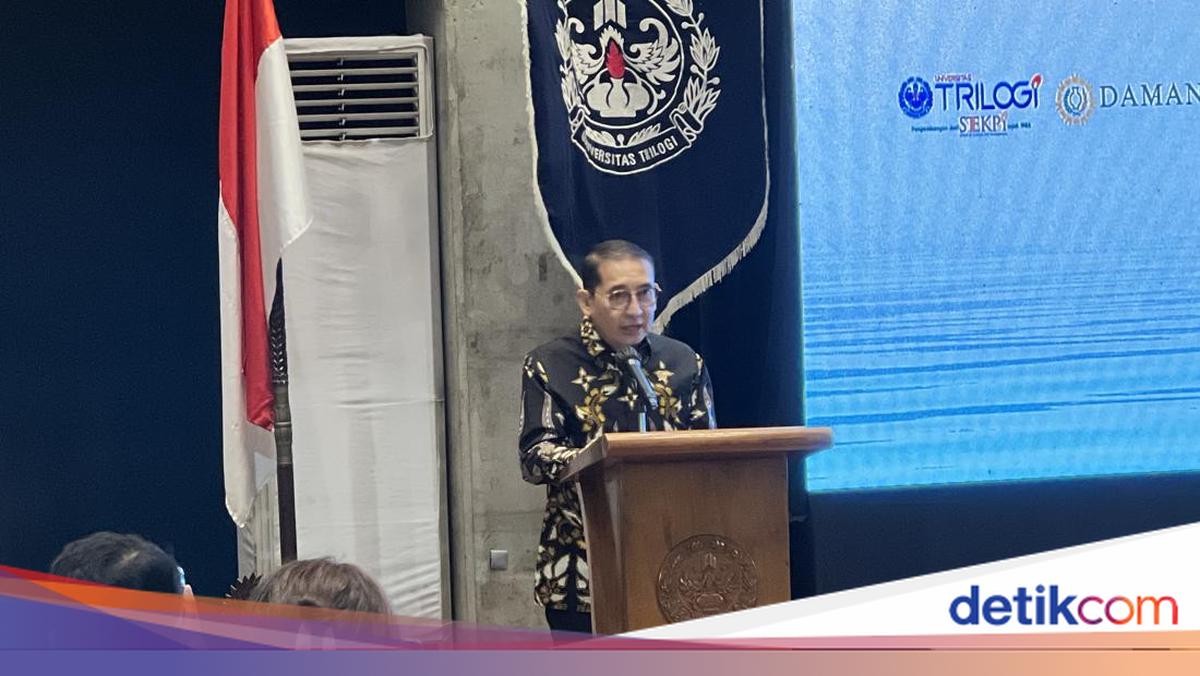
The Minister of Culture, Fadli Zon, stated that the leadership of Indonesia’s second president, Soeharto, is worthy of being studied by the current generation. According to him, Soeharto was a president who closely observed the realities occurring within society.
“I believe that when we discuss Pak Harto’s leadership, there are several characters that are worthy of being learning material for today’s generation. From my perspective, Pak Hartito’s leadership was, first and foremost, grounded in the facts and realities of the people,” said Fadli Zon during his presentation at the National Seminar on the Leadership of General Besar HM Soeharto at Trilogi University, South Jakarta, on Wednesday (24/6/2026).
“Moreover, the facts and realities of society at that time were very chaotic. Pak Harto inherited a very messy situation from the previous regime. The economy was destroyed, inflation was over 600 per cent, growth was negative, and people could not eat,” he added.
Fadli revealed Soeharto’s involvement in several wars to defend independence in the years following Indonesia’s independence. He noted that this experience shaped Soeharto’s decisiveness in decision-making.
“He was decisive in making decisions for the greater interest of the people. This is what I observe, and it has been proven through a long history. For instance, Pak Harto’s physical heroism in the wars to defend independence, particularly during the episodes from 1945 to 1949, was extraordinary. He participated in the Battle of Ambarawa, the Five-Day Battle in Semarang, and the General Offensive of 1 March 1949,” he said.
“As a historian, it is very clear in documents, including testimonies, that Pak Harto played a key role in the General Offensive of 1 March 1949,” he continued.
Fadli Zon also highlighted Soeharto’s role on the international stage, noting that he served as a mediator for conflicts in several neighbouring countries.
“The international achievements that were also mentioned earlier, such as ASEAN, APEC, the Non-Aligned Movement, and acting as a mediator for conflicts in neighbouring countries like the Philippines and Cambodia, such as the Jakarta Informal Meeting at that time,” he said.
Furthermore, Fadli Zon mentioned that several economic policies from the Soeharto era could be emulated today. One such example, he noted, was the food self-sufficiency programme.
“I believe there are many [policies that can be applied]. For example, policies in the agricultural sector successfully led to achieving food self-sufficiency in 1984. We went from facing famine to achieving food self-sufficiency, which was an extraordinary achievement,” he concluded.