
Fadli Zon Discusses 'IMF Trap' and Habibie's Policies, Praises Prabowo's Decision
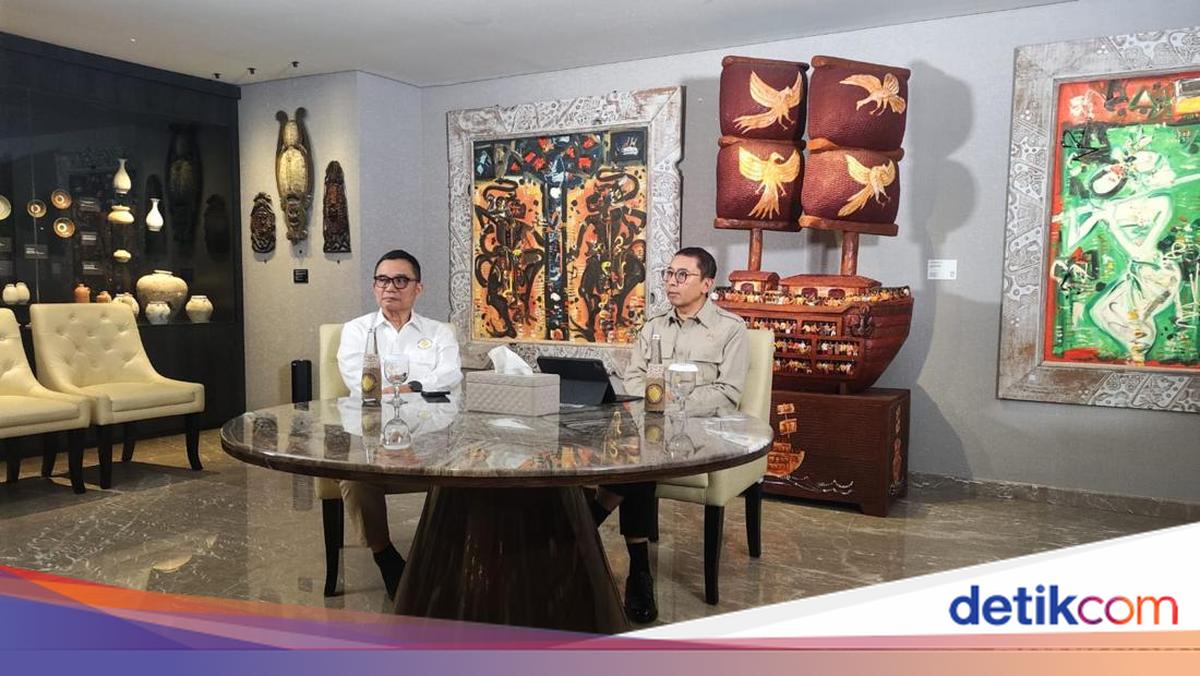
Minister of Culture and Gerindra Party Vice Chairman Fadli Zon discussed the International Monetary Fund’s (IMF) interventionist approach during past rupiah depreciations, highlighting the ‘IMF trap’ and former President BJ Habibie’s efforts to overcome the monetary crisis. Speaking to journalists at the Ministry of Culture in Central Jakarta on Wednesday, Fadli Zon stated that the IMF has always relied on the same playbook. ‘The situation remains the same because it’s the same playbook. The IMF always has the same recipe, a one-size-fits-all approach,’ Fadli said. ‘That one-size-fits-all formula consists of neoliberal prescriptions, privatisation, market liberalisation, free trade, and other fiscal elements, all based on the Washington Consensus crafted by John Williamson in the 1990s.’
Fadli noted that the IMF recently offered a loan to Indonesia amidst the current situation. He praised President Prabowo Subianto’s decision to reject the offer, thereby preventing Indonesia from falling back into the IMF trap. ‘In my opinion, we do not want to accept the IMF’s offer, and that is a very good decision, which I believe came from the President,’ he said. ‘If we were to follow the IMF, we would certainly fall back into the IMF trap, bound by a Letter of Intent that prohibits us from doing this and that. Essentially, the IMF does not want Indonesia to progress.’
He argued that the IMF’s intervention during the 1997-1998 crisis was toxic. ‘The experience of 1997-98 showed that the IMF did not provide medicine but rather poison,’ Fadli said, quoting economist Jeffrey Sachs. ‘Jeffrey Sachs, who is still alive, said that what the IMF did was like pouring petrol on a fire.’
Fadli explained that the depreciation of the rupiah should have been met with debt renegotiation, but this was not possible for Indonesia due to the IMF’s agenda. ‘When the rupiah depreciated, the simple solution—you don’t need to be an economist to know this—was to renegotiate, rollover, and restructure the existing debts. This happened in Korea and Thailand during the 1997-98 crisis, but not in Indonesia,’ he said. ‘The IMF had a different agenda in Indonesia: regime change. That’s why the rupiah was not strengthened but instead deliberately destroyed, with speculators like Soros and his associates entering the market. To weaken the rupiah, it only takes five or six fund managers to do it.’
Fadli added that the IMF demanded Indonesia close 16 banks and halt strategic projects at that time. ‘The goal was to make us a dependent country, forever a developing nation. At that time, we were almost taking off. The World Bank had even declared Indonesia an East Asian Miracle and a Newly Industrialised Country. Our industries were seen as a threat because if Indonesia advanced, other nations with vested interests would be harmed. So, we had to be made obedient and submissive to them.’
He also recounted former President BJ Habibie’s policy of raising interest rates to 70 percent to defend the rupiah, responding to social media criticism comparing President Prabowo and Habibie. ‘To lower the rate, if you recall, many on social media are comparing. Look at what Habibie did: he raised interest rates to 70 percent to keep the rupiah in Indonesia at that time. Do you remember that? Deposits had a 70 percent interest rate per year. That was the highest, I believe, and it was only lowered gradually once the rupiah reached Rp 6,500.’