
Fadli Zon asserts regional autonomy must be rooted in culture
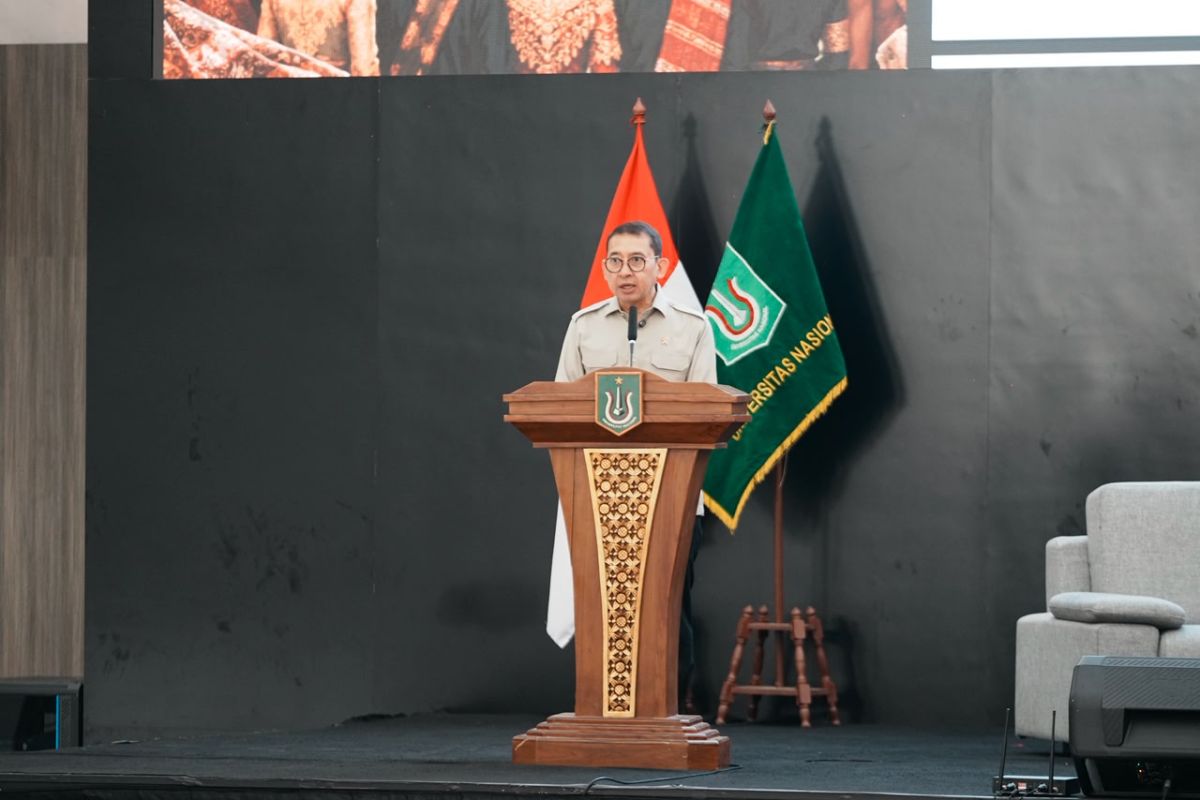
Jakarta (ANTARA) - Minister of Culture Fadli Zon has emphasised that the implementation of regional autonomy must be rooted in culture to ensure that regional development is not severed from the identity, history, and collective memory of the people.
“If every region possesses a different historical origin, cultural landscape, local knowledge, and civilisational experience, then autonomy and regional development must not be uprooted from the collective memory of its people,” said Fadli Zon during the National Seminar on the Urgency of Diversity within the Context of the Cultural Ecosystem in Supporting Regional Autonomy at the National University, in a statement received in Jakarta on Friday.
According to him, regional autonomy has often been trapped in purely administrative and fiscal understandings without involving the cultural dimensions that shape the identity and social dynamics of society. Therefore, he continued, regional autonomy must provide space for the articulation, reproduction, and strengthening of unique local cultures.
On this occasion, Fadli Zon noted that Indonesia possesses immense cultural wealth, comprising 1,340 ethnic groups, 718 local languages, 2,727 intangible cultural heritages, and 743 national-level cultural heritage sites. Indonesia also boasts 16 elements of Intangible Cultural Heritage and six World Heritage sites recognised by UNESCO.
This cultural wealth needs to be positioned as a driver for sustainable development while simultaneously strengthening Indonesia’s position as a civilisation-based nation.
To support this, the government has established five directions for national cultural policy: positioning culture as the foundation of national development, implementing integrated and data-based cultural governance, accelerating the development of the cultural economy, strengthening the protection of cultural heritage, and encouraging digital transformation and international cultural diplomacy.
Fadli Zon also encouraged local governments to utilise the Regional Cultural Main Thoughts (PPKD) as a basis for development planning, strengthen cultural institutions, protect local languages, formulate regulations suited to local character, and develop a sustainable cultural economy.
He emphasised that culture is not a peripheral matter in national development, but rather the foundation that determines the direction and quality of the nation’s civilisation.
“In the context of regional autonomy, the integration of the cultural dimension into all aspects of public policy is not merely an option, but an inevitability that can no longer be delayed,” said Fadli.