
Fading Lustre: Gemstone Traders in Jakarta's 'Surga Batu Akik' Shutter Shops
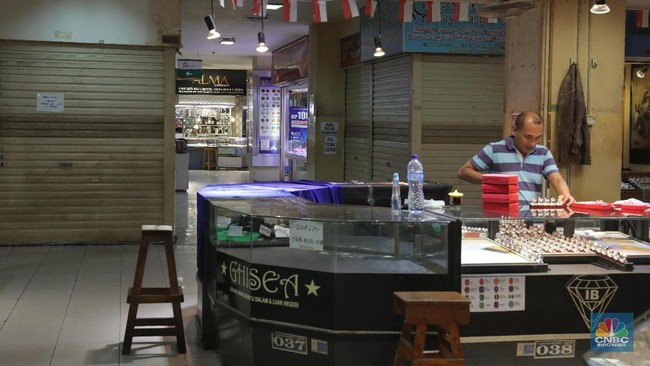
The lustre of gemstones at Pasar Rawa Bening in Jatinegara is now merely a memory. A decade ago, rows of kiosks selling agate and precious stones were packed with buyers and collectors. Unfortunately, the fate of gemstone sellers now appears dire, with stones becoming increasingly difficult to sell optimally. Many sellers have chosen to close their kiosks because they can no longer afford the electricity bills or building rent.
One gemstone trader, Arif, admitted that market conditions have been very quiet recently. He noted that after the Covid-19 pandemic hit, sellers needed five to seven days to sell a stone to a customer. Now, there are times when a stone may not sell at all within a month. The dwindling number of buyers has forced several kiosks to shut down rather than continue incurring losses. “Many have closed because they can’t pay the electricity bill,” he said.
To meet his living needs, Arif has been forced to sell his gemstones at much lower prices. For instance, a stone previously priced at Rp5 million to Rp7 million is now being sold for Rp500,000 due to the pressure to afford basic necessities. “Sometimes, after one or two months, for the sake of eating, we sell items that were priced at Rp5 million. Like it or not, the price has to drop first so we can survive,” he explained.
Fellow kiosk manager Jeje shares the same view, observing that product sales have dropped drastically since the pandemic and have yet to recover. There are periods when Jeje cannot sell even a single gemstone ring. He explained that sellers who can still report daily turnover are considered very fortunate. “If you can still talk about daily turnover, that is already very good in my opinion,” he stated. At his stall, Jeje offers a wide variety of gemstone rings, claiming that 99 per cent of the stone materials originate from Indonesia, such as Java or Sumatra. He prices the rings according to their quality, with better quality commanding higher prices.
Meanwhile, another trader, Sandi Shadewo, said he feels grateful if he manages to sell two or three rings, given the recent decline in public purchasing power for gemstones. Global economic uncertainty has also affected people’s finances, as the rising cost of basic necessities has forced many to curb spending on tertiary products or hobbies. “I am content if I can sell two or three pieces. Sometimes they are Rp200,000, sometimes Rp100,000. Occasionally, if I am lucky, I can get more than a million, maybe Rp1.3 million,” he revealed. Seeing these conditions, he hopes the government, through the Ministry of Tourism, will help introduce this cultural heritage to both local and international tourists in an effort to boost the income of gemstone artisans at Pasar Rawa Bening.