
Facts on Trump's Fury at NATO Giant: Troop Withdrawal Threatens Europe
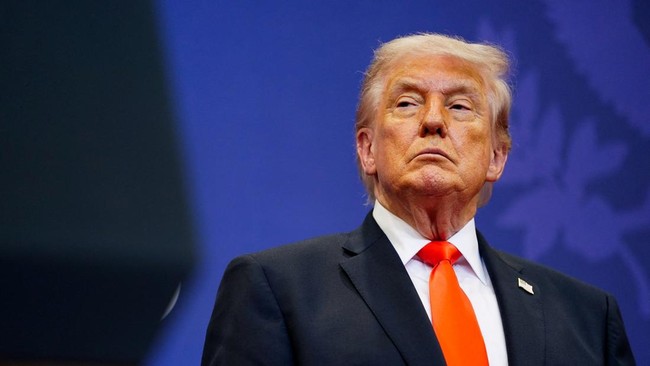
Jakarta, CNBC Indonesia - President Donald Trump is fulfilling his promise to cut US military deployments in Germany, a move that now places Washington’s role in Europe under sharp scrutiny. Citing a report from The Associated Press on Tuesday (5/5/2026), the Pentagon announced it would withdraw 5,000 troops from Germany, but Trump emphasised that he would act “far further” than that number. Typically, there are 80,000 to 100,000 US troops on the European continent, with more than 36,000 of them stationed in Germany. This military presence is a legacy of World War II and the Cold War as a bulwark against Soviet expansion, but its role has since expanded to support operations in the Arctic, Africa, and the Middle East, including the ongoing conflict with Iran. Trump’s decision breaks years of bipartisan consensus supporting security commitments in Europe. Tensions peaked after German Chancellor Friedrich Merz launched sharp criticism last week, stating that the US is being “humiliated” by Iran and accusing Washington of lacking a clear strategy. US Defence Posture in Europe The US European Command (EUCOM), established in 1947, covers about 50 countries and territories. In addition to tens of thousands of personnel in Germany, Italy hosts more than 12,000 troops and the UK has around 10,000 based on Pentagon data. Although the withdrawal plan has been announced, the Pentagon has provided few details on which units or operations will be affected. The US actually increased its troop deployments in Europe after Russia launched a full-scale war against Ukraine four years ago. NATO allies like Germany have suspected for over a year that these additional troops would be the first to leave. Global Role of European Deployments In addition to deterring Russian aggression, the US military presence in Europe helps Washington project power globally due to the shorter distances to other conflict zones. The commander of US and NATO forces in Europe, General Alexus Grynkewich, emphasised the benefits of a strong military footprint on the continent in his testimony before the Senate Armed Services Committee last March. “Having capability and ammunition in Europe allows us to help the US Africa Command target terrorists in Africa, or assist the US Central Command as they carry out Operation Epic Fury (Iran war). The distance is shorter, cheaper, and much easier to project power,” Grynkewich said. Germany currently serves as the headquarters for the US European and Africa Commands, Ramstein Air Base, and the Landstuhl medical centre. Additionally, the US is estimated to station around 100 nuclear bombs at bases in Europe, including Germany, Italy, Belgium, the Netherlands, and Turkey, designed to be delivered via aircraft. Calls to Relocate Troops to the East This withdrawal plan has triggered concerns from Republican leaders in Congress. Senator Roger Wicker from Mississippi and Representative Mike Rogers from Alabama warned that a premature troop reduction would send “the wrong signal to Vladimir Putin.” Wicker and Rogers argued that troops should be relocated to bases in Eastern Europe rather than fully withdrawn, given the significant investments allies have made to host US soldiers. As a result of this decision, the Pentagon has also cancelled plans to deploy a US Army long-range artillery battalion operating ground-launched missile systems to Germany. Trump’s Vision: European Self-Defence In the National Defence Strategy announced last January, the Trump administration emphasised that Europe must do more for its own defence. The document states that while the US remains engaged, the primary priority now shifts to defending the US homeland and deterring China. The strategy notes that Germany’s economic strength far surpasses Russia’s. Trump is also leading the push for NATO allies to raise national defence spending to 5% of GDP, a figure significantly higher than previous targets. Germany’s Efforts to Strengthen Its Military In response to this situation, Germany is beginning to modernise its long-neglected Bundeswehr. Since Russia’s invasion of Ukraine in 2022, Berlin has allocated a special fund of €100 billion or equivalent to US$117 billion (Rp2,018 trillion) for procuring new equipment. The government of Chancellor Merz also plans to increase military personnel to 260,000 from the current approximately 180,000. Defence Minister Boris Pistorius acknowledged that Europe must indeed take greater responsibility for its own security. “Europe must take greater responsibility for its own security. The Bundeswehr is developing, military equipment is being purchased faster, and infrastructure is being developed,” Pistorius told the German news agency, dpa.