
Facts about the devastating floods and landslides in Nepal
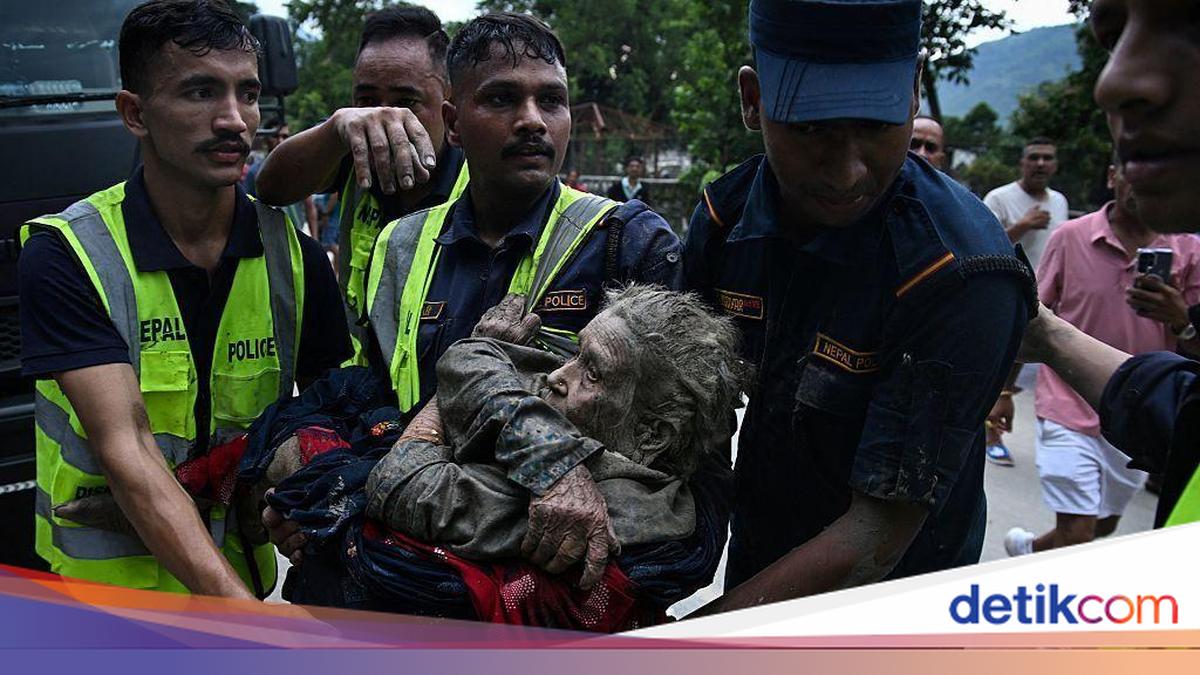
At least 162 people have been reported dead in Nepal as a result of flash floods and landslides that occurred on Wednesday (26/08).
This event is the most devastating disaster in Nepal since the 2015 earthquake, which killed around 9,000 people.
Aerial footage shows widespread damage to homes, roads, and bridges along the Bhotekoshi River in the Rasuwa region of Nepal.
“The entire nation is shocked and deeply saddened,” said Nepal’s Prime Minister, Balendra Shah.
In addition to Tibet, floods and landslides also occurred in Gyirong District, Tibet. The series of events killed at least three people, according to a report by Chinese state television, CCTV.
According to CCTV, at least 558 people are missing in Gyirong. Of that number, 260 are foreign nationals.
The border at Gyirong is a major crossing point for tourists and traffic between China and Nepal.
On Wednesday, state media reported “many casualties” shortly after a landslide occurred at the shared border.
Several downstream districts along the Nepal-China border were affected by the floods and landslides. Local officials said the disaster caused major losses, both in lives and property, but they do not yet have a clear estimate.
A number of homes were submerged in muddy water along the riverbanks in Nuwakot District, Nepal, on Wednesday (26/08). The flash floods also swept away settlements in the area.
Several residential areas in the Rasuwa and Nuwakot districts along the banks of the Bhotekoshi River in Nepal were the worst affected. The area is not densely populated, and its roads serve as a vital main route for Nepal-China trade.
Important infrastructure in the area, such as hydroelectric power plants, highways, and bridges, has been destroyed.
Thousands of tourists from various countries travel through this area to visit Kailash Mansarovar, which is located in Tibet.
Every year during the Janai Purnima festival, hundreds of pilgrims visit Gosaikunda, which is located inside a national park in the region, to worship.
What is known so far about the floods and landslides in Nepal?
‘There was no chance at all to save ourselves’
“My family members were swept away by the flood before my eyes,” said Kalpana Malla, a resident of Nuwakot District, Nepal.
Kalpana said her father, mother, sister, and her sister’s children were all swept away by the flood and landslide.
“They could not escape the flood; there was no chance at all,” she said.
“This flood took everything. My son and I climbed onto the roof of the house and survived, but I cannot explain how we managed to survive,” she said.
Kalpana’s son, Sugam Malla, said he saved his mother by pulling her by the hand.
“Earlier I had given my phone to my sister so she would be safe and could contact people to ask for help. But now she cannot be reached; her phone is off. I am worried she must have been swept away by the flood,” said Sugam.
Another resident, Goma Pandit, lost all her livestock.
“My farmland was also washed away. Ten sacks of mustard seeds, tonnes of maize and rice are all gone. Nothing is left,” she said.
CCTV footage showed people running away as mud and flash floods destroyed buildings in a valley on the Nepal-China border, in Gyirong, Tibet, on Wednesday (26/08).
A Nepali survivor of the event, Keshav Prasad Baral, said the flood at the border between Nepal and Tibet looked like “a huge surge of mud coming straight at us”.
The 68-year-old man is now being treated in hospital. He said the water rose higher and higher before entering his house.
When the event occurred, Keshav tried to reach for his wife’s hand. But his wife was still swept away by the flood and landslide.
“Four or five hours later, a helicopter came to rescue me. My wife is still somewhere under the mud. She is gone,” he said.
Many families are waiting for news at hospitals
Many families are still searching for their missing relatives.
Shreejana Shrestha, a BBC Nepali journalist, visited a hospital in Kathmandu. Some survivors were flown by helicopter to receive treatment at the hospital.
On the other hand, many families gathered outside the hospital. They were hoping to find their loved ones.
Nepali resident Ram Kumari Shrestha is searching for her husband. When the disaster occurred, her husband, who works as a driver, was on his way to Rasuwa District.
Ram has not heard from him since the day before the floods and landslides occurred.
Hundreds of missing victims come from various countries
There are 45 Indonesian citizens domiciled in Kathmandu, Nepal, according to Indonesia’s Ministry of Foreign Affairs. They work in the hospitality sector.
However, as of the publication of this report, the Indonesian Embassy in Dhaka and in Beijing has still not received any reports of Indonesian citizens affected by the floods and landslides.
Indonesian authorities in Dhaka are currently focusing on confirming whether any Indonesian citizens are trekking in the vicinity of Nepal.
“We urge travel agents who send Indonesian citizens to Nepal to immediately provide information on the whereabouts and condition of Indonesian citizens, especially those who are travelling or trekking,” the ministry said in a statement.
The missing people also include 100 Indian citizens, 54 United States citizens, and 33 British citizens, according to Nepal’s tourism board.
Ukraine’s Ministry of Foreign Affairs said 53 of its citizens are currently also at the Nepal-Tibet border.
It said there is no information indicating that Ukrainian citizens are among the dead or injured.
The Australian government stated that a number of its citizens are in the flooded area. However, Australian authorities have not yet confirmed the exact number of their citizens reported missing.
A spokesperson for the tourism board in Nepal said that 24 Canadian citizens have been reported missing.
Testimony of a tour agent who brought tourists to Nepal
Kumar Adhikari, manager of a travel company, received thousands of calls from dozens of families of missing British citizens. The travel agent operates a number of their tours across the Nepal-Tibet border, the Press Association news agency reported.
The travel agent operator told the BBC that they had tried to hire a rescue helicopter. However, the helicopter, they claimed, could not fly due to poor conditions.
The Press Association reported that four Nepali tour guides working for the British travel agency are missing.
Kumar Adhikari said he had contacted the guides when they were expected to be at the Tibetan immigration office. But the phone connection could not be established.
“We hoped they were safe,” Kumar told PA. “But then I received a video from the Chinese government showing that even the Tibetan side was hit by the flood.”
Kumar said he is slowly responding to the many families of tourists who travelled with his company. But he has not yet been able to provide updates, even though he has contacted the British consulate and sent copies of his clients’ passports.
“I feel very sad. We are just thinking about what to do next,” said Kumar.
“At the moment we are grieving, deeply grieving,” he said.
What triggered the floods and landslides?
Whenever a flood like this occurs in the Himalayas, one question that arises spontaneously is: what caused it?
The problem is that there is often no definitive answer that can be obtained instantly. The difficult landscape of the Himalayas, including in Tibet, which some people believe to be the origin of the flood, is almost uninhabited by humans.
Initially, local authorities considered an earthquake to be the triggering factor for the flash floods.
However, the latest analysis from the United States Geological Survey (USGS) shows there was no earthquake in the vicinity of Nepal. The agency said a collapsing glacier and debris flow were the cause of the seismic activity.
“Additional analysis of long-period seismic waves shows that the seismic energy was actually generated by a landslide,” the US Geological Survey said in a statement.
Officials from Nepal’s department of meteorology and hydrology told the BBC that some of the images they saw showed a large block of ice (possibly part of a glacier) had collapsed from a mountain on the Tibetan side. The block carried rocks and other sediment with it.
According to officials at the agency, the debris may have generated a certain volume of water due to friction between the rocks and ice as it fell.
The remnants of the rocks and sediment formed a dam on the Lhende River below, initially blocking its flow but eventually causing the dam to burst.
Previously, there was also suspicion about the collapse of a glacial lake, but several glacier experts rejected that possibility.
The actual reason will be known after clear satellite imagery is obtained and verified by various sources.
Various groups of experts are now piecing together the sequence of events.
Climate change has long been known to have accelerated the melting of glaciers or ice masses in parts of the Himalayas. However, a number of experts consider it still too early to call melting glaciers the main trigger of the floods and landslides.
Why were there so many tourists in the flood-hit area?
The flood-hit areas are Lake Mansarovar near Mount Kailash in Tibet and Lake Gosaikunda in Rasuwa District, Nepal.
These two high-altitude sites are pilgrimage places revered by Hindus, Buddhists, and Jains.
Tens of thousands of tourists travel through Nepal to Lake Mansarovar every year. Late August is the time of year when people, especially Indian tourists, tend to visit Lake Mansarovar, as well as take a holy bath in Lake Gosaikunda.
Pradeep Pandit, Managing Director of Alpine Kailash Trek, said these two areas are on a very popular route. Tourists travel to the area every late August so they can see the full moon, which is considered to bring good fortune.
Nepal receives foreign aid
The World Health Organization (WHO) in Nepal is mobilising and dispatching rescue teams and critical emergency medical supplies, said Tedros Adhanom Ghebreyesus, the head of the agency.
The WHO stated it is “committed to monitoring public health risks”, “strengthening disease surveillance, and ensuring communities can continue to access essential health services.”
India has also sent 10 tonnes of aid to Nepal to help with the emergency response.
“We extend our condolences to the bereaved families and all those affected. In facing this challenge, India stands with Nepal and its people,” said India’s Minister of External Affairs, Subrahmanyam Jaishankar, in a post on X.
Along with the post were photos of aid being loaded onto a plane bound for Nepal.
Source: jawawa.id (https://jawawa.id/newsitem/facts-about-the-devastating-floods-and-landslides-in-nepal-1787813593)
Originally published by detikcom (https://news.detik.com/bbc-world/d-8636418/fakta-fakta-banjir-dahsyat-dan-tanah-longsor-di-nepal), translated from Indonesian