
Facts About Khamenei's Funeral Procession, Learning from the Memory of Khomeini
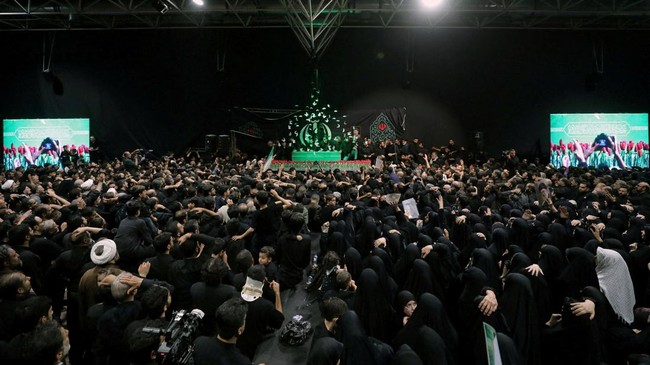
Months after being killed in an airstrike at the start of the war between Iran and the United States and Israel, Iran has finally begun a multi-day state funeral and burial for Supreme Leader Ayatollah Ali Khamenei. The procession is viewed not only as a final tribute to the man who led the Islamic Republic for nearly four decades, but also as a major test of the government’s ability to retain public support amid a still-fragile political and security situation. Khamenei’s body will be paraded through several cities in Iran and into neighbouring Iraq. The government is expected to mobilise state apparatus, civil servants, and paramilitary forces to fill the streets in a show of respect for the late leader. Khamenei, who led Iran for almost 40 years, was killed on 28 February when the US and Israel launched a joint military operation that triggered open war. His funeral was delayed because the conflict was ongoing. The ceremony also serves as a test for Iran’s theocratic government, which has been under severe pressure since the war, particularly as it comes roughly six months after security forces violently suppressed nationwide demonstrations against Khamenei’s rule. The anticipated massive crowds have also raised fears of a deadly crush, evoking memories of the tragedy at the funeral of Iran’s first Supreme Leader, Ayatollah Ruhollah Khomeini, where a crowd surge claimed lives. A temporary ceasefire agreement with the US is believed to have given the government the confidence to hold such a large procession. During the war, Israel reportedly succeeded in killing several high-ranking Iranian officials by exploiting their public appearances. It remains unclear whether the new Supreme Leader, Ayatollah Mojtaba Khamenei, will make his first public appearance during the ceremonies. He is believed to have been wounded in the same attack that killed his father and remains in an undisclosed location. The funeral procession began on Saturday at the Grand Mosalla in Tehran, where Khamenei’s body lay in state until Sunday. On Monday, the body was paraded through the streets of the capital before being taken to the holy city of Qom, about 120 kilometres south of Tehran, a centre of Shia clerical learning. On Tuesday, tributes continued in Qom before the body was transported on Wednesday to Karbala, Iraq, the site of the shrine of Imam Hussein, the grandson of the Prophet Muhammad and a symbol of sacrifice for Shia Muslims. Notably, Wednesday also coincided with the anniversary of the mass demonstrations against Khamenei’s rule that resulted in thousands of deaths at the hands of security forces. After the visit to Iraq, the body was returned to Iran and taken to Mashhad, the country’s second-largest city. The government confirmed that Khamenei will be buried in the shrine complex of Imam Reza in Mashhad. Imam Reza is the eighth imam in Shia tradition, and his shrine is one of the most significant pilgrimage sites in the Shia world, attracting millions of visitors annually. A hadith states that anyone who visits the tomb of Imam Reza with sadness or sin will find peace and forgiveness. Several prominent Shia clerics are buried at the site, including former President Ebrahim Raisi, who died in a helicopter crash in 2024. The funeral procession also revives memories of the chaotic burial of Ayatollah Ruhollah Khomeini on 6 June 1989, when millions of Iranians poured into the streets. The situation descended into pandemonium as mourners swarmed the coffin, causing Khomeini’s white-shrouded body to fall into the crowd. Initial reports indicated at least eight people were killed and around 11,000 injured in the incident. Similar tragedies have occurred more recently, including a stampede at the funeral of Quds Force commander General Qassem Soleimani in 2020, which killed at least 56 people and injured over 2,000. The funeral is taking place as a temporary peace deal between Iran and the US, reached in June, faces significant challenges. The interim agreement provides a 60-day window for both sides to negotiate a permanent resolution to the war, including the future of Iran’s nuclear programme and the status of the Strait of Hormuz. Technical talks began this week in Qatar, but the negotiations are reportedly facing major obstacles due to deep differences between the two sides. Recent exchanges of statements between Washington and Tehran over the future of the Strait of Hormuz further underscore the difficult path toward a lasting peace agreement, even as the temporary ceasefire holds.