
Facts About Khamenei's Funeral Expected to Draw Millions of Mourners
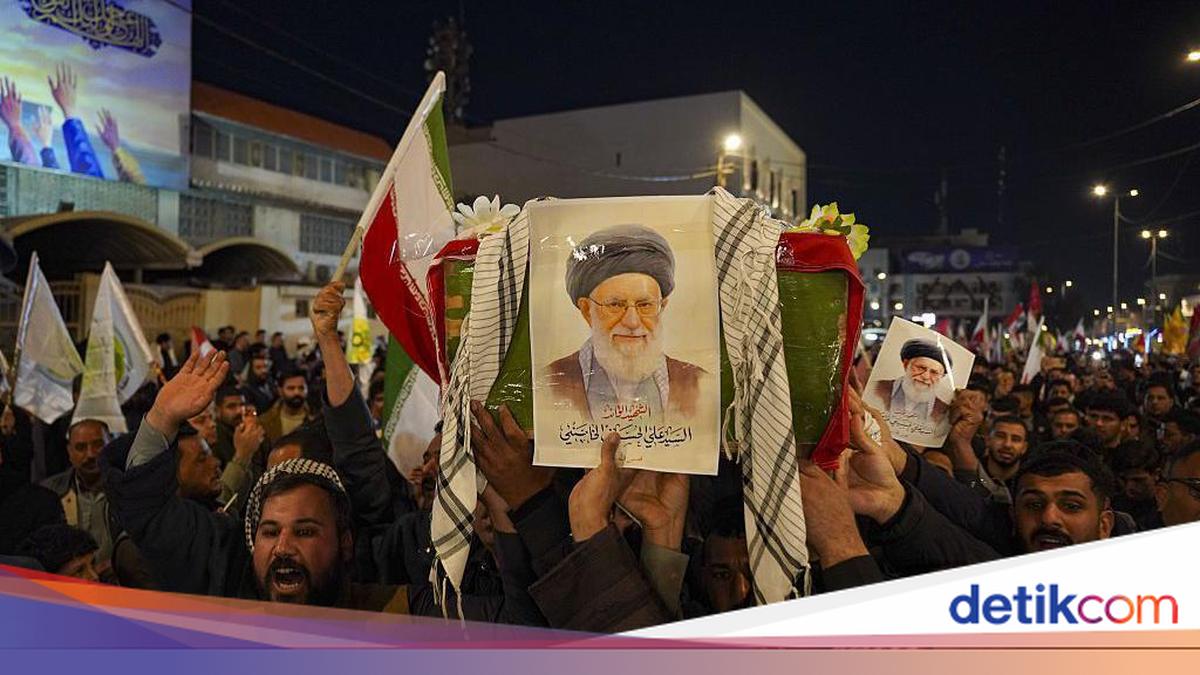
Iran has begun a period of national mourning and a series of funeral processions for its former Supreme Leader, Ayatollah Ali Khamenei. The processions are being held more than four months after Khamenei was killed in an attack launched by the United States and Israel. Authorities have described the event as ‘the funeral of the century’.
The body of the former Supreme Leader is scheduled to lie in state at Tehran’s Grand Mosalla starting Friday (03/07), before being buried in his hometown of Mashhad on Thursday (09/07) next week. An official state funeral ceremony will be held in Tehran on Saturday (04/07).
Officials estimate that between 12 and 20 million mourners will attend the proceedings. The scale of preparations is said to be unprecedented in the history of state ceremonies in Iran, involving the provision of thousands of pilgrim service stations (mawkib), accommodation facilities capable of housing over a million visitors, and specially designed traffic diversions in central Tehran to manage the crowds. To ensure the smooth running of all events, the Tehran-based Mohammad Rasulollah Corps, a key provincial unit of the Islamic Revolutionary Guard Corps, has been deployed to lead security operations.
Authorities have adopted the slogan ‘We must rise’ as the official motto for the funeral, accompanied by a clenched fist symbol. The list of political, religious, and security figures travelling to Tehran is expected to be a major focus, with some analysts suggesting that the absence of certain individuals could be as significant an indicator as the presence of those who attend. Officials have stated that public figures from dozens of countries are expected, including presidents, prime ministers, parliamentary speakers, and ministers. Around 800 foreign journalists are also anticipated to cover the event.
The seven-day series of ceremonies officially began on Friday at the Grand Mosalla in Tehran, where mourners were given the opportunity to pay their final respects until Sunday afternoon. The coffin was placed on a raised platform, with crowd movement routes designed to allow mourners to enter and exit the area within 15 to 20 minutes.
On Tuesday, the proceedings will move to Qom, south of Tehran, where a senior Shia cleric will lead funeral prayers at Jamkaran, one of Iran’s most prominent and symbolic religious sites. The following day, Khamenei’s body will be taken to Najaf, Iraq. After a procession at the shrine of Imam Ali, the first imam in Shia Islam, the ceremonies will continue to Karbala before the body is returned to Iran. Iranian officials stated the Iraq agenda was arranged to fulfil requests from various groups in Iraq, while analysts view it as a move to reaffirm Khamenei’s significant influence in the Shia Muslim world and to showcase Iran’s deep religious and political ties in the region.
On Thursday, Khamenei will be buried in his hometown of Mashhad, within the Imam Reza Shrine Complex. This mausoleum of the eighth Shia imam is Iran’s most important pilgrimage centre, attracting millions of visitors annually. The national mourning period will continue across the country for 40 days, with a series of memorial events planned up to the first anniversary of his death.
The funeral processions are taking place as the Islamic Republic of Iran faces significant political and social challenges. Some analysts view the ceremonies as an opportunity for the state to display unity and reinforce its political narrative, potentially playing a symbolic role in consolidating the post-Khamenei order and rallying support for his successor, his son Mojtaba. However, other observers caution that even large-scale mass mobilisation will not necessarily resolve the country’s deeper political and social divisions.
As preparations were finalised, several crucial questions remained unanswered, including whether Khamenei’s sons, particularly Mojtaba, would attend their father’s funeral. The sons have not been seen in public since last year’s ‘12-Day War’, and uncertainty persists regarding Mojtaba’s health following reports that several family members, including his wife, were killed in an attack on 28 February 2026. The secretary of the organising committee stated on Tuesday, 30 June, that a decision regarding Mojtaba’s attendance would be officially announced by the office of the supreme commander of the armed forces and the relevant authorities.