
Facing Limited Budget, Minister Ara Outlines Strategies for House Construction and Renovation
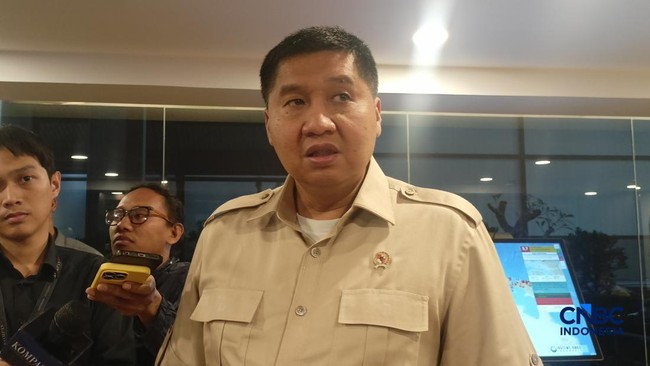
The government is preparing alternative strategies to meet the demand for house construction and renovation amidst budget constraints facing the Ministry of Housing and Residential Areas (PKP) in 2027. One approach involves relying on financing from outside the State Budget (APBN), which is estimated to reach Rp180 trillion.
Minister of PKP Maruarar Sirait stated that his ministry’s budget for 2027 has only been set at Rp11.77 trillion. This figure consists of Rp914 billion for management support programmes and Rp10.85 trillion for housing and residential area programmes.
This amount remains far below the ideal requirement for the Ministry of PKP, which reaches Rp106 trillion. This implies a deficit of approximately Rp94.23 trillion between the actual needs and the budget ceiling available through the APBN. This limitation necessitates that the government seek other sources of financing. One method already being utilised is the Housing People’s Business Credit (KUR Perumahan).
“It is true that our budget in the APBN is Rp11.77 trillion. However, because we are permitted to take creative budgetary steps, an example is the Housing KUR, where we secured Rp50 trillion this year,” Maruarar said during a working meeting with Commission V of the Indonesian House of Representatives (DPR RI) in Jakarta on Thursday (24/9/2026).
Financing through the Housing KUR is not only used for the construction of new houses but also assists the public in renovating existing homes. To date, approximately 87,000 houses are reported to have been renovated using the Housing KUR. Meanwhile, around 18,000 other houses have been purchased or built by utilising this financing scheme.
The government is also relying on the banking sector to expand housing finance capacity. One instrument mentioned is Bank Indonesia’s reduction of the Statutory Reserve Requirement (GWM) from 5% to 4%. This reduction is considered capable of providing additional room for banks to distribute commercial financing, including to the housing sector.
Furthermore, there is a burden-sharing scheme between Bank Indonesia and the Ministry of Finance. This scheme also opens up space to increase the quota for subsidised housing from the previous 220,000 units to 350,000 units.
These various funding sources ensure that support for the housing sector does not depend solely on the budget allocated within the Ministry of PKP’s APBN.
“Budgetary support for the Ministry of Housing from outside the APBN, which we are discussing today, is also quite substantial. In total, I estimate it to be around Rp180 trillion,” said Maruarar.
Source: jawawa.id (https://jawawa.id/newsitem/facing-limited-budget-minister-ara-outlines-strategies-for-house-construction-and-renovation-1790250720)
Originally published by CNBC Indonesia (https://www.cnbcindonesia.com/news/20260924164319-4-770650/dapat-anggaran-minim-ini-senjata-menteri-ara-bangun-dan-bedah-rumah), translated from Indonesian