
Facing El Nino, West Sulawesi Maintains Irrigation and Strengthens Floodgates
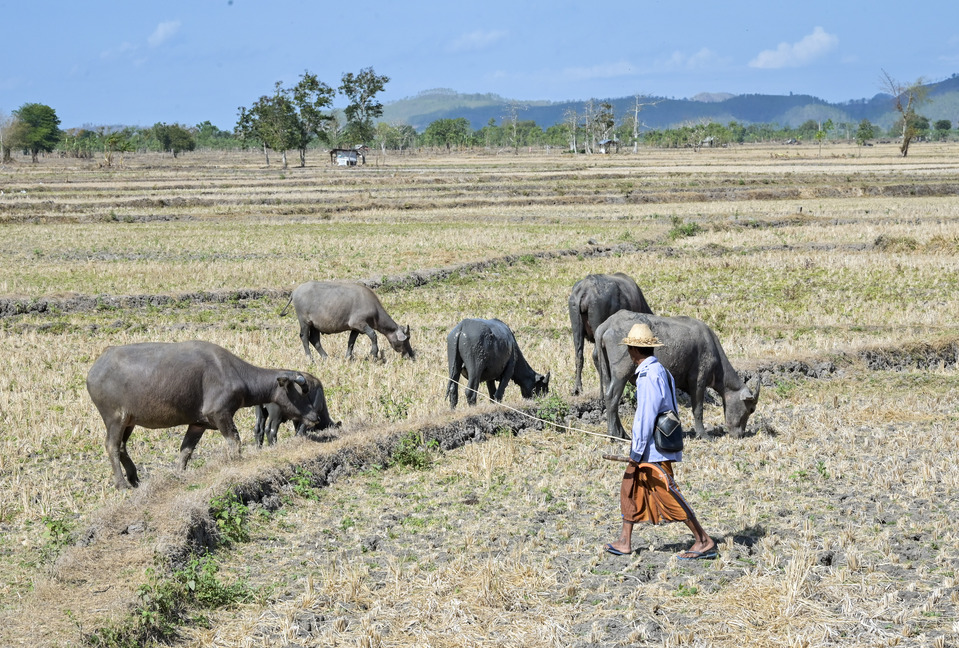
The threat of El Nino, which still looms over several regions in Indonesia, has prompted the West Sulawesi Public Works and Spatial Planning Agency (PUPRD) to move quickly. Through its Water Resources Management Division (PSDA), the agency has prepared a strategy for maintaining irrigation infrastructure and strengthening the operation of floodgates as a main bastion of regional food security.
This move is in line with the vision of West Sulawesi Governor Suhardi Duka, who has made agriculture the backbone of the economy and sustainable infrastructure development the key to public welfare. This commitment emerged during a National Coordination Meeting on Anticipating El Nino and Food Security, where the government warned of potential drought, decreased irrigation water discharge, and disruptions to the planting season that could threaten national food production if not anticipated early.
Head of the PSDA Division at the West Sulawesi PUPRD, Suriana Zain, emphasised that routine maintenance of irrigation channels is the most crucial step. “Sedimentation and weed growth occur every year, obstructing water flow. If left unchecked, the impact will be felt directly by farmers,” she said. The agency has allocated a maintenance budget, with secondary channels costing approximately IDR 1 billion per 700–800 metres and primary channels costing IDR 500 million per kilometre. Although these figures appear large, they are far smaller than the potential losses from crop failure, which could reach billions of rupiah.
West Sulawesi has recorded a proud achievement in cropping intensity, with some irrigation areas reaching an index of 2.5, meaning 2.5 planting seasons per year plus secondary crops. The government’s long-term target is an index of 300, or three planting seasons annually. However, Suriana reminded that this target can only be achieved if water availability and the condition of the irrigation network are maintained optimally.
Beyond infrastructure, human resources pose a serious challenge. Of the 68 water gate operators previously on duty, 21 did not pass the selection for Government Employees with Work Agreements (P3K). As a result, a number of floodgates are now not operating optimally, with some officers forced to supervise two or three gates simultaneously. “This is an emergency condition that needs serious attention,” Suriana stated, noting that floodgate operations are critical for effective water distribution to agricultural land, especially during the predicted long dry season caused by El Nino.
The agency is also evaluating several irrigation areas that have been released from provincial authority in accordance with Minister of Public Works Regulation No. 14/PRT/M/2015, including Tanduk Kalua, Rante Timur, Pana, and Messawa. This evaluation is important to ensure that irrigation management remains effective even though authority has been transferred to district or city governments. Based on past experience, El Nino not only triggers drought but also disrupts agricultural production and causes forest and land fires. Therefore, strengthening water resource infrastructure is a primary focus of national food security. Through sustainable maintenance, strengthened floodgate operations, and cross-sector coordination, the West Sulawesi PUPRD is optimistic it can maintain water availability for farmers. “We are ready to face El Nino with a measured strategy. This is not just about maintaining irrigation, but about protecting the livelihoods of farmers and our collective food security,” Suriana asserted.