
F-47 Mystery: US to Build $1 Billion Complex for Stealth Jet Set to Replace F-22
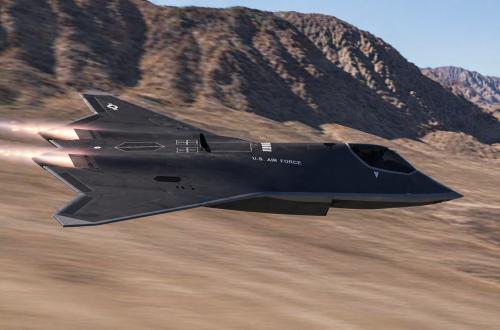
JAKARTA — The United States is preparing a military facilities complex worth more than US$1 billion to support the development and operational testing of the sixth-generation F-47 fighter jet. The facility, to be built at Nellis Air Force Base in Nevada, will include aircraft hangars, combat-systems laboratories, a simulator centre and facilities for maintaining stealth technology, as the Pentagon steps up preparations for the aircraft designed to replace the F-22 Raptor.
The plan was revealed in US Air Force procurement documents published on 22 October 2026 and updated four days later. The documents show that the Pentagon is not only developing a new fighter but also preparing the infrastructure needed to test its capabilities, maintain its systems and integrate future air-warfare technology.
Air & Space Forces Magazine reported on Monday (26 October 2026) that the project, known as the F-47 Future Campus, is expected to cost about US$1.057 billion. The sum covers construction, design, contingency costs, construction security and other supporting expenses required to prepare the F-47 testing complex.
Aviation Week reported on 23 October that the US Air Force wants to accelerate construction through a phased procurement and building approach. The main infrastructure is targeted for completion by March 2031, while several additional facilities are planned to follow by 2032.
The construction is the latest indication of the Pentagon’s commitment to preparing the F-47 for service. Developed by Boeing, the aircraft remains in the engineering and manufacturing development phase. Its first flight is targeted for 2028, with initial operational deployment planned for the 2030s.
However, the US$1 billion complex is not a Boeing factory where F-47s will be assembled. The Nellis facilities are primarily intended to support military operational testing, while Boeing’s aircraft manufacturing takes place at the company’s industrial facilities in the St Louis area of Missouri.
Large hangar and combat-systems laboratory
US government procurement document FA8903-27-OT006 says the initial construction phase will focus on four main groups of facilities. The US Air Force wants the project delivered quickly so that key facilities are available as the F-47 programme enters its next testing phase.
The first is a combined flight operations and maintenance hangar covering about 116,745 square feet (10,846 square metres). It will bring together aircraft accommodation, technical support, maintenance operations and facilities directly connected with flight-line activity.
The hangar is intended to be more than a building in which aircraft are stored when not in use. When testing a new fighter, maintenance facilities are needed to inspect the aircraft, manage configuration changes, support system testing and ensure technical readiness before the next flight.
The second facility is a combat-systems reprogramming laboratory covering about 39,200 square feet (3,642 square metres). It is designed to support avionics maintenance, software updates, information processing and the validation of data used in mission operations.
According to US Air Force budget documents cited by Air Data News, the laboratory will provide space for software engineers, intelligence personnel, security officers, information-technology staff and data managers. It will also have server infrastructure and computing support facilities.
The laboratory highlights the growing dependence of modern fighter development on the management of digital information. Sensors, communications equipment, navigation and mission systems need to be updated and tested so the aircraft can respond to changing threats throughout its service life.
No public details have been provided about the specific software or combat capabilities that will be reprogrammed in the laboratory. Most technical characteristics of the sixth-generation aircraft remain classified by the US government.
The third facility is a simulator centre covering about 40,903 square feet (3,800 square metres). The complex is planned to contain four simulator rooms and an integration area for testing the F-47’s capabilities alongside other military platforms or systems.
Simulators allow a range of mission scenarios to be tested without conducting every activity in actual flight. Personnel can use the technology to study system performance, develop operating procedures and assess interactions between aircraft in virtual environments designed to resemble operational conditions.
The US Air Force is also preparing an aircraft parking apron of about 1.15 million square feet, equivalent to roughly 107,000 square metres. The area, planned for the eastern part of Nellis Air Force Base, will include aircraft sunshades, utility networks and operational support facilities.
The investment of more than US$1 billion is therefore not limited to a single large hangar. The Pentagon is preparing a complex that combines physical infrastructure with facilities for testing and managing digital combat systems.
Specialist facilities for maintaining stealth technology
Later construction phases will include more specialised facilities, including hangars for fuel-system maintenance and corrosion control for stealth coatings. The Pentagon also plans weapons-loading training facilities, an integrated maintenance centre, technician training facilities and personnel support facilities.
One planned building is a low-observable corrosion control hangar, intended to support the maintenance of the aircraft’s low-radar-observability characteristics. Such infrastructure is important because stealth capability depends not only on an aircraft’s shape but also on the condition of particular materials and coatings used on its airframe.
Stealth technology requires specialised maintenance standards to preserve its characteristics in service. Damage to surfaces or radar-absorbing materials may require inspection and repair under prescribed technical procedures.
The planned facility does not, however, reveal the composition of the materials or the design of the stealth coatings that will be used on the F-47. Those details remain among the aircraft’s characteristics that have not been disclosed publicly.
The weapons-loading training facility also reflects the Air Force’s need to prepare procedures for operating weapons from the new platform. During fighter testing, personnel must understand how to handle and install weapons in accordance with the technical design and applicable safety standards.
The construction documents do not establish the types of missiles, number of weapons or payload capacity the F-47 will have. The Pentagon has not disclosed the sixth-generation aircraft’s weapons configuration in detail.
The US Air Force regards the additional facilities as follow-on work, still subject to subsequent procurement decisions and processes. The initial infrastructure is targeted for completion in 2031, while some of the later support facilities are planned to be completed by 2032.
Source: jawawa.id (https://jawawa.id/newsitem/f-47-mystery-us-to-build-1-billion-complex-for-stealth-jet-set-to-replace-f-22-1793170265)
Originally published by Republika (https://news.republika.co.id/berita/tnltwh451/misteri-f47-as-bangun-kompleks-1-miliar-dolar-untuk-jet-siluman-pengganti-f22), translated from Indonesian