
Extreme Weather Disrupts Global Solar Energy Potential
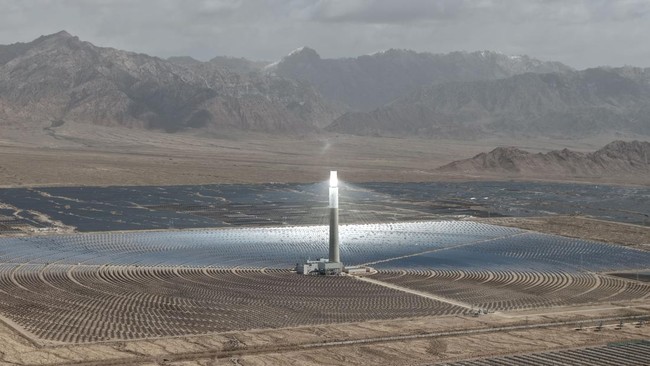
Extreme weather is altering the availability of sunlight in several of the world’s largest solar energy markets. Some regions are receiving solar radiation far above normal conditions, while others are experiencing a decline due to rain and cloud cover.
A report from solar energy data provider Solargis shows these discrepancies occurred throughout June-August 2026. In several locations across Indonesia, Malaysia, and southern parts of the Philippines, solar radiation even exceeded long-term averages by more than 30%.
These findings are particularly significant as Indonesia pursues the development of solar power plants (PLTS) with a capacity of 100 gigawatt-peak (GWp). While increased sunlight offers opportunities for higher electricity production, changing weather patterns also present challenges in maintaining supply reliability.
Shifting Solar Radiation Maps
According to the Solargatis report, southern England, Wales, and Normandy in France recorded solar radiation more than 20% above average. Conversely, several regions in Northern Europe experienced declines of up to 25%.
In India, cloud cover and monsoon rains suppressed solar radiation by up to 20% in several states. Similar declines of over 20% were also observed locally in southern Brazil, northern Argentina, and Uruguay.
These disparities demonstrate that weather changes can have opposing impacts on solar power plants, even within the same period. For investors, as explained in a report by The Japan Times, fluctuations in sunlight availability can cause electricity production to miss projections based on historical patterns. This situation has the potential to affect project revenues and estimated investment returns.
Meanwhile, grid operators must adjust supply as renewable energy production fluctuates. As the contribution of solar power plants to the electricity system grows, the accuracy of production forecasting becomes increasingly vital.
El Niño Could Benefit Solar Power in Certain Regions
The relationship between weather and solar electricity production was also discussed in a study titled ‘Photovoltaic Power Response to El Niño-Southern Oscillation’, published in the journal Communications Earth & Environment. The research utilised re-analysed weather data from 1982-2024 to examine the influence of El Niño and La Niña on solar power production potential.
The results indicate that El Niño can increase the potential for solar power production in Southeast Asia due to reduced cloud cover. More solar radiation can reach the surface and be utilised by solar panels. Higher radiation patterns in parts of Southeast Asia were also visible on the Solargis maps for June-August 2026, particularly in several regions of eastern Indonesia.
The study also found that the increase in solar radiation in these areas could have a greater impact than the negative effect of rising temperatures on panel efficiency. This means that hotter weather must be viewed alongside changes in cloud cover and solar radiation to assess the overall impact on electricity production.
Different impacts were found in several other regions, including California, eastern China, and parts of South America, where El Niño can suppress solar power production potential for several months. The study suggests that weather risks must be assessed based on the specific location of the power plants.
Hydroelectric Power Faces Pressure
Opportunities for solar energy arise even as hydroelectric power plants (PLTA) face the risk of water supply shortages. Quoting Green Central Banking, reduced rainfall due to El Niño can strain reservoir levels in Southeast Asia. Simultaneously, hot weather could increase the demand for electricity for air conditioning.
Pressure on hydroelectric power may persist after the peak of El Niño, as water availability during the dry season depends on reservoir replenishment during the previous rainy season. If this production deficit is covered by coal or gas plants, emission reduction efforts could also be compromised. Diversification of power plants, energy storage, and electricity consumption management are becoming increasingly important to maintain supply.
Challenges to Indonesia’s 100 GWp Target
In Indonesia, the Coordinating Minister for Economic Affairs, Airlangga Hartarto, has urged a revision of the Electricity Supply Business Plan (RUPTL) to accommodate the 100 GWp solar target within two to three years. In a statement on Tuesday (29/9/2026), Airlangga emphasised that solar energy development must be accompanied by battery energy storage systems. The government is also preparing the construction of a 47,758-kilometre transmission network and the development of smart grids to support the use of clean energy.
GWp represents the peak capacity of solar panels under standard testing conditions. The actual amount of electricity generated remains dependent on solar radiation, temperature, equipment conditions, and the grid’s ability to absorb production. Based on these findings, Indonesia’s solar power development needs to incorporate weather variations into site selection and production forecasting. An increase in solar radiation in one season is not sufficient grounds to assume identical production increases throughout the project’s lifespan.
Batteries can help store excess production during the day for use when solar supply decreases. Meanwhile, the distribution of power plants across various regions and the strengthening of the grid can help mitigate the impact of local weather changes. For Indonesia, the opportunity from more abundant sunlight will be most valuable if accompanied by the ability to store, distribute, and balance electricity. These requirements are a crucial part of planning the 100 GWp solar target.