
Extreme Heat! 105 Pakistani Glacial Lakes Melting, Floods Loom
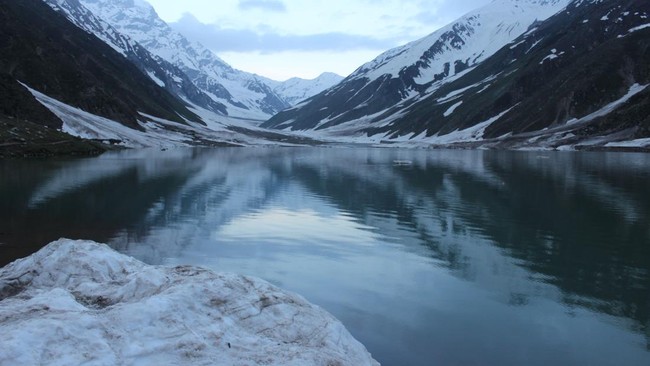
The number of melting glacial lakes in Pakistan has increased sharply in less than two months. The Pakistan Space and Upper Atmosphere Research Commission (Suparco) recorded that the number of these lakes jumped from 40 to 105, based on satellite imagery from July–August 2026.
This increase occurs amidst summer temperatures that are accelerating ice melt in Pakistan’s mountainous regions. However, persistent cloud cover following the July report has made it difficult to accurately measure the extent of change in several lakes.
As glacial lakes expand, the risk of flooding grows. The surge in the number of glacial lakes is a major concern because these lakes can hold vast amounts of water. The risk becomes even higher when the surface area of a lake exceeds its historical maximum.
Such conditions could indicate an increase in water volume and pressure on moraine dams—natural dams formed by accumulations of rock and sediment around glaciers. If these natural dams collapse, water can flow violently into downstream areas, triggering a Glacial Lake Outburst Flood (GLOF).
Suparco noted that 131 lakes fall into the category of Potentially Dangerous Glacial Lakes (PDGLs). Satellite monitoring will continue throughout the melting season to detect lake expansion and signs of increased GLOF risk.
The flood threat is further complicated by the ongoing monsoon season, a period when seasonal wind pattern changes bring heavy rainfall. While the monsoon has already caused widespread damage, the melting glaciers and expanding lakes have the potential to exacerbate flood threats in downstream regions.
Satellite monitoring alone is deemed insufficient and must be supplemented by direct field research. Karamat Ali, a glaciology expert from Karakoram International University, stated that a lack of inter-agency coordination means information regarding glacier shapes, microclimate conditions, and changes in ice mass during summer and winter remains limited.
With more than 13,000 glaciers, Pakistan possesses one of the largest concentrations of glaciers outside the polar regions. According to Ali, several glacier characteristics cannot be verified through satellite imagery alone. Field research is necessary to study glacier conditions, their surroundings, and end moraines—the accumulation of material at the glacier’s edge that can form part of a lake’s natural dam.
Rising temperatures are accelerating glacier melt and potentially expanding lakes, which could trigger flash floods in downstream areas. The impact threatens not only mountain communities but also infrastructure, farmland, and essential services along water flow paths. For Pakistan, the changing glacial lakes serve as an indicator of how rising temperatures in mountainous regions can increase disaster risks for millions dependent on these ecosystems and water sources.
Mohammad Saleem Shaikh, spokesperson for Pakistan’s Ministry of Climate Change and Environmental Coordination, told Dawn following Suparco’s July assessment that rapid temperature rises in the Hindu Kush-Karakoram-Himalaya region are fundamentally altering Pakistan’s cryosphere—the region consisting of ice and snow. This temperature rise accelerates glacier melting and increases the risk of GLOF and other climate-driven disasters.
He noted that while glacier melting initially increases water availability, uncontrolled warming expands unstable glacial lakes that can burst without warning, triggering devastating floods that threaten downstream populations, public infrastructure, farmland, and essential services. “Science has shown very clearly that rising temperatures are changing Pakistan’s mountain ecosystems at an unprecedented speed. Every temperature increase, no matter how small, increases the risk for communities living downstream,” Shaikh told Dawn.
Consequently, he emphasised that the response to these threats must be science-based, supported by technology, and translated into timely action to protect lives, livelihoods, and critical infrastructure.
Pakistan has experienced Glacial Lake Outburst Floods (GLOF) in the past. This disaster is not merely a potential threat but has occurred several times, particularly in Pakistan’s northern mountainous regions. A GLOF occurs when water held in a glacial lake suddenly overflows or the natural dam of ice, rock, and sediment collapses, sending torrents of water, mud, rocks, and debris downstream.
Source: jawawa.id (https://jawawa.id/newsitem/extreme-heat-105-pakistani-glacial-lakes-melting-floods-loom-1790672023)
Originally published by CNBC Indonesia (https://www.cnbcindonesia.com/research/20260929083701-128-771643/suhu-panas-menggila-105-danau-es-pakistan-mencair-banjir-mengintai), translated from Indonesian