
Extreme Drought: MP Urges Data-Driven Water Crisis Management
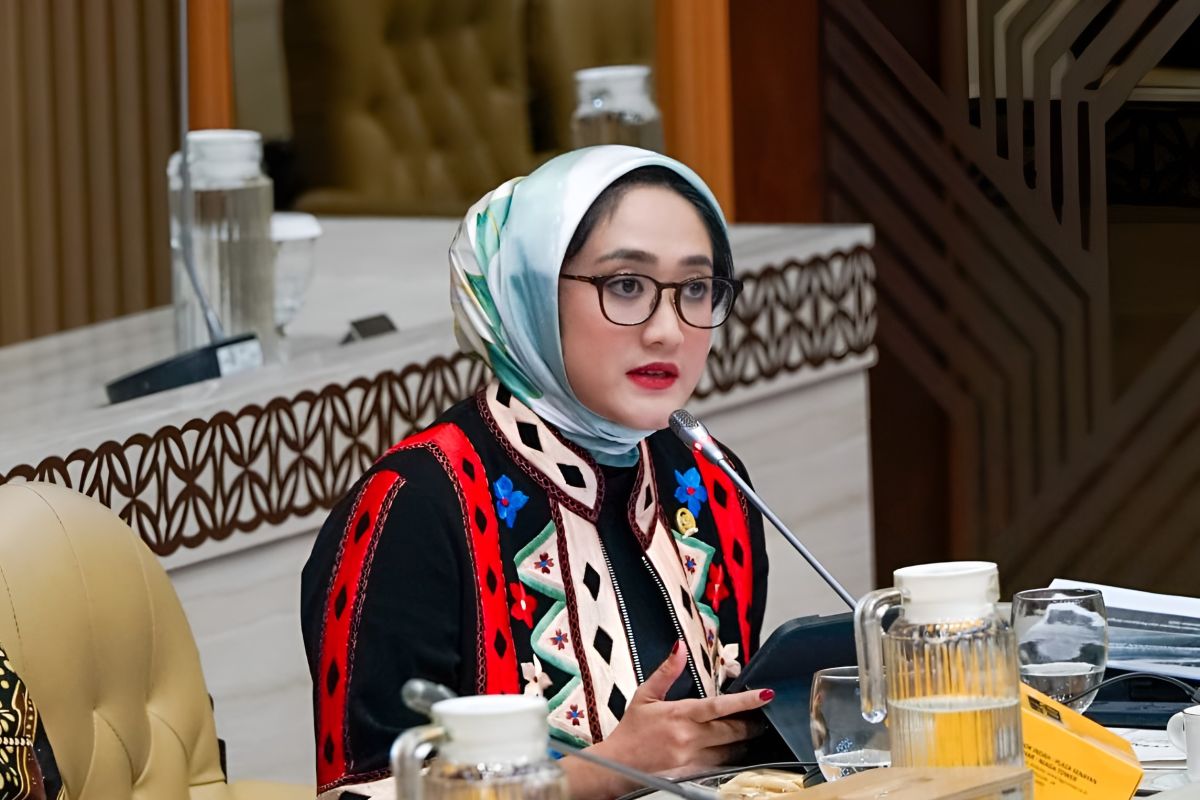
Jakarta (ANTARA) - Rina Saadah, a member of Commission IV of the Indonesian House of Representatives (DPR RI), is urging the government, specifically the Ministry of Agriculture, to address the water crisis in the agricultural sector using accurate field-based data in the face of extreme drought.
In her statement in Jakarta on Tuesday, Rina noted that according to releases from the Meteorology, Climatology, and Geophysics Agency (BMKG), the ENSO index for the third ten-day period of August 2026 indicates that the El Niño phenomenon is at a very strong level.
As a result, monthly rainfall in Java and several rice production centres is expected to plummet below 50 millimetres in September 2026.
Given these conditions, Rina warned that managing the water crisis should not rely solely on the number of pumps distributed, but must be based on actual field conditions.
“In a water crisis, the benchmark is not how many pumps are distributed, but how many hectares of paddy fields are truly saved. Pump placement must be precise, considering water availability, the growth phase of the rice, and the risk of crop failure,” she said.
The legislator from the parliamentary commission overseeing agriculture also reminded the government not to get trapped in short-term solutions.
According to her, the issue of seasonal drought demands fundamental improvements to water infrastructure as a whole, ranging from accelerating the rehabilitation of tertiary irrigation channels and dredging sedimentation in small reservoirs (embung), to the maintenance of water catchment areas and river basins (DAS).
“We need comprehensive management from upstream to downstream, protecting water catchment areas, ensuring irrigation channels are functional, and mapping which paddy fields must be prioritised for rescue,” she added.
Rina also warned that deep groundwater drilling should not be conducted indiscriminately without hydrological studies to prevent long-term environmental damage.
Previously, the Minister of Agriculture, Andi Amran Sulaiman, emphasised that the government has prepared strategies to face land drought caused by the El Niño phenomenon to maintain agricultural productivity.
Amran stated that various strategic steps have been prepared by the government to face drought through irrigation, pumpisation, small reservoirs, and drought-resistant seeds to safeguard national food production.
These strategies involve accelerating the construction and rehabilitation of irrigation networks to ensure the water supply to agricultural land remains stable during the dry season in food production centres.
The government is also expanding the pumpisation programme to assist farmers in obtaining water supplies from the nearest sources, ensuring that planting activities and land productivity continue optimally.