
Extreme Drought Hits Tigaraksa, Tangerang: 700 Families Face Clean Water Crisis
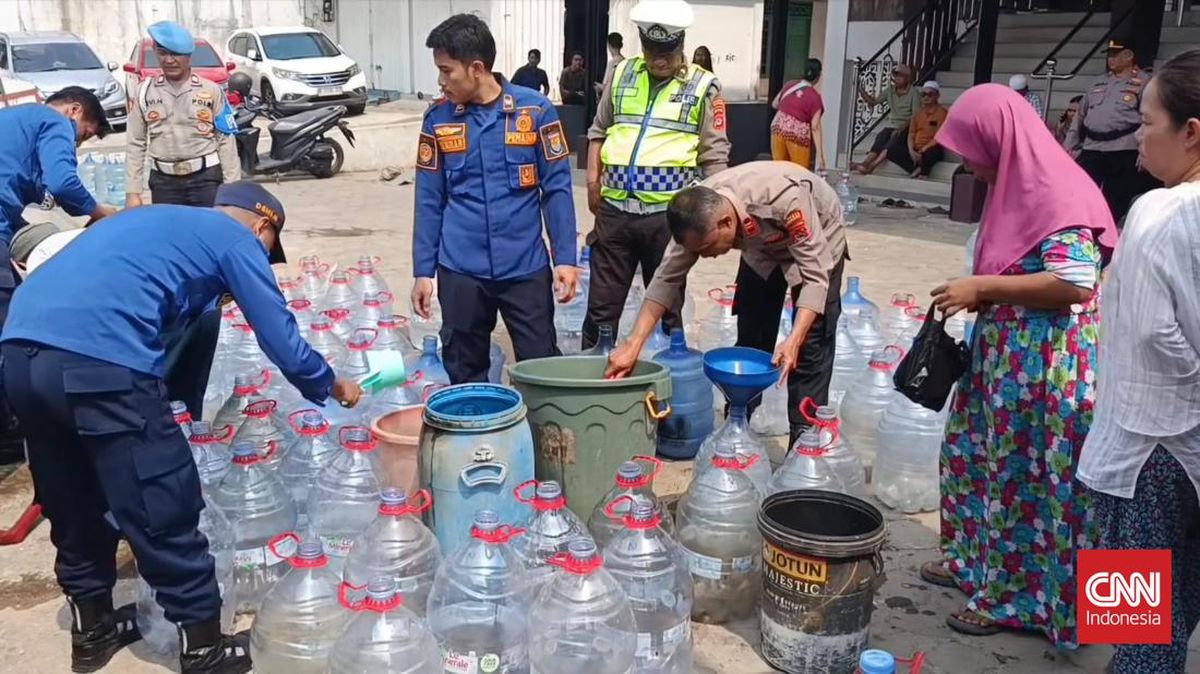
Some 700 households in Tigaraksa District, Tangerang Regency, Banten, are experiencing a clean water crisis as a result of drought triggered by the extreme dry season. The situation has persisted for around two months.
In observations by CNN Indonesia in Pasir Bolang Village, Tigaraksa District, dozens of residents queued to receive clean water aid distributed by the Tangerang Regency Regional Disaster Management Agency (BPBD).
The majority of those who came were housewives carrying water containers and various vessels for storing water.
One resident, Ayi Fatimah, said the dug wells that serve as the community’s water source had begun to dry up, with the water flow steadily declining since the dry season began.
“It’s been two months of drought. There is actually water, but it only comes out in a trickle. If it rains, there’s plenty of water, but since it comes from a dug well, the flow is small,” said Ayi Fatimah, a resident of Pasir Bolang Village, Tigaraksa District, on Tuesday (4/8).
Over the past two months, Ayi said, residents have received clean water aid only once. To meet their daily needs, they have been forced to buy water in gallons, particularly for cooking and drinking.
“We buy gallons of water, three to four gallons a day, costing 15,000 to 20,000 rupiah depending on how much is left. That’s for cooking, drinking, and for washing and sanitation,” she explained.
Meanwhile, the Head of the Tigaraksa Sector Police, AKP I Made Artana, said at least five villages and urban wards in the Tigaraksa District area had been affected by the drought, including Kadu Agung, Margasari, Pasir Bolang, Pasir Nangka, and Cileles. As a result, around 700 households are in need of clean water assistance.
“In Tigaraksa District itself, there are a total of five villages and urban wards affected, with around 700 households needing assistance,” said Made.
He predicted that the extreme dry season could potentially last until October 2026, meaning the need for clean water in a number of areas is expected to increase further.
“Because this is the impact of the prolonged dry season, we are carrying out data collection on affected residents,” he explained.