
Extinct Animals Brought Back to Life, Next Up: Longer Human Lifespans
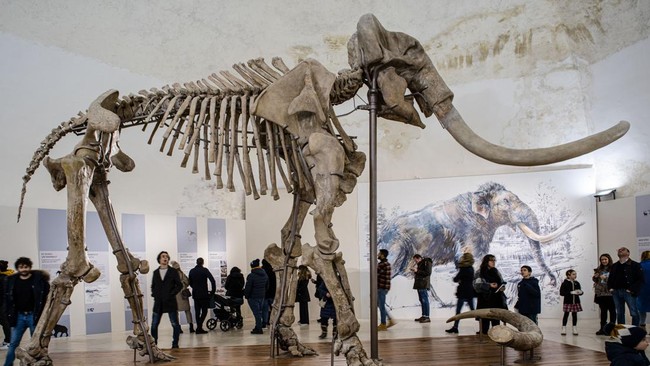
Jakarta, CNBC Indonesia – Imagine an ancient wolf, extinct for more than 12,500 years, walking the Earth again, or a woolly mammoth crossing the frozen Arctic plains. This is no longer science fiction: it is now being done. The aim, it turns out, is not simply to restore biodiversity. The same technology could also extend human lifespans, the company says, as cited on Monday (12 October 2026).
Colossal Biosciences, founded by Ben Lamm, says it has successfully produced three ancient wolf pups named Romulus, Remus and Khaleesi. They were created by reconstructing genomes from thousands-of-years-old fossil DNA and adapting them to living grey wolves. Their surrogate mother was an ordinary domestic dog.
“If it looks like a duck, sounds like a duck and performs the ecological function of a duck, then it is a duck,” Lamm said, explaining the work.
Alongside the ancient wolf, the company is working on projects to bring back the woolly mammoth, the dodo, the thylacine and the giant moa. If plans proceed as expected, a woolly mammoth could be born in the 2030s.
The technology developed to bring extinct animals back could have much wider implications for humans. Research into why elephants almost never develop cancer could be applied to cancer prevention and treatment in people. DNA-editing techniques developed for the projects could also be used to treat hereditary diseases and genetic disorders.
Successfully “bringing back” the woolly mammoth could affect soil density in the Arctic, reducing carbon emissions and converting heat-absorbing forests into grasslands.
The same techniques could also use synthetic DNA to revive crop varieties that grow faster and withstand extreme climates. Finally, knowledge of the genetics and natural immunity of different species could help people respond more quickly when a pandemic emerges.
Many have compared the project with the film Jurassic Park. Lamm said the comparison was appealing, but stressed that there was a fundamental difference.
“The film had no conservation model or benefits for humans. We are doing this because the world is losing biodiversity on a massive scale – it is estimated that half of all species will disappear over the next 25 years. We need tools to save what remains and restore what has been lost,” he explained.
The potential has made Colossal highly attractive to investors. The company has raised more than US$435 million (around Rp6.5 trillion) and is valued at US$10.2 billion (around Rp154 trillion).
Notably, 30% of investors said they had taken part at the urging of their children, who were interested in science. In other words, bringing back the past is not merely about repeating history, but about creating technology that could help save the future.
Source: jawawa.id (https://jawawa.id/newsitem/extinct-animals-brought-back-to-life-next-up-longer-human-lifespans-1791899484)
Originally published by CNBC Indonesia (https://www.cnbcindonesia.com/tech/20261012133229-37-775346/hewan-punah-hidup-lagi-berikutnya-umur-manusia-makin-panjang), translated from Indonesian