
Extending the berth to optimise port services
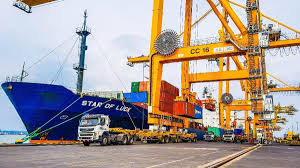
Indonesia’s economy grew by 5.61% in the first quarter of 2026, but this expansion has not broadly translated into the real sector. In fact, several port service providers report slower and more expensive operations, with performance at major ports deteriorating due to sub‑optimal or worn equipment. Productivity has fallen, elongating the time required for vessel berthing and unloading, ultimately leading to queues at berths.
At Tanjung Perak Port in Surabaya, the average berthing wait for vessels at the Berli an Container Terminal (TPK Berlian) has reached 30 hours. This is driven by demand for container handling services that exceeds current capacity. Wahyu Jatmiko, Senior Manager of Legal and Public Relations for PT Pelabuhan Indonesia (Persero) Regional 3, acknowledged that Berlian’s terminal capacity remains well below demand. “There are still berthing delays at TPK Berlian with an average time of 30 hours. The terminal’s capacity can only serve 53 calls per week, while demand has surged to 70 calls per week,” he said.
Conditions at Semarang’s Tanjung Emas Port are no different. In the run‑up to and after Eid al‑Fitr 2026, vessel queues at the anchorage reached as many as nine ships simultaneously, with waiting times of 4–6 days. The Yard Occupancy Ratio (YOR) at the terminal rose to 90%, far above the safe limit of 65%.
Not only is there a surge in volume, but the market’s non‑competitive structure is exacerbating the situation. H. Sunarno HS, acting Director of Operations for PT Pelayaran Tresnamuda Sejati (agent for Wanhai), described how few choices there are in Semarang compared with other ports. “In Semarang, there is only one container terminal; there is no competitor. If you compare to Tanjung Priok, there are many options: NPCT One, TPK Koja, JICT, EMA. In Surabaya there are TPS and Teluk Lamong. But in Semarang there is none,” Sunarno said.
This lack of competition makes service improvements hard to drive organically. The sole operating terminal lacks competitive pressure to upgrade.
Teguh Arif Handoko, Chairman of ALFI’s Central Java Provincial Council, assessed that emergency measures such as diverting containers to the second line and inspecting red lanes with Customs on Saturdays are only patching short‑term problems. “This year volumes will rise by at least 10% more, to around 1.1–1.2 million TEUs. The Central Java industrial zone is currently producing only 30% of full capacity. Once full, volumes will be much higher,” he said.
He urged rapid infrastructure expansion, not merely repairs. Extending the berth from 600 metres to 1,000 metres should be undertaken immediately. Four new QCC Panamax cranes that have arrived should be commissioned as planned, around June 2026, after testing.
When ships sit at anchorage for days, engines keep running and fuel is wasted. The fuel costs incurred during queues erode shippers’ margins. Add to that the need for increased land transport as routes are diverted.
H. Sunarno HS outlined the cascading costs of the delays: “The costs are immeasurable. Ships bound for Jakarta, Surabaya, Semarang, if they have to wait, the entire route schedule is disrupted. Shipping costs are calculated in dollars. We also receive many complaints from cargo owners. Raw materials wait at factories. The losses are double—the losses and the complaints.”
The impact does not end at sea. Exporters in Kendal’s Industrial Zone have begun diverting shipments to Tanjung Priok or Tanjung Perak to avoid congestion in Semarang, though this solution is costly. “Why would we send to Surabaya or Jakarta when a lorry fare is already around Rp 8 million? That adds to their logistics costs,” said Teguh Arif Handoko.
There are early signs of improvement. Ade Siti Muksodah, head of GPEI in Central Java, says YOR has fallen to about 60% and line two has returned to operation. However, she emphasises that continuous monitoring remains essential as Central Java’s export‑import volumes continue to grow. (H‑2)
PT Kaltim Kariangau Terminal (KKT) held a Table Top Exercise ISPS Code 2026 to mitigate sabotage risks and strengthen maritime security in Balikpapan.
Among the cross‑border shipping developments, fast ferries also pose challenges.
Imports of cattle arriving at Tanjung Priok Port by April 2026 reached 2,500 head, up from the same period the previous year.
The importance of standby support vessels, such as tugboats, to rapidly alleviate bottlenecks in marine traffic is underscored.
Iran has warned that no port will be safe in the Gulf and the Sea of Oman following the US blockade of Iranian vessel access via the Strait of Hormuz, potentially triggering a fresh escalation.
Copyright @ 2026 Media Group - mediaindonesia. All Rights Reserved