
Exports Predicted to Rise, Yet Indonesia Remains Underconnected to Global Markets
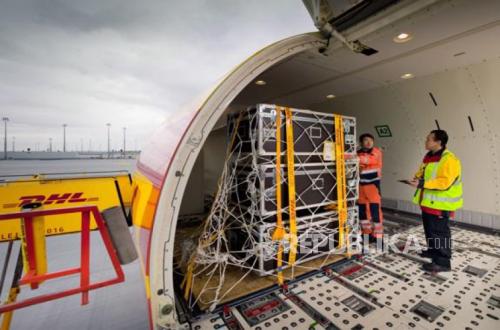
Indonesia’s trade is expected to grow rapidly over the next five years. However, its level of connectivity with the rest of the world still lags behind. Logistics will determine whether this projection truly translates into an expansion of exports.
Indonesia’s trade prospects are bright. In the next five years, Indonesia is expected to be one of the countries with the fastest trade growth in the world. However, another figure reveals a significant homework task: Indonesia still ranks 112th in the global connectivity index.
This picture is evident in two DHL reports. The Trade Atlas 2025 places Indonesia, alongside India, Vietnam, and the Philippines, among the top 30 countries based on growth speed and additional trade volume for the 2024-2029 period. Meanwhile, the Global Connectedness Report 2026 notes that Indonesia ranks 112th out of 180 countries with a connectivity score of 47.
Indonesian trade is expected to grow. The question is, will this growth truly make Indonesia more connected to the global market?
Comfortable with the Domestic Market
The large domestic market has long been one of Indonesia’s economic strengths. Producers have room to grow without having to immediately seek buyers abroad. When global demand weakens, domestic consumption can serve as a buffer.
However, a large market can reduce the drive to expand outward. Selling products between cities feels easier than managing international shipments. Exporters must understand the requirements of destination countries, calculate costs, prepare documents, and ensure goods arrive on schedule.
This condition is not unique to Indonesia. Globally, only about 21 per cent of the value of produced goods and services ends up outside their country of origin. Most economic activity still takes place within domestic markets.
Therefore, connectivity rankings do not merely indicate the size of export value. The index measures how deeply trade, capital, information, and human flows cross national borders relative to the size of each economy.
Indonesia has a large economy. To become more connected, export growth needs to involve more companies, reach more markets, and occur consistently.
Opportunities are Shifting to Asia
Momentum is building in the region. During the 2024-2029 period, ASEAN trade volume is expected to grow by an average of 5 per cent per year. Indonesia sits in the middle of a region that is becoming increasingly important to global production and trade networks.
These opportunities do not only come from commodities. Manufacturing, consumer products, creative industries, processed foods, components, and technology-based products all have the potential to reach wider markets.
These opportunities also need to reach production centres outside the main economic hubs. For producers located near ports, airports, or industrial estates, access to international networks is relatively easier. In other areas, the journey to export gateways can be longer and more expensive. Global connectivity, therefore, is also determined by the strength or weakness of domestic logistics links.
The problem is that competitive goods are not necessarily easy to move out of their country of origin. After an order is received, exporters must still transport products from the production site to international shipping networks. Costs, punctuality, documentation, and the ability to track shipments all determine whether a transaction can be completed.
This is the point where logistics affects competitiveness. Overseas buyers do not only assess product quality. They also look at whether suppliers can meet requested volumes, ship according to schedule, and provide certainty when obstacles arise.
Senior Technical Advisor at DHL Express Indonesia, Ahmad Mohamad, stated that industry needs change as businesses become more connected to the global market.
Source: jawawa.id (https://jawawa.id/newsitem/exports-predicted-to-rise-yet-indonesia-remains-underconnected-to-global-markets-1789962922)
Originally published by Republika (https://ekonomi.republika.co.id/berita/tlp0wa291/ekspor-diprediksi-meningkat-indonesia-disebut-masih-kurang-terhubung-dengan-pasar-global), translated from Indonesian