
Exploring the Transformation of the Insurance Ecosystem: From Regulation to Service Models
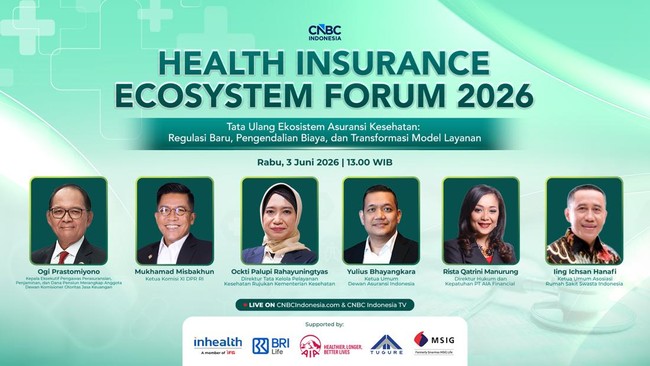
Uncontrolled medical inflation is beginning to erode the resilience of the health insurance system in Indonesia, sparking concerns regarding the sustainability of current business models. This comes at a time when public awareness of health insurance continues to rise amidst global uncertainty.
Data indicates that medical cost inflation in Indonesia is expected to reach approximately 13.6% in 2025, surpassing general inflation. This figure places Indonesia at the highest position in the Asian region, followed by Thailand at 13.1%, Malaysia at 12.5%, and Singapore at 11.5%.
Unlike other nations, Indonesia faces additional pressures, including low insurance penetration and a high reliance on out-of-pocket expenses, which currently stand at around 33%. According to the Financial Services Authority (OJK), these out-of-pocket costs have reached Rp175 trillion, indicating that the rise in healthcare costs is being felt directly by the public.
The surge in medical costs has a direct impact on the profitability of the insurance industry. The health insurance claim ratio in Indonesia is recorded at approximately 86%, with the combined ratio exceeding 100%. This condition signifies that the premiums collected are almost entirely exhausted by claim payments. In several instances, companies have incurred losses and decided to terminate their health insurance business lines.
To respond to these dynamics, the OJK, acting as the regulator, has issued POJK No. 36 of 2025. This regulation aims to restructure and strengthen the health insurance ecosystem through improved risk management, the application of co-payments, the implementation of utilisation review mechanisms, and the strengthening of consumer protection.