
Exploring the Thousand Islands Aboard a Jakarta Transport Agency Boat
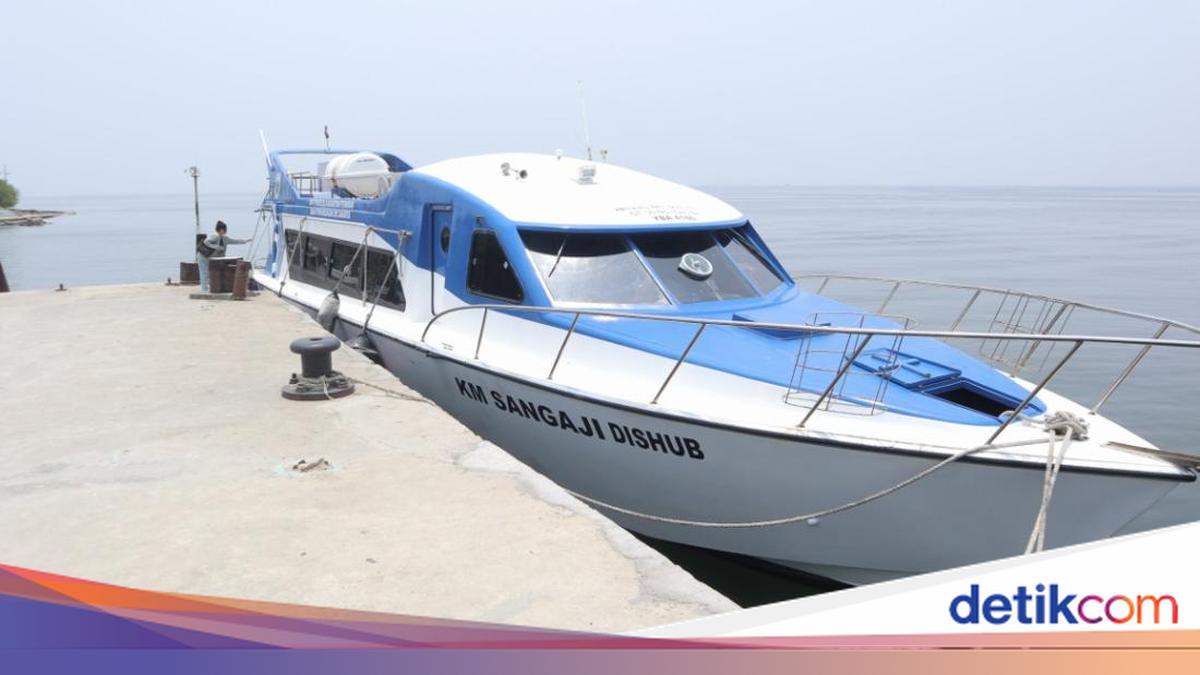
The Thousand Islands are a familiar destination for Jakarta residents. But transport and costs can be considerations when planning a visit. I was therefore interested in trying another way to cross over: travelling aboard a tourist boat run by the Jakarta provincial Transport Agency. I paid Rp49,000 for a trip to several islands: Untung Jawa, Onrust, Cipir and Bidadari.
On a return journey from Muara Angke Port, I hoped to see different sides of the Thousand Islands, from an island where residents go about their daily lives to one that preserves traces of history. I also would not have to arrange inter-island transport myself or find different operators. The itinerary was bundled into one ticket; I simply had to follow the scheduled trip.
On Friday, 16 October 2026, I set off for Muara Angke to find out what it was like to explore the Thousand Islands using this service. The first task, of course, was finding the port. For first-time visitors, getting to Muara Angke Port can be a little confusing, as the route passes through a residential area with relatively narrow roads. From the approach road, the port does not immediately look like a departure terminal for tourist boats. But that impression changes on arrival. The port area appears well maintained, with a spacious waiting room, plenty of seats and several areas that are still largely empty.
Free Wi-Fi is available for passengers who want to go online while waiting. Staff also appear ready to help, while departure information is announced over a loudspeaker. So although first-time visitors may need a while to find their way to the port, there are at least clear directions once they reach the departure area.
The boat was scheduled to leave at about 8.40am. Around ten minutes beforehand, passengers were directed to check in and make their way to the boat. After waiting at the port, I finally headed to the pier. What had initially been just a package option on a computer screen was now under way.
From the outside, the boat looked clean and well maintained. The interior gave a similar impression: the seats were neatly arranged, there was a toilet, and two air-conditioning units kept the cabin cool despite the scorching weather. I could sit comfortably without being exposed to the sun the whole time. For a trip taking passengers from one island to another, a comfortable cabin is a welcome bonus.
Even so, being aboard a boat feels different from travelling by road. It moved across the sea and occasionally rose and fell with the waves. The motion made me feel slightly unsteady, reminding me that the journey was not simply about getting from place to place, but also about adjusting to the sea. From the cool cabin, I waited for our first destination to draw near.
About 30 minutes after leaving Muara Angke, the boat arrived at Untung Jawa Island.
The island is more than just a beach for swimming or taking photographs. Residents’ houses stand amid tourist activities, while schools from kindergarten to junior secondary level show that the island is also a place where people live and go about their daily routines.
Visitors had about two hours to spend as they wished. Some went swimming and enjoyed the sea, while I chose to sit by the beach and chat with a food-stall owner. From the conversation, I learnt that island life has its own challenges, particularly when residents need to deal with documents or meet needs that require them to travel to Jakarta.
“It’s quite difficult too. If anything comes up, you have to go to the city [Jakarta]. You need to go there to deal with important documents; to sort out your identity card, you have to go to the city, because administratively we’re still part of North Jakarta,” the stall owner said.
The story gave me a different perspective on the distance between the island and the city. Jakarta may not be far away geographically, but administrative matters and buying certain necessities still require planning. Some goods have to be bought in bulk, while others are entrusted to someone travelling to the mainland.
It also helped me understand the prices at the food stall. Instant noodles cost about Rp10,000, while bottled water ranged from Rp4,000 to Rp6,000. These prices are higher than in some parts of Jakarta, but the goods have to be brought in from the city.
Despite these limitations, the stall owner did not describe island life as nothing but difficult. Asked whether he wanted to enjoy the facilities available in the city, he instead spoke about the comfort of living among the local community.
“Here, we just enjoy life; we’re not trying to satisfy worldly desires. We enjoy the atmosphere and life here. The residents are friendly and get along with one another. To me, everyone on this island has become like family.”
That conversation was an unexpected part of my visit to Untung Jawa. I had come to enjoy the island, but instead gained a glimpse of the lives of the people who live there. It was also from a resident that I learnt visitors can go fishing. Two hours was enough to enjoy the surroundings and have a conversation, but not enough to understand an island’s life in full.
From Untung Jawa, the trip continued to Onrust Island. Visitors have to pay a Rp10,000 entrance fee, in addition to the boat ticket. For me, the extra cost was worth the experience.
At Onrust, I listened to Sopiyan, a friendly guide who was open to questions. He knew the island’s history and helped visitors understand the place they were exploring. Having a guide made the visit more meaningful: it was not just a matter of looking around or taking photographs, but also of learning the stories behind the remains.
Onrust was the most memorable stop for me. The problem was that the visit felt too short. The explanation was not finished when the group had to prepare to leave, even though there was still much I wanted to learn. Sopiyan even said: “If you want to know everything on this island, you could spend days with me.”
His remark captured the limitations of a day-trip package that has to divide its time among several islands. Visiting many places on one trip is appealing, but destinations such as Onrust need more time if visitors are to understand their history fully. Sopiyan’s explanations were so engaging that I wished I could have stayed longer.
After Onrust, the boat took us to Cipir Island. The entrance fee was the same, Rp10,000, but my experience was very different. While Onrust felt well maintained and offered historical explanations from a guide, Cipir seemed neglected.
I saw rubbish in several places, smelled a fishy odour from fishing boats nearby, and found the food stalls rather makeshift. There was no guide to explain what visitors could see or why the island mattered. As a result, the visit felt directionless and gave little reason to stay longer.
The contrast with Onrust was even clearer after that experience. There, I had learnt about the island and been able to ask the guide questions. At Cipir, I had no comparable experience, so the same entrance fee seemed to offer a different level of value. Yet Cipir is historically connected to Onrust. Better information and maintenance could help visitors understand that relationship, rather than making Cipir merely a stop before returning to the boat.
After Cipir, we returned to the boat to head back to Muara Angke. But one thing remained unresolved: Bidadari Island, which was listed in the package, was not visited. I was not given an explanation for the route change. I suspected that the time available might have been a factor, but could not confirm this.
A low-cost ticket opens the door to a trip
Muhammad Fazl, 22, a worker from East Jakarta, was one of the visitors drawn to the Transport Agency boat package by its price. He travelled alone on 16 October 2026. This was his second visit to the Thousand Islands, although his first was a long time ago. He had gone with his father when he was five, but his memories of that trip were hazy.
His decision to return did not follow an elaborate travel plan. He came across information about the package while scrolling through social media. A price of around Rp50,000 to visit several islands caught his attention, prompting him to open the booking website. He did not first compare the cost with an open-trip package or the option of hiring a boat. The low price was enough to make him look into it further.
“I found out about it on social media, when I was scrolling. I saw that it was only about Rp50,000 and covered several destinations, several islands. So I opened the website to take a look.”
However, a low price does not mean tickets are always easy to get. Fazl said he had tried twice to get a ticket for the previous weekend, on Friday and Saturday, but failed. He only managed to book for a weekday. The low fare for the boat trip can attract plenty of interest, but not everyone can get a ticket for their preferred date.
On the day he successfully booked, he visited the website at around 9am and had no significant problems. He found the process easy to understand, particularly as he was booking for a weekday. He also considered the system of booking one day in advance, with limited quotas, reasonable. Similar systems are used at various other tourist destinations, he said, so the process did not seem unfamiliar.
For his trip, the boat ticket was the most attractive cost component. But Fazl did not consider the fare to be the total cost of the outing. He brought his own motorbike, so he spent only about Rp10,000 on petrol. He estimated that his overall spending, including food, snacks and other expenses, came to less than Rp150,000.
“The boat ticket is cheap, honestly. The other expenses are normal and I can control them myself.”
Fazl enjoyed the boat trip. He found the boat clean, the air conditioning sufficiently cool and the seating area comfortable. There were not too many passengers, so he did not feel crowded.
In Fazl’s view, each island did not need to be given the same amount of time. Some stops felt too long, while others deserved more time. “At Onrust, I think it was too quick, especially as there was a tour guide, so we couldn’t go anywhere else. We should have had longer there, so we could join the tour and then explore on our own. Cipir wasn’t to my taste; I wasn’t interested and didn’t do anything there. So I think the time at Cipir should be cut.”
Even so, Fazl said he had time to do various things during the visits. He could eat, shop, take photographs and even charge his phone. He did not feel that he had missed any main activity while on the islands.
The Jakarta Transport Agency boat service offers sea trips from Muara Angke to several islands in the Thousand Islands. The routes are divided into different circuits, connecting Muara Angke with Untung Jawa, Onrust, Cipir and Bidadari on return journeys. Fares vary by destination and zone, ranging from Rp44,000 to Rp100,000 per person, including administrative or insurance charges.
Bookings are made online through a ticketing platform called JaketBoat. Online tickets go on sale from one day before departure, while tickets bought in person on the day depend on availability. The system allows prospective passengers to select a route and package before arriving at the port.
Source: jawawa.id (https://jawawa.id/newsitem/exploring-the-thousand-islands-aboard-a-jakarta-transport-agency-boat-1793523146)
Originally published by detikcom (https://news.detik.com/intermeso/d-8733509/menjelajah-kepulauan-seribu-dengan-kapal-dishub), translated from Indonesian