
Exploring the Liang Metanduno Rock Art: Traces of the World's Oldest Civilisation
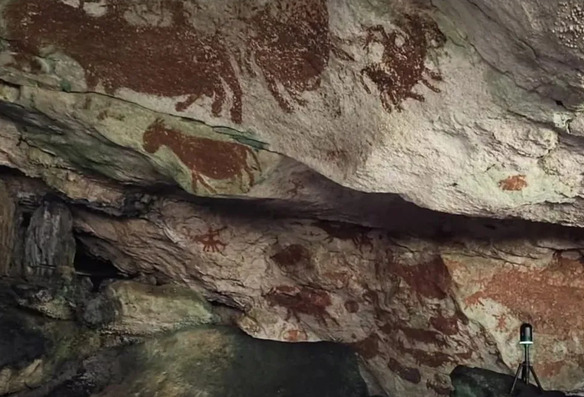
Indonesia has further cemented its position as a centre of prehistoric world civilisation through an archaeological discovery in Southeast Sulawesi. One site now in the spotlight is Liang Metanduno, a cave that holds a wealth of ancient rock art. This site is not only a subject of scientific research but has also been proposed as a national cultural icon representing the historical identity of the ‘Bumi Anoa’ region.
During a working visit to the Southeast Sulawesi Museum in Kendari on a Saturday in July 2026, Minister of Culture Fadli Zon paid special attention to the immense potential of the Liang Metanduno rock art. He proposed that museum management install a replica of the painting on the ceiling or wall of the museum’s front room.
This initiative aims to build a strong identity by making the replica of the ancient painting the main feature of the Southeast Sulawesi Museum, attract tourists from various backgrounds including students, the general public, and international visitors, and provide public education by offering a visual representation of the region’s historical wealth before tourists visit the original site in Muna Regency. ‘The hope is that before visiting other destinations in Southeast Sulawesi, people will come to the museum first so they can get to know this region,’ said Minister Fadli Zon.
Based on the data presented, the rock art in Southeast Sulawesi, including that found in the Liang Metanduno area, is estimated to be a staggering 67,800 years old. This figure places the find among the oldest rock art in the world, surpassing the age of famous cave paintings in Europe. The validity of the site’s age and historical value is supported by comprehensive research involving credible institutions, including the National Research and Innovation Agency, Griffith University, and Southern Cross University from Australia. This finding provides authentic proof that civilisation in Southeast Sulawesi has existed for tens of thousands of years, making the region a priceless cultural treasure for global science.
While specific details regarding the motifs at Liang Metanduno are still being validated by experts, rock art in the Muna area generally possesses unique characteristics that distinguish it from other sites in Indonesia, such as those in Maros-Pangkep. Minister Fadli Zon stressed that museums in the modern era must not merely be storage places for inanimate objects. Museums must transform into living ‘cultural showcases’. By presenting a replica of Liang Metanduno, the Southeast Sulawesi Museum is expected to tell a richer story about human evolution and culture in the archipelago. This effort also aligns with the strategy for developing heritage tourism. By promoting Liang Metanduno, Southeast Sulawesi will be known not only for its marine natural beauty, such as Wakatobi, but also for its globally significant historical depth.
The Liang Metanduno rock art is tangible proof that Indonesia is a crucial point in the history of ancient human migration and cognitive development. The government’s support through the Ministry of Culture to popularise this site via the Southeast Sulawesi Museum is a strategic step in preserving and promoting the nation’s intellectual wealth on the international stage.