
Exploring the Charm of Kudus, Demak, and Banyumas Batik through 'Traces of Beauty'
Jakarta (ANTARA) - Every piece of batik cloth is inseparable from the social and cultural journey of various communities across Indonesia. However, as times change, the traditions of batik that once enjoyed a golden age are now struggling to regain widespread recognition.
Batik has become a core part of Indonesia’s national identity. While many types of batik are widely known and used, others are fighting to survive in the shadows of their former glory, such as the batik from Kudus, Demak, and Banyumas. The batik traditions from these three regions have faced fluctuations that have led to them being less popular than in the past.
Junior Curator of the Mutiara Zahwa Nauli Textile Museum stated that Kudus, Demak, and Banyumas were once active batik-producing regions. However, their golden era began to fade due to a significant decline in production between the 1960s and 1980s, influenced by changing market dynamics and a lack of interest among the younger generation.
The lack of regeneration among batik artisans, changing societal lifestyles, evolving tastes, and various socio-economic factors have all impacted the sustainability of these batik traditions. “We need to reintroduce these struggling batiks because, regardless, they remain part of our national identity, with beauty that is just as captivating to the eye and the heart,” Zahwa told ANTARA in Jakarta.
The diverse batik traditions across various regions, with every cloth and motif storing traces of history, creativity, and the lives of the people of their time. Therefore, reintroduction is one way to keep those traces alive.
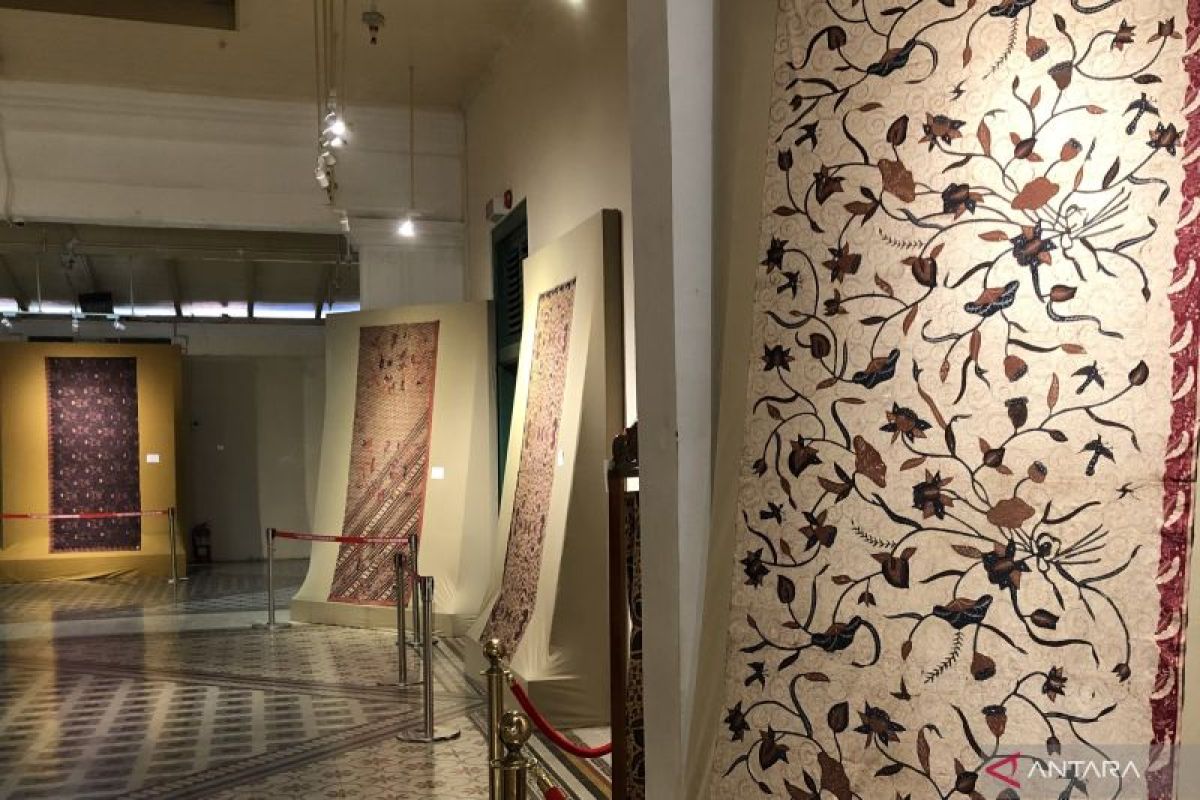
A total of 60 collections, consisting of 3 from Demak, 15 from Kudus, and 42 from Banyumas, are featured in the exhibition “Traces of Beauty: Batik Kudus, Demak, and Banyumas”. This is an effort by the Textile Museum to reintroduce the rich batik traditions of these three regions, which are currently not widely known by the general public.
Most of the items are hand-drawn (batik tulis) and the displayed pieces are part of the Textile Museum’s old collections. The batik from Kudus, Demak, and Banyumas are characterised by natural stylised motifs, similar to coastal batik.
Kudus batik features large, bold motifs paired with rich, detailed ‘isen-isen’ (background patterns). The collection includes long cloths made of cotton in the ‘Kudusan’ style with motifs such as aquatic plants, ‘kyai janggar’, and ‘beras mawur’. There are also ‘Pagi Sore Sore Bolak Balik’ long cloths featuring motifs of bouquets, birds, butterflies, and ‘sisik ulo’.
Demak batik displays a coastal character blended with floral stylisation. One of the items shown is the ‘Pagi Sore’ long cloth, a hand-drawn cotton batik with motifs such as ‘tabur bunga susymoyo lungkembang ukel tapaitik’, ‘ceplok nitik’, and ‘iseng semarangan’.
Meanwhile, Banyumas batik possesses a strong character with bold lines and motifs. The exhibited collection includes cotton long cloths with ‘lung lungan’, birds with ‘andang mukti’, and ‘ukel’ motifs. Additionally, there are hand-drawn cotton long cloths featuring the ‘Buketan Tambal’ motif.
“These three regions have a strong Islamic influence because the batik works of these areas were pioneered by famous Muslim figures in Indonesia, such as Sultan Agung in Kudus, Sunan Kalijaga in Demak, and even Najendra, one of Prince Diponegoro’s followers who settled in Banyumas,” said Zahwa.
The Head of the Art Museum Management Unit of the Jakarta Provincial Culture Office, Sri Kusumawati, stated that preserving batik in a museum involves more than just protecting the fabric. Through such efforts, the museum can serve as a space that connects the heritage of the past with the development of contemporary batik and future generations.
As such, the “Traces of Beauty: Batik Kudus, Demak, and Banyumas” exhibition serves to reunite the public with these collections and open a space for dialogue regarding their journey, beauty, and sustainability.
“Even if their heyday may have passed, the traces of skill, creativity, and cultural value contained within these works live on to this day,” Sri told ANTARA in Jakarta.
The momentum of National Batik Day serves as a reminder that batik is not merely cloth or fashion, but a part of Indonesia’s identity and cultural wealth. Through this exhibition, the Textile Museum aims to educate the public with the hope of helping these batik styles return to life and become widely known once again.
Ultimately, the sustainability of batik is determined by a society that loves, recognises, and uses it. The “Traces of Beauty: Batik Kudus, Demak, and Banyumas” exhibition is available at the Jakarta Textile Museum until 2 November 2026.
Source: jawawa.id (https://jawawa.id/newsitem/exploring-the-charm-of-kudus-demak-and-banyumas-batik-through-traces-of-beauty-1790996250)
Originally published by Antara (Indonesian) (https://www.antaranews.com/berita/5769581/menengok-pesona-batik-kudus-demak-dan-banyumas-lewat-jejak-keindahan), translated from Indonesian