
Exploring Pizza Gaza's Strategy to Empower the Underprivileged and Build Schools in Palestine
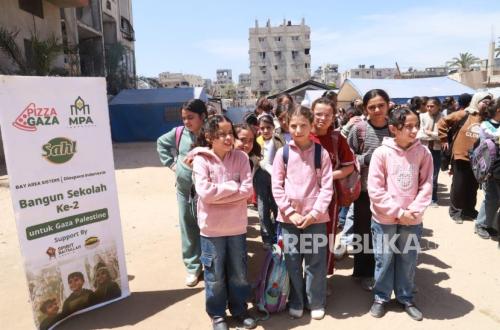
Pizza Gaza continues to strengthen its commitment to building a culinary business that is not only oriented towards business growth but also provides tangible benefits to society. Driven by a vision of strengthening the economy and education, Pizza Gaza empowers local communities, supports MSMEs, and allocates a portion of its profits to various social activities in Indonesia and Palestine.
Pizza Gaza was established in 2024, following a decline in a previously managed book business. Initially, the venture emerged as a continuation of fundraising activities conducted through the sale of various Palestinian merchandise products. All proceeds from those sales were used to assist the people of Gaza affected by the conflict.
The origins of Pizza Gaza stem from the initiative of a 13-year-old boy named Faruq, who has a passion for cooking and experimented with creating his own pizza recipes. By collaborating with recipes developed by his younger sibling, a family pizza recipe was eventually created.
Following numerous positive testimonials, Faruq attempted to sell the pizza as a product option within his mother’s frozen food business. The name ‘Pizza Gaza’ was chosen to reflect his spirit of affiliation with the Palestinian struggle. He is determined to make Pizza Gaza a business that supports the Palestinian cause.
As the business has grown, Pizza Gaza has expanded its reach into the culinary sector. In addition to offering pizza, Pizza Gaza now provides a variety of foods and snack products that can be ordered through its official website.
Within approximately two years, Pizza Gaza has developed into a social business ecosystem involving resellers, workers from underprivileged communities, and mentored MSMEs. Around 90 per cent of Pizza Gaza’s current sales are supported by a network of resellers spread across various regions, particularly Central Java and East Java.
This reseller-based business model is designed to create more income opportunities and help stimulate local economies in various areas. Through this system, individuals can run a business by selling Pizza Gaza products without having to build a business from scratch.
Pizza Gaza is also committed to empowering the surrounding community. Approximately 99 per cent of the workforce involved in its operational activities comes from underprivileged groups near the business location. They are provided with opportunities to work, develop skills, and earn a more sustainable income.
In addition to developing its own products, Pizza Gaza serves as a platform for mentored MSMEs. Various products from these entrepreneurs are assisted in their marketing processes and offered through Pizza Gaza’s sales network. This step is part of an effort to build a mutually supportive business ecosystem that provides broader benefits.
Commitment to Education and Humanity
Pizza Gaza’s social commitment is realised through various humanitarian and educational programmes. In Gaza, Pizza Gaza has contributed to the construction of two schools as a form of support for the sustainability of education for children in the region.
In Indonesia, Pizza Gaza has established two early childhood education centres (PAUD) and provides scholarships to children in need. Social support is also channelled to assist communities affected by natural disasters, the construction of wells, and various other humanitarian activities.
Source: jawawa.id (https://jawawa.id/newsitem/exploring-pizza-gazas-strategy-to-empower-the-underprivileged-and-build-schools-in-palestine-1790564152)
Originally published by Republika (https://ekonomi.republika.co.id/berita/tm1x3q370/mengintip-strategi-pizza-gaza-berdayakan-duafa-hingga-bangun-sekolah-di-palestina), translated from Indonesian