
Exploring 'Made in China' goods at the colossal Yiwu supermarket
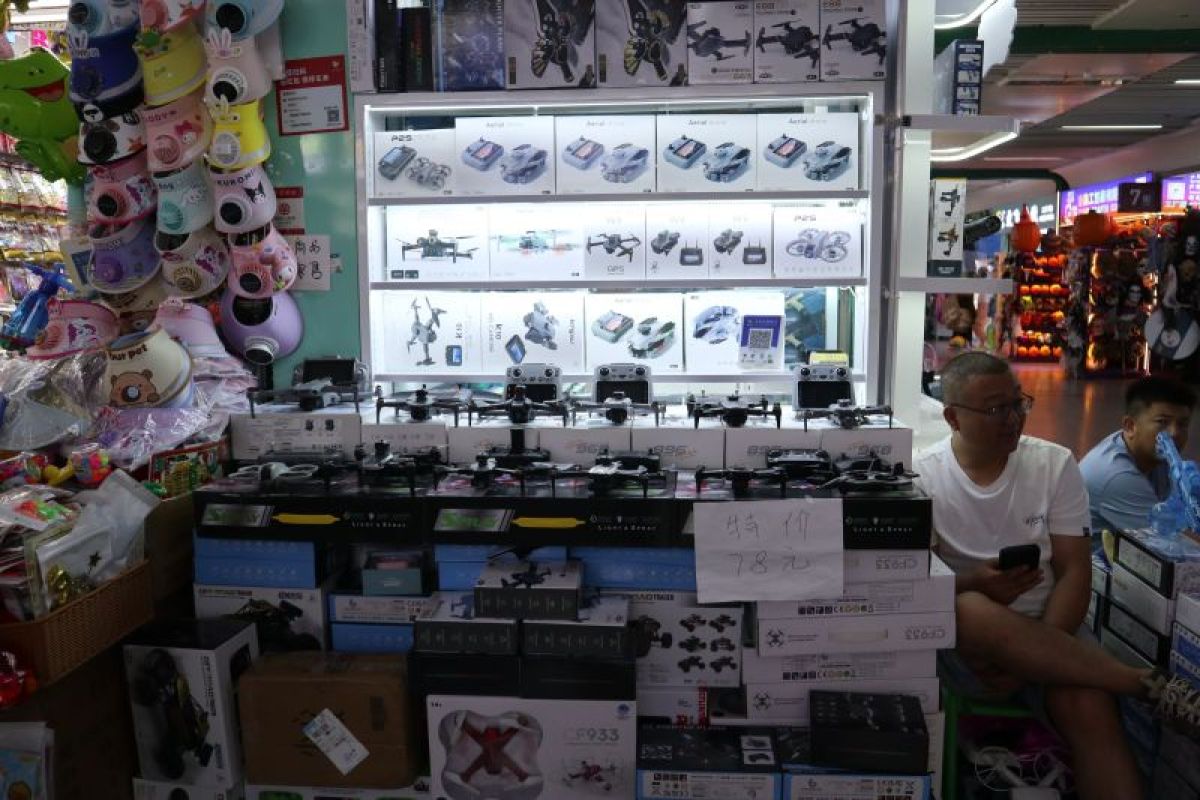
It is a common assumption that various small items such as keychains, fridge magnets, cups, dolls, accessories, or assorted souvenirs that fit in the palm of a hand originate from China, or are ‘made in China’. Although China has now expanded its production capacity to various high-tech products, from household electronic appliances and electric vehicles to robots, small commodities made in the Bamboo Curtain country remain a favourite and are marketed to various countries. However, do you know where to find these interesting and cheap small goods in China? The answer is in Yiwu City, Zhejiang Province, in eastern China. In Yiwu, there is a small goods shopping centre called ‘Yiwu International Trade City’ covering an area of 4 million square metres, or about five to six times the size of Gelora Bung Karno, with more than 70,000 kiosks, 400,000 types of products across 2,000 different categories. ‘If you spend three minutes in each shop and visit the market for eight hours every day, you will need about 1.5 years to visit all the shops,’ a tour guide told ANTARA during a visit to the location at the end of May 2026. As much as 65 per cent of the products from the trade centre are exported to more than 215 countries and regions. In addition, more than 90 per cent of shops sell goods directly from manufacturers, so the prices offered are factory prices. However, buyers generally must purchase in large quantities because goods are not sold at retail. It is therefore not surprising that upon entering the giant supermarket, many foreigners are present, even from the morning around 9 a.m. when the mall opens. The traders there are also able to understand English, at least numbers when bargaining with buyers. The shopping centre in Yiwu first began in the 1960s as a market where people exchanged sweets for chicken feathers, a local tradition for survival. At that time, Yiwu was just a small area hidden in a mountainous region. Most of its land was barren, so there were not many livelihood options for its residents. These conditions encouraged the local community to earn a living through trade. Gradually, Yiwu developed into a meeting point between producers from various regions and buyers coming from different locations. This development reached an important milestone in September 1982 with the opening of the Huqingmen Open Market. The roadside and open-air market had 705 kiosks and offered more than 2,200 goods. At that time, sellers did not have fixed kiosks, so they had to arrive earlier to secure the most strategic kiosk. The market then underwent several renovation stages until it moved to its current location in Futian, with construction from 2002 to 2017, earning the title of the ‘World’s Largest Small Commodity Wholesale Market’ and launching an AI platform to translate promotional videos into more than 30 languages.