
Exploring Lembur Pakuan: Governor Dedi Mulyadi's Serene Cultural Village
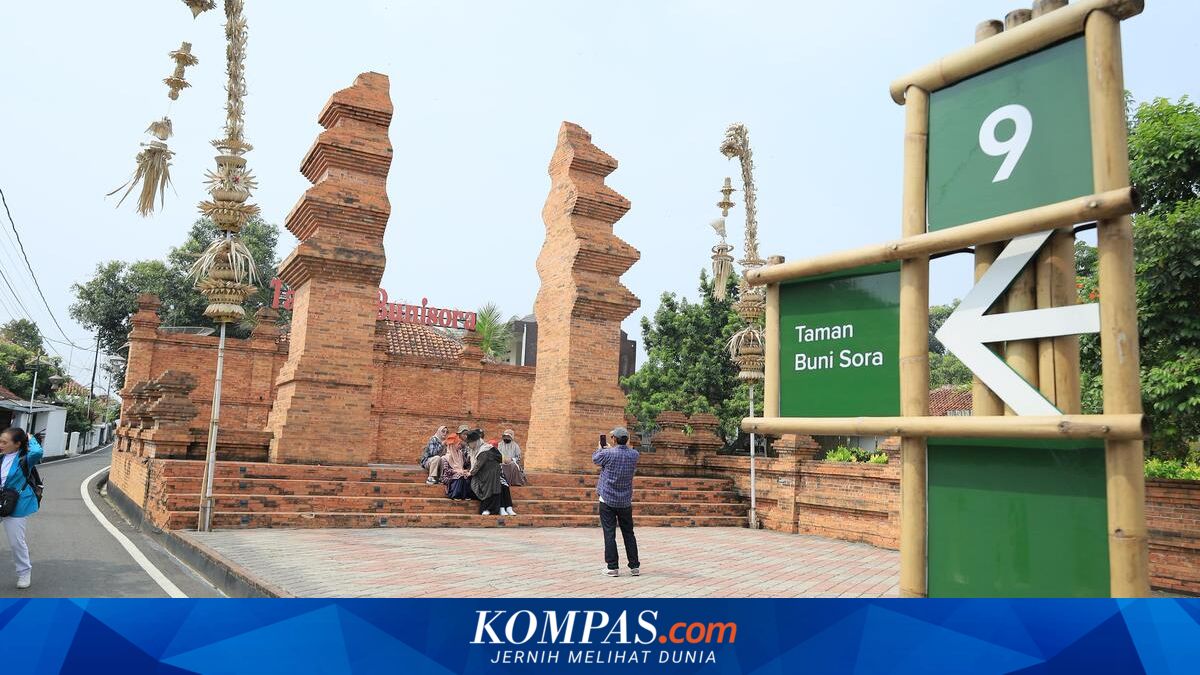
Subang — Who hasn’t heard of Lembur Pakuan? Located in Sukasari Village, Dawuan District, Subang Regency, West Java, this area is known as one of the residences of West Java Governor Dedi Mulyadi.
However, Lembur Pakuan has other attractions, including vast rice paddies stretching as far as the eye can see and well-kept residential areas.
At several points, ponds and gentle streams irrigating the fields enhance the area’s serene atmosphere.
From a distance, the village’s Sundanese character is unmistakable, not just in the landscape but in the detailed spatial design. Structures, open spaces, and visual elements like gateways welcoming visitors all contribute to this.
These gateways blend modern architecture with cultural ornaments, enriched with bamboo and black-and-white fabrics rich in philosophical meaning.
After passing numerous gateways, visitors can choose to explore rice landscapes, cultural spaces, warm community interactions, or historical sites all within one area.
Tourist activities vary: some stroll along pedestrian paths and village roads, pause to observe locals’ daily routines, rest in traditional pavilions, or sample snacks sold by residents.
At one point in the journey, Sri Budi Utami, a resident of Kulon Progo, experienced the area firsthand and appreciated how the village is managed without losing its authentic character.
‘A simple place, well-managed to become a tourist attraction that preserves local wisdom,’ said Sri Budi on Sunday (24 May 2026).
As the Assistant for Economic and Development Affairs in the Kulon Progo Regional Secretariat, she was impressed by Lembur Pakuan’s strengths, which go beyond aesthetics to maintaining the village as a living space for the community.
Tourism emerged not as the primary goal but as a byproduct of culture-based spatial planning.
Acting Dawuan District Head Hasan Sahroni explained that the area embodies the spatial planning philosophy of ‘lembur (village) managed, city organised’.
‘The concept returns to our culture. West Java is special because its villages are well-managed and cities are orderly,’ Hasan said.
Cultural traces are evident not just in physical structures and ornaments but in traditional arts like Tutunggulan and Silat Panglipur, regularly performed by residents.
The area also hosts the Badega group, community members who serve as symbols of collective efforts to maintain the environment and village harmony. Within Badega are female tourism guides in kebaya and men in plain black pangsi outfits — loose shirts and trousers.
From cultural sites, the tour moves to historical landmarks. Exploring Lembur Pakuan reveals Taman Bunisora, named after King Bunisora, a key figure during the transition of the Sunda Pajajaran Kingdom after the 14th-century Bubat War tragedy.
After King Linggabuana’s death, the heir Wastu Kancana was still young. Bunisora assumed temporary authority to maintain stability until leadership could be passed on.
This story is now part of historical education and Sundanese cultural identity reinforcement in Lembur Pakuan. Most importantly, culture, history, and local wisdom remain alive within the community.
‘We develop our culture, grounded by media partners. I believe this will positively impact visits, tourism, and more,’ Hasan said.