
Explore the 7 Most Popular Business Sectors in Indonesia for 2026 - GoodStats Data
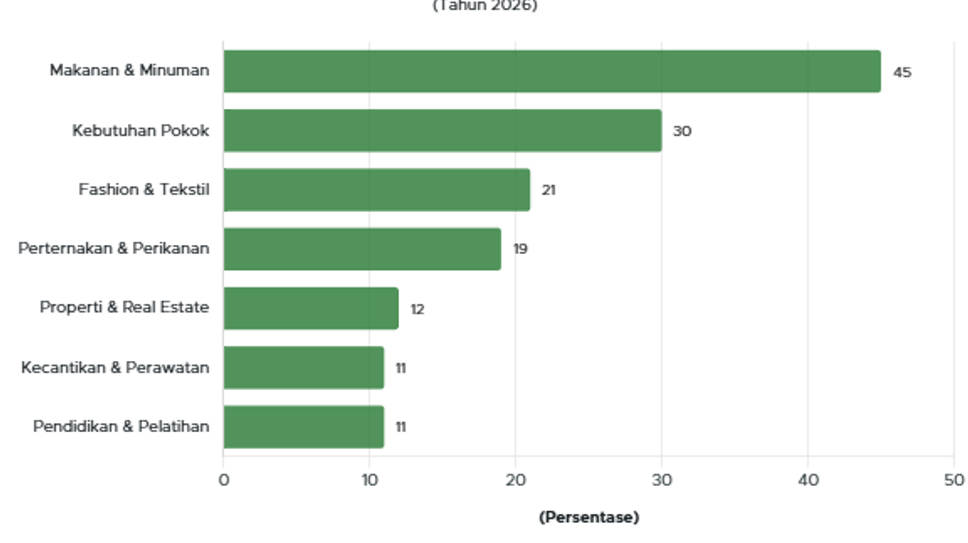
Interest among Indonesians in the business world continues to rise, particularly amid the development of the digital economy and changing market needs. Many people are beginning to eye various business sectors considered to offer significant opportunities, both for new entrepreneurs and those with experience.
These sectors are assessed to have a broad market because they constitute daily needs of the population. Additionally, opportunities for product innovation as well as evolving culinary trends also contribute to the high interest in this field.
In second place is the basic necessities sector with a percentage of 30%. This sector is considered stable because it provides goods that are always needed by the public, thus its demand tends to be consistent.
Next, the fashion & textiles sector ranks third with 21%. This industry remains popular because it relates to lifestyle and constantly changing trends, thereby opening diverse business opportunities, from clothing to accessories.
The agriculture, livestock, and fisheries sector also shows fairly high interest with a percentage of 19%. This indicates that resource-based sectors still hold appeal, especially because they directly relate to food needs.
In the following position, the property and real estate sector is chosen by 12% of respondents. Although it requires relatively large capital, this sector remains attractive because it is seen as offering long-term investment value.
Additionally, the beauty and personal care products sector also makes the list with a percentage of 11%. The increasing public awareness of self-care is one of the driving factors behind the growth of businesses in this field.
Finally, the education and training sector records a percentage of 11%. The need to enhance skills and knowledge keeps this sector developing, particularly with the emergence of various digital learning platforms.