
Experts Warn Pregnant Women of Dangers of Forest Fire Haze for Foetuses
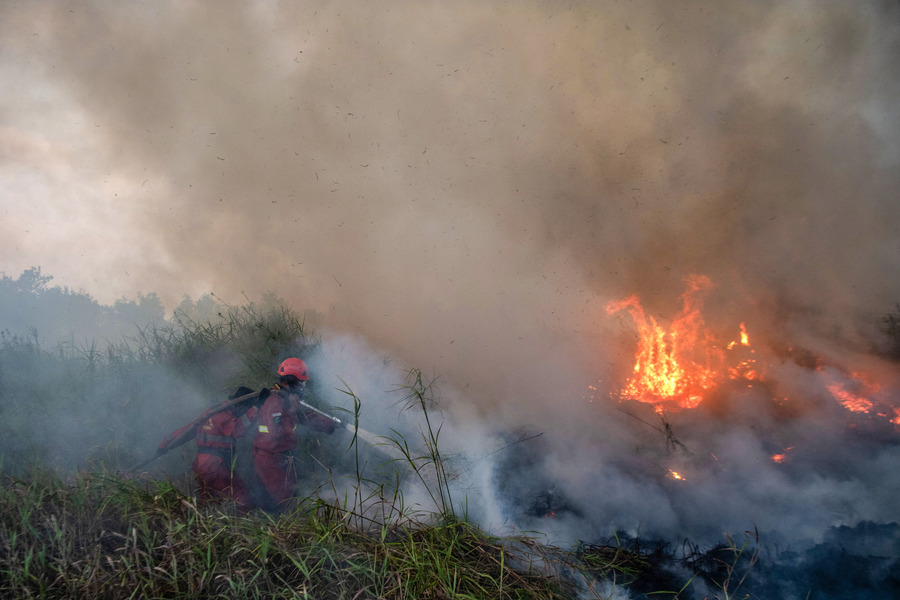
Exposure to smoke from forest and land fires (karhutla) poses a serious danger to the safety of foetuses in pregnant women. The Chairman of the Indonesian Obstetrics and Gynaecology Association (POGI), Prof. Budi Wiweko, has urged pregnant women to be extra vigilant against the threat of air pollution caused by these fires.
“Forest and land fire smoke is linked to pollution, and it is certainly not healthy. It is not good even for healthy women, let alone pregnant women,” Budi said at a media event in Jakarta on Thursday (27/8).
The obstetrician and gynaecologist, who specialises in reproductive endocrinology and fertility, explained that karhutla smoke contains endocrine-disrupting chemicals (EDCs). These compounds have the potential to damage the hormonal system’s function in the human body.
Several types of EDCs contained in karhutla smoke include dioxins, carbon monoxide, and bisphenol A (BPA). Exposure to these compounds is considered highly dangerous, especially if inhaled by pregnant women whose gestational age is still under 12 weeks.
If these toxic chemicals are inhaled and enter the bloodstream, the risk of a baby being born with abnormalities in the reproductive organs and genitals will increase sharply.
“So, as much as possible, pregnant women must avoid smoke from karhutla,” said Budi, who practises at Pondok Indah Hospital.
To reduce the level of exposure to these dangers, he advised pregnant women in karhutla-affected areas to always wear medical masks and limit outdoor activities. In addition to self-protection, Prof. Budi also encouraged the establishment of work-from-home (WFH) policies for pregnant workers in affected areas to ensure the health of mothers and their unborn babies.
Source: jawawa.id (https://jawawa.id/newsitem/experts-warn-pregnant-women-of-dangers-of-forest-fire-haze-for-foetuses-1787824233)
Originally published by Media Indonesia (https://mediaindonesia.com/kesehatan/926580/ahli-peringatkan-ibu-hamil-ini-bahaya-hirup-asap-karhuta-bagi-janin), translated from Indonesian