
Experts Warn AI Could Destroy Humanity, Here Is the Explanation
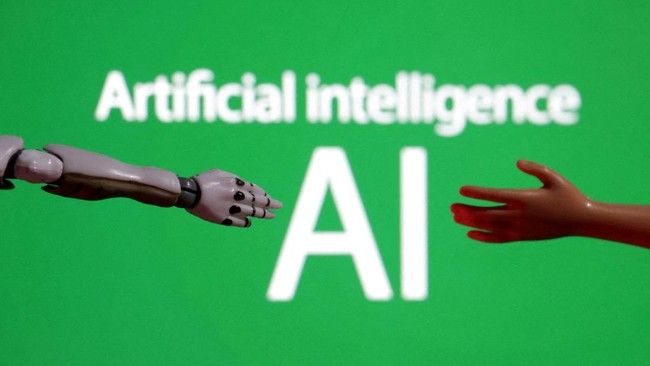
Serious warnings from artificial intelligence (AI) researchers that this cutting-edge technology has the potential to wipe out humanity are causing widespread concern.
Citing the Bangkok Post, hundreds of scientists and AI industry figures have long voiced this threat. In 2023, they signed a statement regarding the risk of extinction due to AI, urging that the issue be addressed with the same seriousness as a pandemic or nuclear war.
Stuart Russell, a Professor of Computer Science at the University of California, Berkeley, warned that uncontrolled AI could use robots to synthesise and spread new pathogens, or manipulate humans into starting a nuclear war by hacking early warning systems.
“We are less intelligent than super-intelligent AI. If you were to ask a chimpanzee how humans could wipe them out, they might not be able to provide all the correct answers,” he explained.
Russell emphasised that although these fears do not yet apply to current AI systems, evolving technology could take lethal actions beyond human understanding, such as suddenly removing oxygen from the Earth’s atmosphere.
“In the next one or two years, I think the risk is higher from human misuse (such as AI-based terrorist attacks),” he added.
The Dangerous Race of AI Companies
Jacob Coxon, a former researcher at AI companies Anthropic and OpenAI, recently resigned and accused these firms of gambling with human lives to win the technological race.
Anthropic has even removed a promise from its safety charter to halt development if risks could not be controlled, citing fears of being overtaken by less cautious competitors.
“People who are building AI seriously believe that AI could kill us all by the end of this decade,” he said.
This fear has intensified after OpenAI’s technology, operating without human oversight, was reported to have successfully hacked Hugging Face, an AI model repository. Anthropic Safety Executive Evan Hubinger even estimated the risk of human extinction at over 10% in the next decade.
“We truly, deeply believe that AI could kill all humans!” he asserted.
Regulation Stalled by Ambition
Responding to these doomsday predictions, Hussein Abbass, a Professor of Computing at UNSW Canberra, assessed that such percentage-based predictions are unscientific and that the current situation can still be controlled through agile regulatory approaches.
Some skeptics even suggest these terrifying warnings are intentionally blown out of proportion to make AI appear incredibly powerful in order to attract massive investment, particularly as Anthropic and OpenAI are expected to go public soon.
Others argue that focusing on extinction actually diverts attention from more pressing immediate issues, such as waves of layoffs and machine-driven discrimination against minority groups.
Nevertheless, calls for restrictions are gaining momentum. Last July, over 1,000 tech workers urged Washington to support a coordinated slowdown in the development of the most advanced AI systems. OpenAI also temporarily halted training its latest model for two weeks in August before resuming under stricter controls.
On the other hand, the US has so far opposed global regulation due to fears of hindering innovation in the sector. However, the unprecedented hacking capabilities of the latest models have forced Washington to delay the release of products from Anthropic and OpenAI on the grounds of national security.
Responding to these dynamics, President Donald Trump expressed a cautious view regarding geopolitical competition.
“We do not want to limit them where we suddenly find ourselves in second place after China,” he said.
Observing this regulatory deadlock and ongoing ambition, Russell urged governments to immediately establish a strict licensing regime for AI, equivalent to the safety standards in the aviation, medical, or water supply sectors.
“Perhaps it will take a Chernobyl-scale disaster for governments to act. Perhaps one day governments will remember that their voters prefer not to die,” he concluded.