
Expert's Views on Komdigi Ministry's Ultimatum to Wikimedia
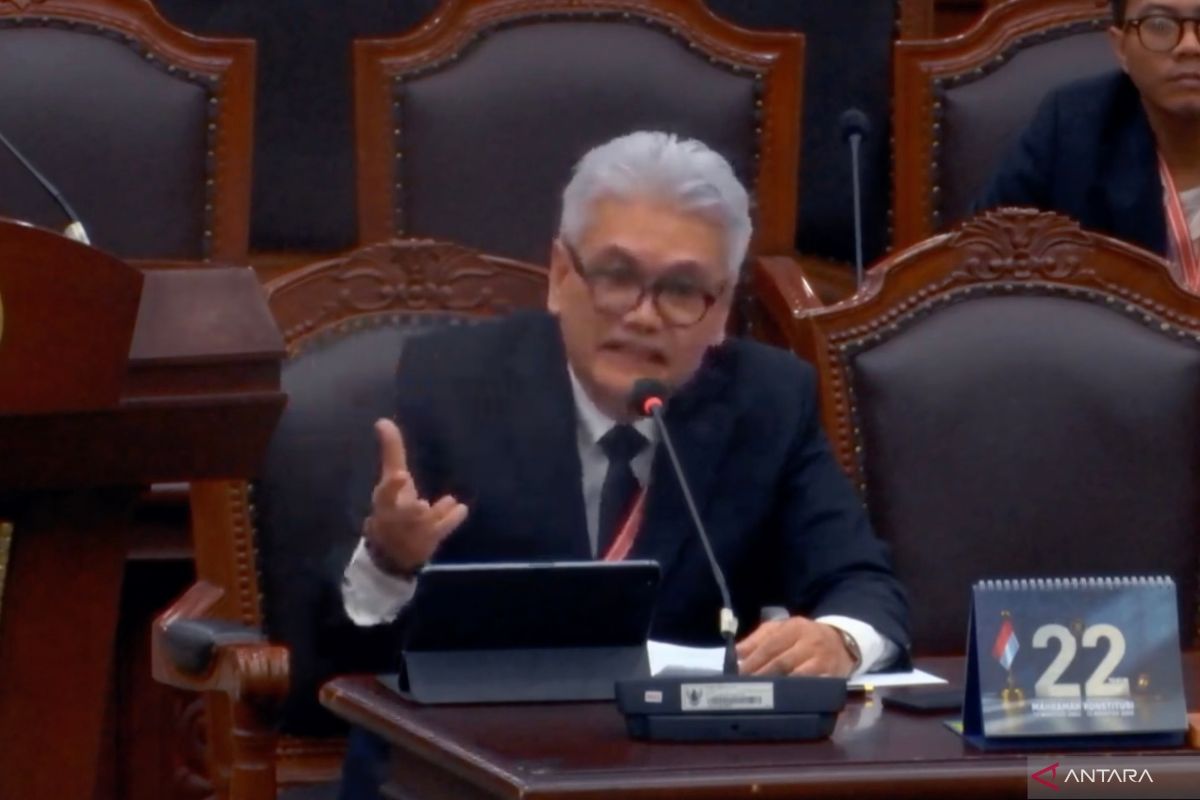
Jakarta (ANTARA) - Legal expert and Professor of Cyberlaw as well as Founder of the Center of Cyberlaw & Digital Transformation at the Faculty of Law, Universitas Padjadjaran, Ahmad M. Ramli, views the ultimatum by the Ministry of Communication and Digital (Komdigi) to Wikimedia as a step in law enforcement in the digital space. “In this context, the government has also provided sufficient socialisation for quite some time. Therefore, this final ultimatum should be seen as ‘law enforcement’,” he stated when contacted by ANTARA in Jakarta on Tuesday. He also explained that Komdigi would not impose sanctions without prior warnings and has issued notifications as an administrative process, along with sufficient time extensions for the relevant parties. “This issue should not be viewed as a hindrance to digital transformation but rather as consistency in regulatory compliance. Moreover, reality shows that large platforms have already done so,” Ramli said. According to him, the ultimatum aligns with Komdigi regulations, namely Article 7 of Minister of Communication and Informatics Regulation No. 5 of 2020, as amended by Minister of Communication and Informatics Regulation No. 10 of 2021, which stipulates that the minister may impose administrative sanctions on private-scope electronic system operators (PSE). Those sanctions, he continued, are applied gradually, starting from written reprimands, temporary suspension, to access blocking and revocation of registration. The regulation also provides a normalisation channel; if the PSE in question fulfils its obligations, access can be restored. In addition, Ramli stated that Article 8 of the Minister of Communication and Informatics Regulation affirms that sanctions can also be imposed at the request of other ministries or agencies if sectoral violations occur. “I see that the positive legal framework is already in place, the mechanisms are clear, including the way out if obligations are met,” he said. “As far as I recall, check the latest data, many big tech platforms and global and national super apps such as Google, Google Cloud, TikTok, OVO, Traveloka, and GoTo have actually registered as PSE. This is where the principle of equal treatment needs to be applied and enforced to all parties,” he added. He continued, “I personally regret it if the platform managed by Wikimedia is shut down because it has currently become one of the dynamic public information sources.” Furthermore, Ramli mentioned that in academic circles, Wikipedia articles, although not directly citable for research, are useful as entry points to obtain references from the articles listed in footnotes. “Academics can then access those articles directly from their original sources. As we know, Wikipedia is a large online encyclopaedia containing knowledge articles. Meanwhile, Wikimedia is the organisation that supports its operations,” he said. In various countries, he added, the Wikimedia Foundation (WMF) has local partners, including in Indonesia, namely Wikimedia Indonesia (WMID). “I hope Wikimedia soon fulfils its registration obligations in accordance with Indonesian regulations, following the steps of other big tech platforms that have complied with regulatory obligations in Indonesia. The best approach is for Wikimedia to promptly fulfil its administrative obligations so that blocking does not need to occur,” Ramli said.