
Experts Urge Stronger Rules to Address Digital Espionage
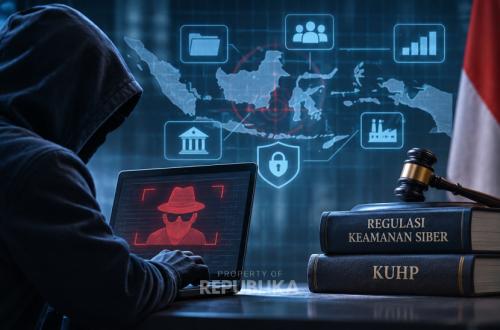
JAKARTA — Advances in digital technology have expanded the potential for espionage against Indonesia. Information gathering, once conducted conventionally, can now target economic, social and political data, as well as the state’s strategic information, through digital networks. The situation is seen as requiring stronger regulations so that national information protection keeps pace with technological developments.
Ardi Sutedja, chairman of the Indonesia Cyber Security Forum (ICSF), said digitalisation had made important information easier for interested parties to access and collect. Much of the data relating to the economic, social and cultural sectors is now stored in digital form.
“Critical information and data relating to the economy, society, culture and so on are now all in digital form. That makes them easier to obtain digitally, and it is not difficult for this to go undetected,” Ardi said.
He said the definition of espionage in the Criminal Code (KUHP) needed to be updated to reflect technological developments. The rules should cover the use of digital tools to gather information, he said.
Ardi warned that failing to anticipate the development of digital espionage could result in Indonesia losing strategic information without realising it.
“Otherwise, we will fall behind. Even though things are moving faster now, we may already have lost a lot of important data without being aware of it,” he said.
Edy Prasetyono, executive director of the ASEAN Study Centre at the University of Indonesia’s Faculty of Social and Political Sciences, said Indonesia’s geographical position, natural-resource wealth and geopolitical interests meant it held strategic information that could be targeted by foreign espionage.
Information on critical minerals, industrial secrets, defence and policymaking processes could give other countries a strategic advantage.
Edy said provisions on the issue were still spread across several regulations. He therefore called for a dedicated law providing more comprehensive definitions and a clearer division of authority.
“The most important thing is to move quickly towards a bill on countering foreign espionage,” Edy said.
Meanwhile, TB Hasanuddin, a member of Commission I of the House of Representatives (DPR), cautioned that proposals to strengthen regulations should also take existing provisions into account. He said Law No. 17 of 2011 on State Intelligence already authorises the State Intelligence Agency (BIN) to gather information about espionage threats, while coordinating with law-enforcement authorities.
“In my view, there is already a legal framework for anticipating espionage. The public — or, in this case, the relevant officials and personnel — simply need to implement this law,” he said.
TB Hasanuddin suggested that further discussion be held through a joint forum. He said any strengthening of the rules should take existing regulations into consideration while safeguarding democratic principles and legal certainty.
Source: jawawa.id (https://jawawa.id/newsitem/experts-urge-stronger-rules-to-address-digital-espionage-1793811078)
Originally published by Republika (https://news.republika.co.id/berita/tnyvu9522/pakar-dorong-penguatan-aturan-antisipasi-spionase-digital), translated from Indonesian