
Experts Urge Strong Oversight of Asset Forfeiture Bill
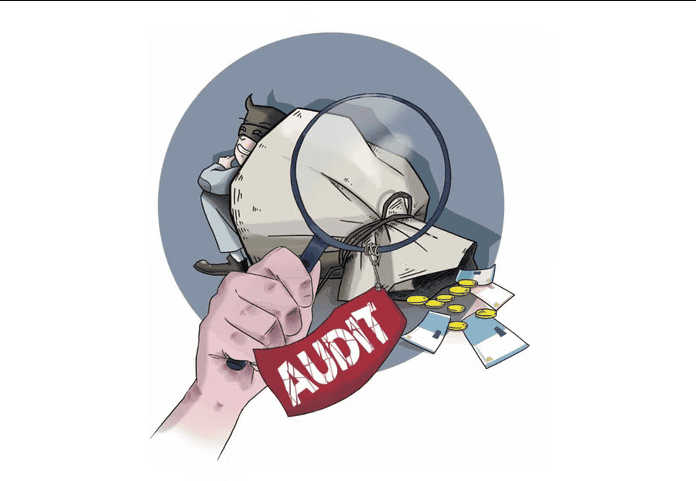
The deliberation of the Asset Forfeiture Bill (RUU Perampasan Aset) is being accelerated and is targeted for approval in a plenary session of the Indonesian House of Representatives (DPR RI) by December 2026 at the latest. Amid this acceleration, experts are urging that the authority to seize assets be accompanied by strong oversight mechanisms to prevent abuse of power and protect the rights of the public.
Chairman of Commission III of the DPR RI, Habiburokhman, said the formation of the Asset Forfeiture Bill continues to be expedited so that it can be completed according to the year-end target. “Commission III continues to accelerate the formation of the Asset Forfeiture Bill,” said Habiburokhman on Tuesday (25/8).
According to Habiburokhman, the DPR still has approximately eight weeks of effective sitting time remaining after accounting for the recess period. This time will be used to complete a number of deliberation stages.
These stages include public hearings (RDPU), harmonisation, working meetings with the government, deliberation of the Problem Inventory List (DIM), first-level decision-making, and ratification in a plenary session.
In the process of drafting the Asset Forfeiture Bill, Commission III of the DPR RI has held 35 public hearings and conducted three working visits to several regions. Commission III has also received written input from dozens of community elements. According to Habiburokhman, the majority of the public who provided input support the formation of the Asset Forfeiture Bill.
However, this support is accompanied by the hope that the regulation will be drafted carefully and will not open loopholes for abuse of authority. One such input was conveyed by public expert and senior journalist Bambang Harymurti during a public hearing of Commission III of the DPR RI at the Parliament Complex in Jakarta on Tuesday (11/8).
Bambang warned that the authority to seize assets must not be used for political interests. According to him, the regulation needs to provide firm limits so that the state’s great authority does not turn into an instrument to pressure certain parties. “The bill must strictly prohibit the use of asset forfeiture authority to silence political opponents,” said Bambang.
Bambang considers asset forfeiture to be a form of state authority that has a major impact on society. Therefore, its implementation cannot rely solely on the integrity or good intentions of officials currently exercising power.
According to him, clear limits on authority and oversight mechanisms are needed to ensure that the asset forfeiture process proceeds according to law. This oversight is important to keep the authority of asset forfeiture directed at its main objective, namely recovering assets related to criminal acts, while preventing actions that could harm the public.
This input is in line with the attention of Commission III of the DPR RI in deliberating the Asset Forfeiture Bill. The regulation is expected to strengthen efforts to eradicate corruption without creating room for abuse of authority by law enforcement officials.
Habiburokhman said the process of absorbing public aspirations has so far been carried out extensively. Various public views have been collected and mapped as part of the regulatory drafting process.
The majority of aspirations received, he said, support the formation of the Asset Forfeiture Bill. However, the public also wants the substance of the regulation to be discussed carefully to ensure that the authority granted to the state has clear limits.
The target for approval in the DPR RI Plenary Session in December 2026 shows that the deliberation of the Asset Forfeiture Bill is now entering an acceleration phase. Nevertheless, the acceleration of deliberation must still go hand in hand with thoroughness in drafting norms and oversight mechanisms. The resulting regulation is expected not only to be effective in recovering assets derived from crime, but also to provide legal certainty and protection of public rights.
With adequate oversight, the Asset Forfeiture Bill is expected to become a strong instrument to support the eradication of corruption without turning into a tool for abuse of power or political interests.