
Experts Urge Bromo Management to Strengthen Fire Mitigation
Tourism expert from Andalas University, Sari Lenggogenable, is urging the management of the Bromo Tengger Semeru National Park to strengthen risk-based mitigation. This step is urgently needed through the restriction of activities and the regulation of visitor capacity, particularly during high-risk fire periods.
“During seasons with a high risk of fire, for example, visitor capacity, certain activities, the use of fire, commercial activities, filming, events, and other risky activities must be able to be limited based on the daily risk level,” said Sari, as quoted by Antara on Thursday (17/9).
According to Sari, the management of the Bromo area should not rely solely on a firefighting approach. Management is deemed obligated to adopt a comprehensive tourism disaster and crisis management approach, which includes area recovery, tourism ecosystem preservation, protection of community livelihoods, and the restoration of tourist confidence.
Tourism crisis management itself comprises three main stages: response (emergency response), recovery, and resilience. In the initial stage, human safety and fire suppression are absolute priorities, which must be immediately followed by a recovery phase so that communities dependent on the tourism sector do not lose their source of income for too long.
In the post-fire recovery phase, Sari outlined four crucial interventions that must be implemented by the management:
Safety of Alternative Routes: The diversion of tourists must strictly adhere to the principle that alternative tourist routes must always refer to safety maps. “Do not divert tourists merely to maintain visitor numbers,” she emphasised.
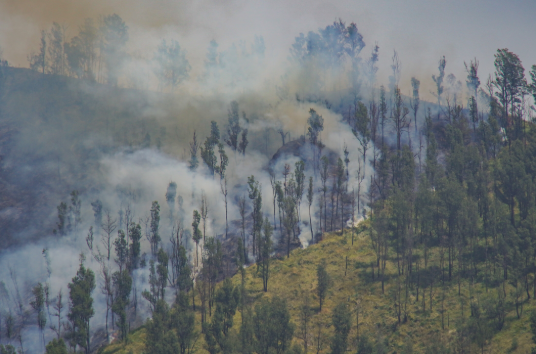
Fire in the Bromo area was reported to have struck again on Thursday (10/9/2026). The fire spot was first monitored around 16:30 WIB in the Savana Pengol area before spreading towards Mount Kursi. Strong wind conditions also accelerated the movement of the fire, while joint authorities and officers are still investigating the exact cause of the incident.
Sari believes that the recurring fire incidents in Bromo should serve as a strong signal for management to shift their approach from reactive management to predictive risk management.
The measure of success in recovering the Bromo area is not measured by how quickly tourists flock back, but rather by the level of area safety when reopened, the speed of economic recovery for local communities, and the extent to which the potential for the next fire risk can be suppressed.
“Because the highest value of science and management is not in the complexity of explanations, but in the tangible benefits for life,” she concluded.