
Experts stress importance of adaptive government communication to tackle 'homeless media'
Jakarta (ANTARA) - A number of experts in the fields of technology and social media have emphasised the importance of adaptive government communication to face ‘homeless media’ amidst the era of massive technological development.
According to the Ministry of Communication and Digital, ‘homeless media’ refers to corporate entities or organisations that engage in journalistic practices but are not registered as media companies.
In an official statement in Jakarta on Friday, the Board of Trustees of the Government Social Media Summit (GSMS), Karina Kusumawardani, stated that the government needs to devise strategies to safeguard messages regarding issues intended for the public.
“Amidst increasingly complex media fragmentation, maintaining message consistency and communication identity is a challenge that must be addressed collectively,” said Karina during the GSMS 2026, themed “Navigating Government Communication: Remaining Trustworthy Amidst the Era of Media Fragmentation” in Jakarta, Tuesday (9/6).
The government must be agile in blending press releases, dynamic social media content, and face-to-face socialisation. This communication innovation is crucial for creating adaptive responses and boosting organic public engagement.
CEO of NoLimit Indonesia, Aqsath Rasyid Naradhipa, highlighted the phenomenon of the emergence of homeless media and non-conventional entities that are now massively changing how the public accesses and trusts information.
“These non-conventional media entities are growing rapidly because they successfully fill the void in perspectives, particularly for the younger demographic who tend to prefer decentralised and concise information over traditional news formats,” said Ado.
Aqsath also revealed that this shift requires government agencies to interact more dynamically.
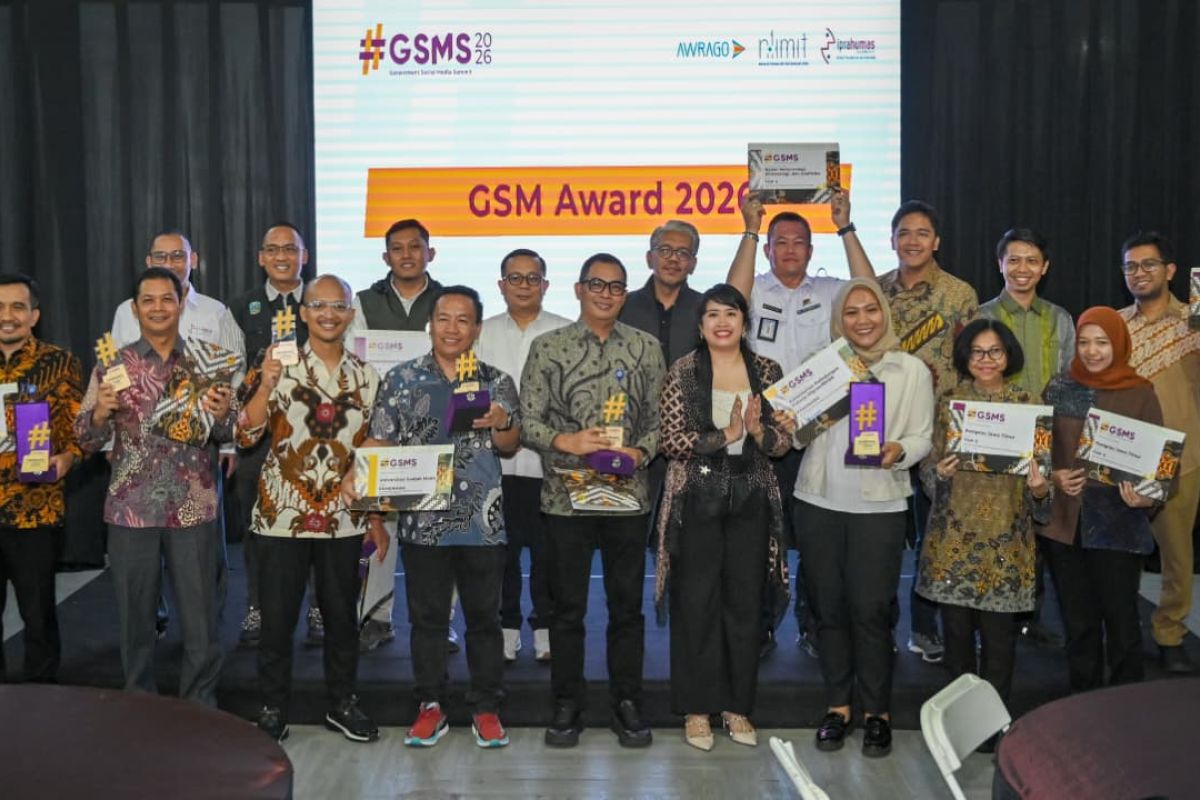
During the event, awards were presented to 16 government agencies for their best performance in social media management.
A total of 16 awards were distributed across four categories: “Most Engaging”, “Best Use of Image”, “Best Use of Video”, and “Best Account”. Each category included four clusters: ministries, agencies, provincial governments, and state universities.
The winner for the “Most Engaging” category included the Ministry of Social Affairs, the Indonesian National Police, the Special Region of Yogyakarta, and the Bandung Institute of Technology. The winners for “Best Use of Image” were the Ministry of Migrant Workers Protection (BP2MI), the Indonesian State-Owned Enterprises Regulatory Agency, the Special Region of Yogyakarta, and Udayana University.
The “Best Use of Video” award was achieved by the Ministry of Manpower, the Corruption Eradication Commission (KPK), the Special Region of Yogyakarta, and Semarang State University. Meanwhile, the winners for “Best Account” were the Ministry of Higher Education, Science, and Technology, the House of Representatives of the Republic of Indonesia (DPR RI), the Special Region of Yogyakarta, and Gadjah Mada University.
Source: jawawa.id (https://jawawa.id/newsitem/experts-stress-importance-of-adaptive-government-communication-to-tackle-homeless-media-1781232810)
Originally published by Antara (Indonesian) (https://www.antaranews.com/berita/5605136/ahli-tekankan-pentingnya-komunikasi-pemerintah-hadapi-homeless-media), translated from Indonesian