
Experts Say Mining Sector Profit-Sharing Already Similar to Oil and Gas "Gross Split"
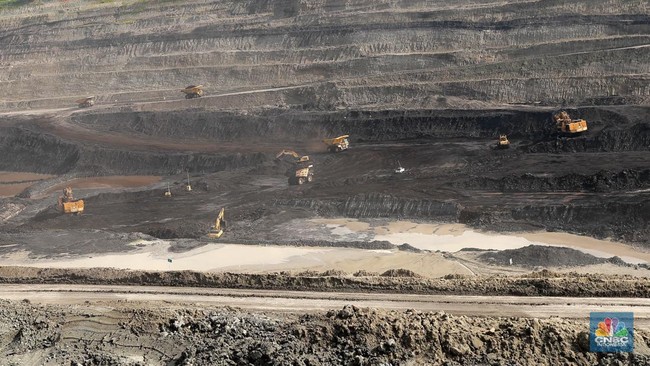
The Indonesian Mining Experts Association (Perhapi) has commented on the government’s plan to implement a profit-sharing scheme in the mining sector. The scheme under discussion would adopt the model applied in the oil and gas sector.
As is known, in the upstream oil and gas world, there are two types of cooperation contracts: the Production Sharing Contract (PSC) with Cost Recovery and the PSC Gross Split.
Both types of contracts represent cooperation between the government through the Special Task Force for the Implementation of Upstream Oil and Gas Business Activities (SKK Migas) and investors.
Chairman of the Perhapi Advisory Board, Rizal Kasli, stated that the profit-sharing mechanism currently in place in the mineral and coal mining sector is substantively similar to the gross split scheme in the upstream oil and gas industry. This is because all operational costs are fully borne by the contractor without any cost reimbursement scheme from the state.
Nevertheless, he noted that the mining industry does not recognise the term cost recovery or profit-sharing with operational cost reimbursement. He mentioned that the government has long received state revenues certainty through royalties and various types of taxes from the early stages of mining activities.
“In the mineral and coal mining industry, there is no cost recovery scheme or gross split. What applies is actually more similar to the gross split scheme. Where all costs from exploration, development, construction, mining, processing to sales are borne by the contractor,” he told CNBC Indonesia on Thursday (7/5/2026).
Through the scheme currently in place in the national mining industry, the government sets profit-sharing in the form of Non-Tax State Revenue (PNBP) as tiered royalties whose value follows fluctuations in global commodity prices.
According to him, with that model, the state does not need to conduct in-depth audits of companies’ daily expenditure reports as done in the cost recovery scheme in the oil and gas sector.
“The government does not need to audit the contractor’s financial reports as in cost recovery in oil and gas. Automatically, contractors will carry out cost control and efficiency in their operations,” Rizal continued.
Rizal explained that the royalty rate collected by the government can increase up to 28% for holders of PKP2B permits if coal prices are soaring high in the international market. Rizal assessed that the scheme provides benefits to the state because tax revenues continue to flow along with increases in companies’ operational profits.
“The government could implement both schemes in the mining industry. However, it is recommended to use the gross split scheme for stabilising state revenues upfront,” he said.
Although the discourse on adopting the oil and gas scheme to the minerba sector is seen as interesting, his side reminds the government to conduct in-depth studies regarding the investment attractiveness for business actors. If the government chooses to implement cost recovery, then a strong supervisory body is needed to verify the validity of financial data.
“There must be a strong and credible body to carry out cost verification, validation and audits that must be done when contractors seek reimbursement for costs incurred. If not, there will be leakages in the state budget through those reimbursement costs,” he concluded.
Bahlil’s Plan
Minister of Energy and Mineral Resources (ESDM) Bahlil Lahadalia revealed that the government is studying the implementation of a profit-sharing scheme like that in the upstream oil and gas industry to also apply to the mineral and coal mining industry (minerba).
He conveyed this after meeting with President Prabowo Subianto in a limited meeting at the State Palace on Tuesday (5/4/2026).
In that meeting, one of the main focuses of discussion was the restructuring of the national mining sector.
“We discussed the future arrangement of mining that must be mostly owned by the state. And that relates to the implementation of Article 33 (of the 1945 Constitution),” Bahlil revealed at the State Palace on Tuesday (5/5/2026).
According to Bahlil, the government wants to ensure that the management of natural resources, both old and new mines, can provide maximum contribution to state revenues.
At least, one of the options being studied is to adopt the cooperation pattern applied in the upstream oil and gas sector to the mining sector.
“And we will use examples like the profit-sharing in our oil and gas management. Our oil and gas has Cost Recovery, has Gross Split, perhaps those patterns that we will try to exercise to build cooperation with the private sector,” Bahlil explained.
Nevertheless, he emphasised that the concession scheme in the management of mineral and coal mining will still be retained.
“Still concessions, but we will optimise for revenues so that they are balanced with the state, and the state should get a larger share,” he said.