
Experts project non-subsidised fuel prices to rise by 5–11 per cent in October
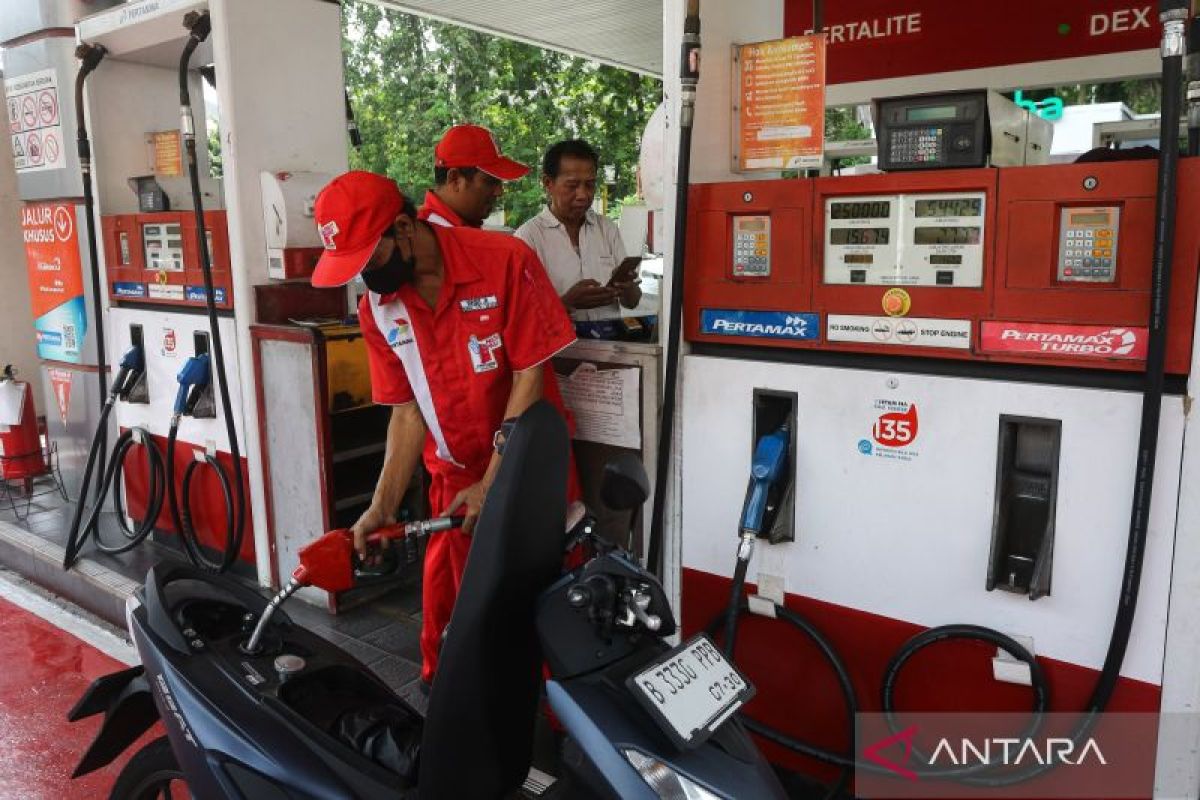
If following the established formula, non-subsidised fuel prices will rise by 5–11 per cent in October, according to Yayan Satyakti, a researcher and lecturer at the Faculty of Economics and Business, Padjadjaran University.
“Yes, upward pressure still exists. October prices are calculated based on the market average from 25 August to 25 September, and during that period, processed petrol prices in Singapore (MOPS) rose by approximately 14 per cent,” Yayan stated when contacted in Jakarta on Saturday.
Yayan explained that the average MOPS petrol price rose from 111.4 US dollars per barrel in the September pricing window to approximately 126.7 US dollars per barrel for the October window. Meanwhile, the Rupiah strengthened from Rp17,892 per US dollar to Rp17,630 per US dollar.
“If following the formula, non-subsidised fuel prices will rise by 5–11 per cent. Pertamax is likely to be held at its current rate again, but its actual cost is now around Rp18,350 per litre,” said Yayan.
Regarding the detailed price estimates for non-subsidised fuel in October 2026, Pertamax Green 95 is expected to rise from Rp19,150 per litre to Rp21,200 per litre, while Pertamax Turbo is expected to increase from Rp19,600 per litre to Rp21,450 per litre.
Furthermore, for diesel varieties, Dexlite is expected to rise from Rp23,700 per litre to Rp25,000 per litre, and Pertamina Dex is expected to increase from Rp25,200 per litre to Rp26,600 per litre.
“What should be done in the short term is to announce the prices along with the reasons openly. A small, predictable increase is easier to accept than a sudden shock,” Yayan advised.
For the medium term, Yayan recommended more frequent, small price adjustments to prevent them from accumulating into a massive surge.
In mid-September 2026, the Ministry of Energy and Mineral Resources (ESDM) projected that the Indonesian Crude Price (ICP) would remain at a high level, ranging between 83–87 US dollars per barrel. This projection is linked to supply constraints in the Strait of Hormuz and the anticipated decline in oil reserves in the United States.
The government stated it will continue to monitor global crude oil price movements as part of its efforts to maintain national energy security. The government also affirmed that the ICP formula remains transparent and reflects international market dynamics to ensure accountability for state finances and the upstream oil and gas industry.
With global market pressures remaining a concern, September’s ICP development will follow changes in international supply and market conditions. Monitoring prices and the use of the ICP formula are part of the government’s steps to maintain energy security and the accountability of state financial management and the upstream oil and gas industry.