
Experts: Peatland Fire Prevention Must Be Science-Based
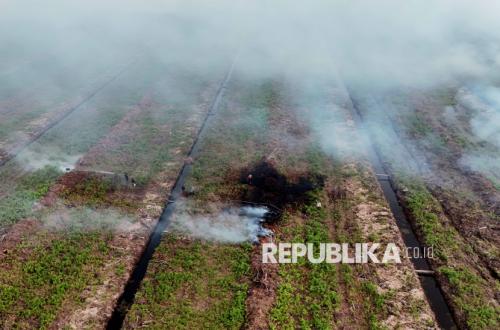
IPB University Professor Budi Indra Setiawan has urged that forest and land fire prevention in peat ecosystems be carried out using a science-based approach. He said such efforts need to be comprehensive because fire risk is influenced by various interrelated technical and non-technical factors.
According to him, peat fires cannot be explained by a single factor alone. Groundwater levels, dry weather, peat moisture levels, availability of surface fuel, wind speed, and the presence of ignition sources can all increase fire risk.
‘Peat fires are a complex problem. Falling groundwater levels, dry weather conditions, reduced peat moisture, abundant surface fuel, wind speed, and the presence of ignition sources can interact with each other and increase fire risk,’ Budi said in Jakarta.
He explained that peat which loses moisture becomes increasingly flammable. Fire can even spread beneath the surface and persist for long periods, making it difficult to detect and extinguish through surface-level handling alone.
Therefore, peatland fire prevention needs to begin with maintaining groundwater levels and strengthening water management. Canal and canal-block management, provision of retention basins and water sources, monitoring of peat moisture, and readiness of firefighting equipment are among the steps needed in vulnerable areas.
Budi said a science-based approach also requires a monitoring system capable of providing a rapid picture of field conditions. Weather data, hotspots and peat conditions need to be integrated through satellite imagery, groundwater level sensors, watchtowers, ground patrols, and the use of drones.
‘Monitoring technology is very helpful, but hotspot data must still be verified directly in the field. Not all hotspots are fires, and not all fires can be immediately seen from satellites, especially if the fire is beneath the peat surface,’ he said.
Budi assessed that monitoring information must be acted upon immediately because small fires are easier to control before they develop into larger blazes. Early detection and rapid response are important parts of reducing fire risk, especially during the dry season when peat is more likely to dry out.
Prevention efforts cannot rely solely on technical aspects. Human behaviour, land-clearing practices, limited alternatives for non-burning land preparation, land tenure issues, tenure conflicts, community welfare levels, and coordination between parties also influence fire risk.
Fire prevention needs to be accompanied by education, community economic empowerment, provision of non-burning land-clearing technology, strengthening of village institutions, and sustained risk communication. Such an approach is expected to reduce dependence on burning practices while strengthening community preparedness in vulnerable areas.
Soil expert Basuki Sumawinata added that handling of each fire incident must also be carried out through evidence-based investigation. Information about fire spots within or around a licensed area, according to him, is not sufficient to immediately determine the cause, perpetrator or motive of a fire.
‘Fire prevention and handling must be based on accountable data and verification. Conclusions must not be drawn based on a single piece of information or simply because a fire was found within a particular area,’ Basuki said.
According to him, investigations need to cover the fire’s point of origin, wind direction, soil type, land-use history, vegetation condition, area boundaries, access to the location, patrol records, and the handling steps that have been taken. All this information is important for distinguishing the location of the fire, the cause of the fire, the party that started the fire, and the party responsible for controlling it.
Both experts assessed that successful peat fire prevention requires collaboration between the government, businesses, communities, academics, and law enforcement. Prevention must be carried out year-round through water management, early detection, community capacity building, rapid response, and accurate, evidence-based public communication.