
Experts Highlight the Importance of Education for Smokers Struggling to Quit
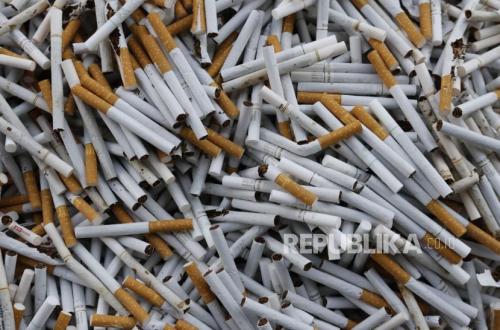
JAKARTA — Education and support for smokers who want to quit need to be strengthened, including in healthcare facilities. Practitioners and academics have highlighted the importance of an approach focused on smoking cessation, accompanied by evidence-based information about the health risks of cigarettes and alternative tobacco products.
Healthcare practitioner Dr Jeffrey Ariesta Putra, Sp.B., said there remains a gap between the number of smokers in Indonesia and their access to help to quit. According to data from 2021 that he presented, Indonesia had at least 70 million smokers, 63 per cent of whom said they wanted to quit.
However, Jeffrey said, only 38 per cent of smokers received education or assistance to stop smoking when they visited a hospital.
“There is a discrepancy in the data: there are many smokers, and they come to hospital, but unfortunately they are not treated or even identified. This gap makes me ask what we as healthcare workers can do. Patient education is important,” Jeffrey said at the 3rd Symposium of the Indonesian Health Resilience Association (SIERA III) 2026 in Jakarta.
According to Jeffrey, hospital visits give healthcare workers an opportunity to educate patients about quitting smoking. This can begin during the initial examination and continue through preparations for medical procedures.
One approach that can be used is the 5A method: ask about smoking habits; advise the patient to quit; assess their readiness; assist them in the quitting process; and arrange follow-up.
Jeffrey said collaboration across professions is needed to ensure education is delivered consistently. Healthcare workers also need standard operating procedures to support patients who want to quit smoking.
“To ensure education is consistent, collaboration across professions is important. We want to form a team that can work together to implement SOPs, so that ultimately patients can reduce the harm caused by smoking,” he said.
During the same discussion, Professor Amaliya, a periodontics specialist at Padjadjaran University’s Faculty of Dentistry, presented a 90-day study involving marine personnel who smoked.
The study compared a group that switched completely from cigarettes to alternative tobacco products with a group that continued smoking. It monitored several indicators, including blood flow in the gums, gum condition, the ability to taste, and carbon monoxide levels in exhaled breath.
Amaliya said the group that switched showed improvements in several indicators during the observation period, including gum blood flow.
“After switching from cigarettes to alternative tobacco products such as heated tobacco products and vapes or e-cigarettes for three months, blood circulation in their gums improved. Their blood vessels, which had been constricted, improved,” Amaliya said.
She added that the gum condition of the group that switched became closer to that of people who did not smoke. Carbon monoxide levels in their exhaled breath fell from 14 at the start of the study to 5.22 after three months. In the group that continued smoking, the level was about 16 at the end of the observation period.
However, Amaliya stressed that observations made over three months cannot be used directly to draw conclusions about long-term health effects. The findings should be understood in light of the indicators assessed and the duration of the study.
Education for adult smokers should therefore present research findings proportionately, including the limitations of the available evidence. Differences in specific indicators do not, by themselves, mean that alternative tobacco products are risk-free or safe for health.
Professor Wahyu Widowati, an academic specialising in toxicology and biomolecular science at Maranatha Christian University, said an understanding of the risks of smoking should take account of the compounds produced by burning tobacco.
She explained that burning cigarettes produces thousands of compounds, including carbon monoxide, nitrogen oxides and benzene. Nicotine, meanwhile, is an addictive substance, and the two should be understood in the context of their different health risks.
“The cause of the health risks is not nicotine, but the burning cigarette. Although nicotine does have addictive effects,” Wahyu said.
According to Wahyu, heated tobacco products and e-cigarettes differ from conventional cigarettes because they do not use the same tobacco-burning mechanism. However, this difference does not mean alternative products are free of health risks.
The discussion also addressed tobacco harm reduction (THR), an approach that considers ways to reduce exposure to harmful substances, particularly for adult smokers who have not managed to quit. Nonetheless, the effectiveness and risks of each product need to be assessed using sufficient scientific evidence.
Stopping the use of cigarettes and tobacco products remains the best way to avoid the health risks associated with them. Healthcare education and support should therefore prioritise quitting and provide balanced information about risks, claimed benefits and the limitations of evidence for each alternative.
With appropriate education, healthcare workers are expected to help patients make informed decisions while strengthening efforts to control tobacco consumption.
Source: jawawa.id (https://jawawa.id/newsitem/experts-highlight-the-importance-of-education-for-smokers-struggling-to-quit-1793368298)
Originally published by Republika (https://ameera.republika.co.id/berita/tnptnx522/pakar-soroti-pentingnya-edukasi-bagi-perokok-yang-sulit-berhenti), translated from Indonesian