
Experts Highlight NCB Concept in Asset Forfeiture Bill, Warn of Risks and Limitations
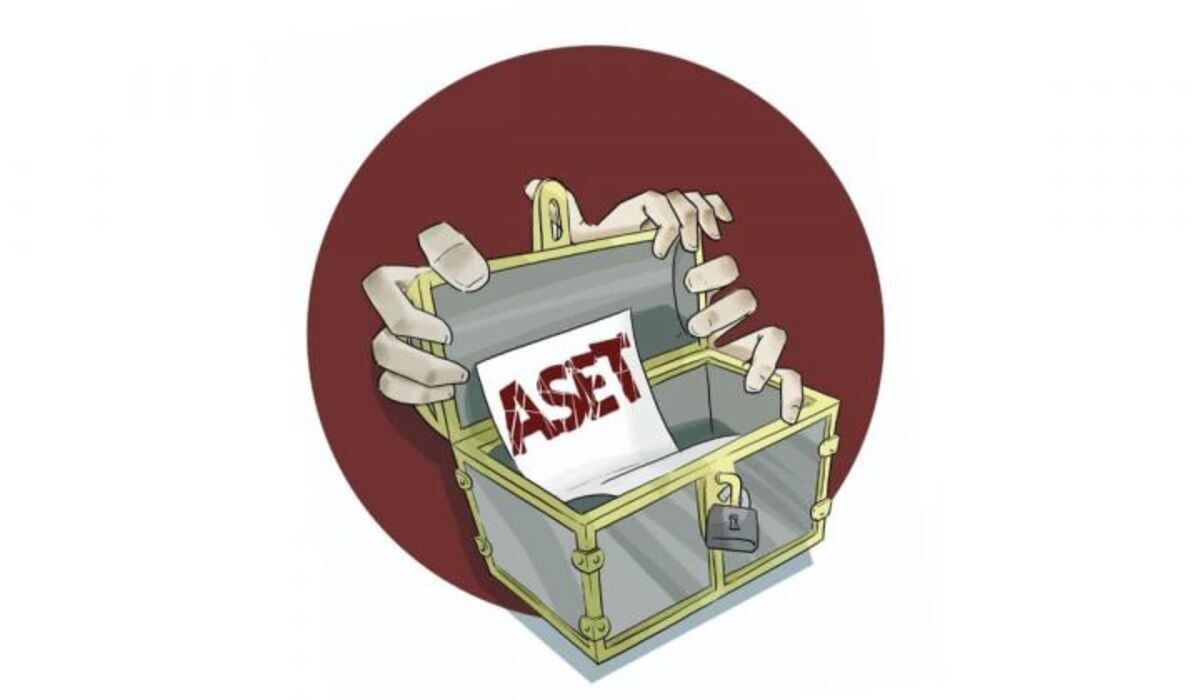
Criminal law experts are highlighting the importance of clear regulations on the non-conviction based asset forfeiture (NCB) concept in the Asset Forfeiture Bill, particularly to avoid compromising principles of caution in law enforcement.
Heri Firmansyah, an academic in criminal law from the Faculty of Law at Tarumanagara University, stated that the NCB concept has not yet been explicitly regulated in Indonesia’s legal system and needs to be formulated carefully.
“The non-conviction based asset forfeiture concept is actually not yet explicitly regulated in Indonesia’s legal system. What we are more familiar with is asset forfeiture based on court decisions,” Heri said in his presentation before Commission III of the House of Representatives (DPR RI) on Monday (6/4).
Heri explained that NCB differs from the conventional asset forfeiture mechanism (conviction based asset forfeiture), which requires a criminal conviction against the perpetrator.
“NCB is closer to the civil forfeiture concept, which can be carried out through a lawsuit against the asset, without having to wait for a criminal conviction against the perpetrator,” he clarified.
According to him, this approach can serve as an alternative in certain situations, especially to accelerate the recovery of assets from crimes.
However, Heri warned that the implementation of NCB should not be solely driven by the desire to speed up case handling, but must still consider the quality of the legal process.
“The question is, are we only chasing speed or also the quality of case handling? This is important because law enforcement must still be carried out prudentially or with full caution,” he stressed.
He assessed that the fundamental difference between NCB and the conventional mechanism lies in their proof orientation, with one emphasising formal truth and the other material truth.
In the NCB concept, Heri continued, there is a reversal of the burden of proof mechanism, where the accused party must prove the origin of their assets.
“In this concept, the accused party must prove that the assets they own do not originate from criminal acts,” he said.
In addition, the standard of proof in NCB is sufficient at probable cause or reasonable suspicion, differing from criminal proof which requires the judge’s full conviction (beyond reasonable doubt).
Heri emphasised that NCB cannot be made the main substitute for conviction-based asset forfeiture.
“NCB does not automatically replace conviction based asset forfeiture. There are certain conditions, for example when the suspect’s whereabouts are unknown,” he said.
On that basis, according to him, it is important for lawmakers to establish clear boundaries on when NCB can be used.
Furthermore, Heri stressed that the regulation of NCB in the Asset Forfeiture Bill must be drafted carefully and integrated with the existing legal system.
“The emphasis is not only on the speed of the process, but also on compliance with legal principles and harmonisation with other regulations,” he concluded.
Heri also highlighted the importance of strengthening international cooperation in the context of asset forfeiture, particularly through mutual legal assistance (MLA) mechanisms in the Asset Forfeiture Bill.
“International cooperation is important because assets from crimes can be spread across countries. There must be a common perception that those assets indeed originate from crimes,” he explained.
He added that Indonesia already has several cooperation instruments, both bilateral and multilateral, including international conventions related to corruption and money laundering.
Commission III of the DPR RI received input from legal experts regarding the discussion of the Asset Forfeiture Bill, particularly on mechanisms for handling wealth disproportionate to the owner’s profile.
Legal experts affirmed that the fair trial principle must be the main foundation in the Asset Forfeiture Bill to avoid violating citizens’ legal rights.
Criminal law experts highlighted the importance of clear regulations on the types of assets that can be forfeited in the Asset Forfeiture Bill to ensure legal certainty.