
Experts: El Niño Does Not Ignite Fires, Humans Remain the Trigger for Forest and Land Fires
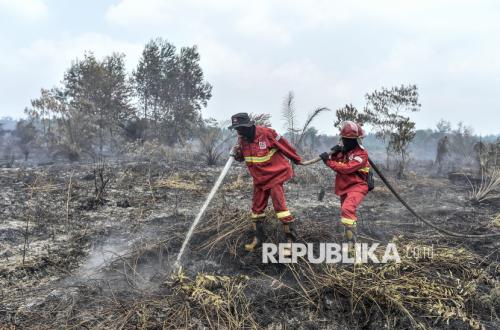
Weather Modification Technology expert Asep Karsidi has emphasised that the El Niño phenomenon is not the initial cause of forest and land fires. Human activity remains the primary trigger of fires, while dry conditions increase the risk and accelerate the spread of flames.
Asep said dry conditions in August 2026 are becoming increasingly intense. Based on evaluations and analyses by BMKG and NOAA, 76.5 per cent of seasonal zones in Indonesia have entered the dry season, while low rainfall dominates 90.79 per cent of the territory.
“Indonesia is facing a combination of an active dry season, a very strong El Niño, and a tendency towards a positive Indian Ocean Dipole,” said Asep when asked for his response regarding forest and land fires, quoted on Wednesday (26/8/2026).
According to the University of Indonesia Geography lecturer, this combination of conditions reduces cloud formation and rainfall, making vegetation and peatlands more flammable. However, these climatic conditions do not by themselves create fire.
“Climate is not the initial source of fire, but rather an amplifying factor that makes fire easier to ignite, spread, and difficult to control,” said Asep.
He said human activity, including land clearing by slash-and-burn methods, is the main cause of forest and land fires. Therefore, South Sumatra, Riau, Jambi, and Kalimantan need to increase vigilance through hotspot monitoring, patrols, and firefighting preparedness.
Forest and land fire expert Raffles B Panjaitan also stressed that El Niño cannot be positioned as the party that ignites fires. According to him, every fire still requires a trigger, so prevention efforts need to be directed at human activity in fire-prone areas.
“El Niño does not ignite fires. Fire still requires a trigger,” said Raffles.
He said most fires are linked to human activity, from land clearing by burning and negligence in using fire to uncontrolled burning. Therefore, prevention is not enough if it only relies on monitoring technology, patrols, and firefighting equipment, but also needs to address community behaviour.