
Experts deem MBG programme constitutional but call for governance improvements
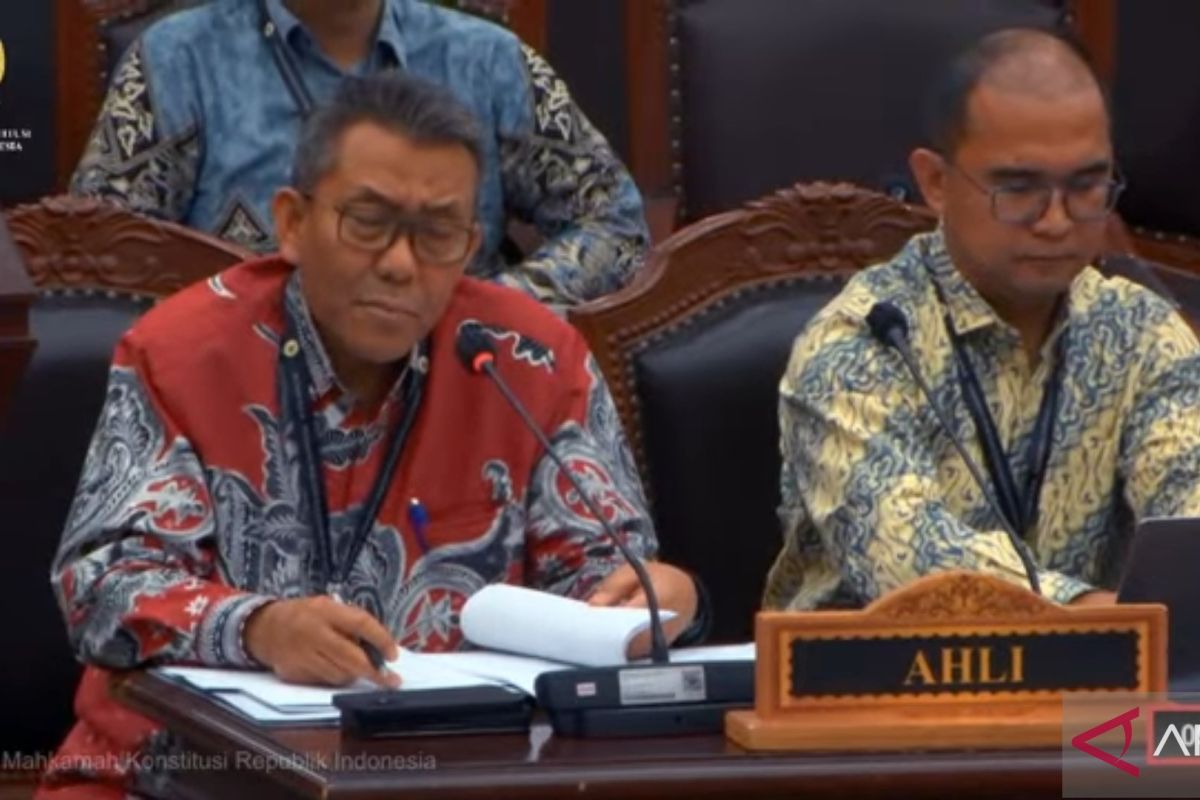
Jakarta (ANTARA) - Expert witnesses presented by the House of Representatives (DPR RI) during the judicial review of Law Number 1or 2025 regarding the 2026 State Budget (APBN) at the Constitutional Court have stated that the Free Nutritious Meal (MBG) programme is constitutional, though its implementation requires improved governance.
This testimony was delivered by Professor Cecep Darmawan, Dean of the Faculty of Social Science Education at the Universitas Pendidikan Indonesia (UPI), and Oce Madril, a lecturer at the Faculty of Law, Universitas Gadjah Mada (UGM), during the hearing at the Constitutional Court on Tuesday.
Cecep Darmawan stated that it is premature to conclude that the MBG programme should be discontinued. According to him, the various issues arising during the implementation of the MBG actually demonstrate the need for comprehensive governance improvements. The success of the programme is determined not only by the size of the budget but also by the quality of the management applied.
He warned that the MBG programme must not become a space for rent-seeking practices, budget hijacking, or acts of corruption that harm students and the state. He noted that the allocation of the MBG budget must be carried out proportionally and must not hinder the fulfilment of other basic educational needs, such as teacher welfare, the enhancement of educator and staff competence, the improvement of learning quality, and the provision of educational facilities and infrastructure.
“Achieving national education standards must remain the top priority in the distribution of the national education budget,” he said.
Furthermore, he encouraged the involvement of various stakeholders in the programme’s governance, ranging from schools, school committees, parents, and local governments to the business sector through Corporate Social Responsibility (CSR) programmes. “This way, the programme does not rely entirely on the State Budget (APBN),” he added.
Meanwhile, Oce Madril shared his perspective from a constitutional standpoint. “The APBN budgeting is conducted through statutory procedures and has met the 20 per cent mandatory spending for education, making it a constitutional State Budget,” said Oce.
According to him, the use of the education budget for the MBG remains within constitutional corridors as long as it is allocated precisely to students, educators, and educational staff, and supports the nutritional improvement of the beneficiaries. “Therefore, the APBN Law regulating such a budget does not violate the mandatory spending provisions as mandated by Article 31, paragraph (4) of the 1945 Constitution,” he stated.
The hearing will continue on Wednesday (1/7) to hear final testimonies from experts representing the DPR RI and the government.