
Experts Criticise Local Governments' Plan to Impose Surface Water Tax on Palm Trees
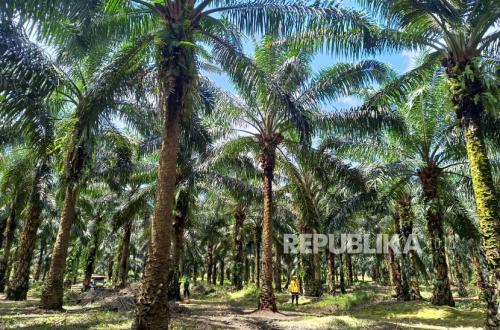
Plans by several regional governments (pemda) to impose a surface water tax (PAP) of Rp 1,700 per palm tree per month have drawn criticism from legal experts. The policy lacks a legal basis and could violate Law No. 1 of 2022 on Financial Relations between the Central Government and Regional Governments (HKPD) and Government Regulation No. 35 of 2023 on General Provisions for Regional Taxes and Levies.
Muhamad Zainal Arifin, Director of the Centre for Legal Studies and Advocacy on Natural Resources (Pustaka Alam), stated that taxing palm trees through the PAP scheme is an illogical policy and a misunderstanding of the definition of surface water tax. According to him, surface water legally refers to sources such as rivers, lakes, reservoirs, swamps, or other water bodies that do not infiltrate into the ground.
“Palm trees only absorb rainwater or dew naturally through the soil, not by pumping surface water using machines. Taxing the natural process of plants is an imposition of rules,” Zainal said in a press statement in Jakarta on Wednesday (15/4/2026).
Zainal explained that the HKPD Law clearly defines surface water tax as a tax on the extraction and/or utilisation of surface water. Article 1 number 52 of the HKPD Law defines surface water tax as a tax on the extraction and/or utilisation of surface water. Meanwhile, in Article 30 of the HKPD Law, the tax base must be calculated based on the volume of water extracted.
This means, he continued, that the tax can only be imposed if there is an active action to extract water. For example, pumping water from a river using a pump, measuring it through a water meter, and then channeling it for specific needs.
“As long as there is no actual extraction of water from a river or lake, there is no object for surface water tax. It is impossible to measure how many cubic metres of surface water a palm tree uses,” Zainal said.
Several regions planning to implement PAP include the Riau Provincial Government, West Sumatra, and Bengkulu. They are currently drafting the regulations. For instance, the West Sumatra Provincial Government targets revenue of Rp 1 trillion from the levy. As an initial step in 2026, West Sumatra targets PAP receipts of Rp 5.94 billion, focusing on non-smallholder palm plantations.